


 Ada Pertanyaan? Hubungi Kami


2026 Hak Cipta Milik Hukumonline.com
Produk Pilihan


 Ada Pertanyaan? Hubungi Kami
Marcell Sihombing, ANT
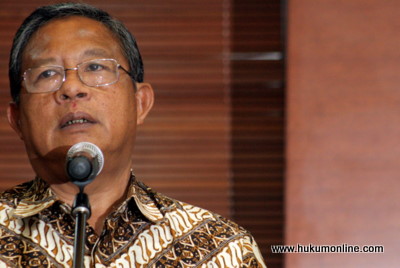
Coordinating Minister for Economic Affair, Darmin Nasution. Photo by: SGP.
The government has finally launched its 11th Economic Policy Package, which places its focus squarely upon the further development of the pharmaceutical and health-equipment industries, as well as micro-, small-, and medium-scale businesses (SME), the property sector, and the acceleration of the flow of goods through the country’s seaports via a process of integrated-risk management.
“Four policies have been compressed into the package which was announced today. One additional policy was also going to be announced today, however it still requires further deliberation in order to ensure that it can significantly contribute to the village communities that are its focus,” asserted Secretary of the Cabinet Pramono Anung in Jakarta on Tuesday, 29 March 2016.
Also present at the policy announcement was Darmin Nasution, Coordinating Minister for Economic Affairs, who stated that the development of the pharmaceutical and health-equipment industries would hopefully ensure an adequate supply of pharmaceutical and health-equipment products in the country, which would in turn support the Public Health Insurance (JKN) program and may eventually lead to the creation of affordable medicines.
With regards to SMEs, the government has also announced the establishment of the Export-Oriented People’s Business Credit Program (Kredit Usaha Rakyat Berorientasi Ekspor/KURBE), which will hopefully provide an integrated and comprehensive export-financing facility which can be utilized by SMEs. Through the KURBE program, SMEs will hopefully be able to produce export-quality products, and this should eventually lead to the diversification of Indonesia’s range of exportable products.
The country’s SMEs have been experiencing export difficulties of late due to financing issues, as well as issues pertaining to human resources, marketing strategies, and compliance with international trading standards. It is hoped that the new policy package will eventually stimulate SMEs and improve Indonesia’s volume of exports, as well as the overall competitiveness of SMEs here and the quality and additional value of any exportable products produced.
The main objective of the KURBE initiative is to provide an integrated and comprehensive export-financing facility. With this goal in mind, the program will grant two types of loan, namely Export Working Capital Loans (Kredit Modal Kerja Ekspor/KMKE) and Export Investment Loans (Kredit Investasi Ekspor/KIE) for SMEs. Furthermore, the channeling of these new financing facilities to SMEs will be the responsibility of the Indonesia Export Financing Institution (LPEI), which is also known as Indonesia Eximbank.
Through this 11th policy package, a number of financing upper thresholds can be granted, specifically: Micro KURBE, with an upper threshold of IDR 5 billion, Small KURBE with an upper threshold of IDR 25 billion (with a maximum allocation for KMKE which is set at IDR 15 billion), and Medium KURBE with an upper threshold of IDR 50 billion (with a maximum allocation for KMKE which is set at IDR 25 billion). The government has also mandated that any KURBE will remain valid for a maximum period of three years for KMKEs, and/or five years for KIEs.
As far as the property industry is concerned, the government plans to establish the Real Estate Investment Fund (DIRE) which will boast affordable premium rates. This program will hopefully be able to offer long-term investment funds which can support the acceleration of housing and infrastructure construction in accordance with Indonesia’s Mid-Term National Development Plan (RPJMN) for 2015-2019.
This new DIRE policy is being introduced because Minister of Finance Regulation No. 200 of 2015 is considered to have failed to increase the growth of the property sector in Indonesia. This is due to the fact that the current tax tariffs remain high when compared to those of neighboring countries. Through this new DIRE policy, the government is hoping to accelerate the development of the real-estate sector in Indonesia, and also eventually contribute to a more rapid development of the country’s financial sector through the capitalization of the capital market. Ultimately, this will also strengthen the role of the stock exchange as an alternative source of long-term funding.
And finally, in terms of risk management, the government is planning to initiate the Indonesia Single Risk Management (ISRM) system in a bid to streamline the flow of goods through the country's seaports. This policy, it is believed, will ultimately accelerate timeframes as regards import-export activities, and this should lead to greater certainty for businesses, as well as greater efficiency as regards licensing times and expenses.
“It [the new policy] should also slash dwelling times through a process of oversight improvement and the integration of risk-management measures between relevant ministries and institutions,” concluded Minister Nasution.
(rfs/sp)
Marcell Sihombing, ANT
Coordinating Minister for Economic Affair, Darmin Nasution. Photo by: SGP.
The government has finally launched its 11th Economic Policy Package, which places its focus squarely upon the further development of the pharmaceutical and health-equipment industries, as well as micro-, small-, and medium-scale businesses (SME), the property sector, and the acceleration of the flow of goods through the country’s seaports via a process of integrated-risk management.
“Four policies have been compressed into the package which was announced today. One additional policy was also going to be announced today, however it still requires further deliberation in order to ensure that it can significantly contribute to the village communities that are its focus,” asserted Secretary of the Cabinet Pramono Anung in Jakarta on Tuesday, 29 March 2016.
Also present at the policy announcement was Darmin Nasution, Coordinating Minister for Economic Affairs, who stated that the development of the pharmaceutical and health-equipment industries would hopefully ensure an adequate supply of pharmaceutical and health-equipment products in the country, which would in turn support the Public Health Insurance (JKN) program and may eventually lead to the creation of affordable medicines.
With regards to SMEs, the government has also announced the establishment of the Export-Oriented People’s Business Credit Program (Kredit Usaha Rakyat Berorientasi Ekspor/KURBE), which will hopefully provide an integrated and comprehensive export-financing facility which can be utilized by SMEs. Through the KURBE program, SMEs will hopefully be able to produce export-quality products, and this should eventually lead to the diversification of Indonesia’s range of exportable products.
The country’s SMEs have been experiencing export difficulties of late due to financing issues, as well as issues pertaining to human resources, marketing strategies, and compliance with international trading standards. It is hoped that the new policy package will eventually stimulate SMEs and improve Indonesia’s volume of exports, as well as the overall competitiveness of SMEs here and the quality and additional value of any exportable products produced.
The main objective of the KURBE initiative is to provide an integrated and comprehensive export-financing facility. With this goal in mind, the program will grant two types of loan, namely Export Working Capital Loans (Kredit Modal Kerja Ekspor/KMKE) and Export Investment Loans (Kredit Investasi Ekspor/KIE) for SMEs. Furthermore, the channeling of these new financing facilities to SMEs will be the responsibility of the Indonesia Export Financing Institution (LPEI), which is also known as Indonesia Eximbank.
Through this 11th policy package, a number of financing upper thresholds can be granted, specifically: Micro KURBE, with an upper threshold of IDR 5 billion, Small KURBE with an upper threshold of IDR 25 billion (with a maximum allocation for KMKE which is set at IDR 15 billion), and Medium KURBE with an upper threshold of IDR 50 billion (with a maximum allocation for KMKE which is set at IDR 25 billion). The government has also mandated that any KURBE will remain valid for a maximum period of three years for KMKEs, and/or five years for KIEs.
As far as the property industry is concerned, the government plans to establish the Real Estate Investment Fund (DIRE) which will boast affordable premium rates. This program will hopefully be able to offer long-term investment funds which can support the acceleration of housing and infrastructure construction in accordance with Indonesia’s Mid-Term National Development Plan (RPJMN) for 2015-2019.
This new DIRE policy is being introduced because Minister of Finance Regulation No. 200 of 2015 is considered to have failed to increase the growth of the property sector in Indonesia. This is due to the fact that the current tax tariffs remain high when compared to those of neighboring countries. Through this new DIRE policy, the government is hoping to accelerate the development of the real-estate sector in Indonesia, and also eventually contribute to a more rapid development of the country’s financial sector through the capitalization of the capital market. Ultimately, this will also strengthen the role of the stock exchange as an alternative source of long-term funding.
And finally, in terms of risk management, the government is planning to initiate the Indonesia Single Risk Management (ISRM) system in a bid to streamline the flow of goods through the country's seaports. This policy, it is believed, will ultimately accelerate timeframes as regards import-export activities, and this should lead to greater certainty for businesses, as well as greater efficiency as regards licensing times and expenses.
“It [the new policy] should also slash dwelling times through a process of oversight improvement and the integration of risk-management measures between relevant ministries and institutions,” concluded Minister Nasution.
(rfs/sp)