


 Ada Pertanyaan? Hubungi Kami


 Ada Pertanyaan? Hubungi Kami
Marcell Sihombing, Nando Narendra
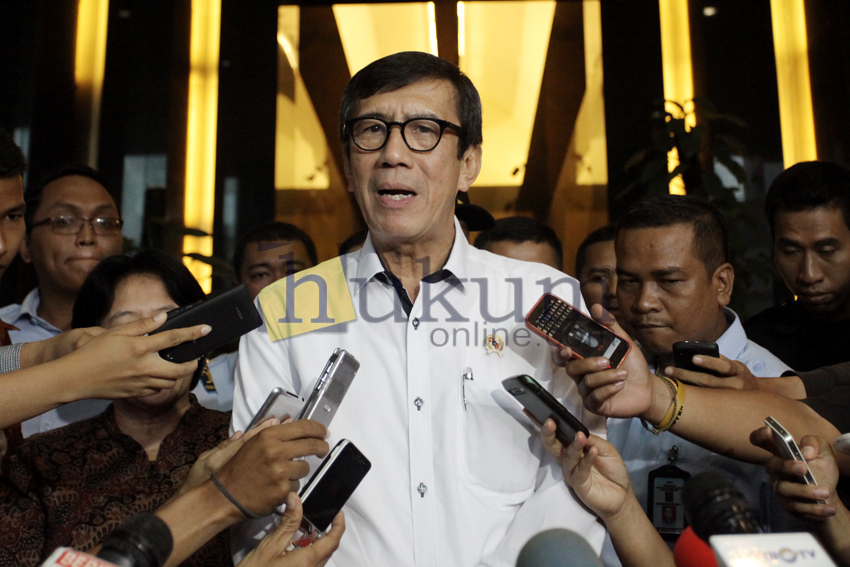
Minister of Law and Human Rights, Yassona Laoly. Photo by: RES.
Minister of Law and Human Rights has issued Regulation No. 8 of 2016 on Application Procedures and Requirements for the Registration of Intellectual Property Licensing Agreements (2016 Regulation) on 24 February 2016. The 2016 Regulation is served to be the implementation regulation in registering intellectual-property (IP) licensing agreement at the Directorate General of Intellectual Property (Directorate General).
Furthermore, any IP licensing agreements which have not been registered with the Directorate General will not be considered legally binding, especially as they relate to any third parties. In fact, several laws currently covering the intellectual property sector already stipulate that all IP licensing agreements must be registered with the Directorate General in order for them to be considered legally binding on third parties. These laws include Law No. 30 of 2000on Trade Secrets, Law No. 31 of 2000on Industrial Design, Law No. 32 of 2000on Integrated-Circuit Designs, Law No. 14 of 2001on Patents, Law No. 15 of 2001on Trademarks, and Law No. 28 0f 2014on Copyrights (Copyrights Law).
“At least one article contained within each of the above intellectual-property laws stipulates that no IP licensing agreements can be considered legally binding upon any third parties so long as they have yet to be registered with the Ministry of Law and Human Rights. However, no actual registration procedures were laid out prior to the issuance of the new regulation,” asserted Ahmad M. Ramli, Director General for Intellectual Property, from his office on Thursday, 25 February 2016.
Director General Ramli stated that, to date, his division (the Directorate General) had yet to fully execute its authority as regards the processing of any registration applications filed by either licensees or licensors, owing to the absence of a proper regulatory framework. By way of example, Director General Ramli pointed to Article 83 (3) of the Copyright Law, which expressly stipulates that unregistered IP licensing agreements are not considered legally binding on any third parties.
“The public has long been waiting for this and hopefully the 2016 Regulation will finally set out the necessary legal framework for the registration of IP licensing agreements,” asserted Director General Ramli.
Minister Laoly also ventured an opinion on the matter and stated that the 2016 Regulation was also being issued for the purposes of improving services to the public, as well as to provide greater legal certainty for IP rights licensors who are looking to enter into IP licensing agreements with licensees. In addition, it is hoped that the 2016 Regulation will ultimately be able to increase the amount of Non-Tax State Income (PNBP) collected by the Ministry of Law and Human Rights.
“It [the 2016 Regulation] is aiming to increase the Directorate General’s contribution to the country’s PNBP, bearing in mind that the registration tariffs have already been set out under Government Regulation No. 45 of 2014 on Classifications and Applicable Tariffs for Non-Tax State Income,” asserted Minister Laoly.
Ari Juliano Gema, the Creative-Economy Agency’s Deputy for Regulation and Intellectual Property Facilitation, told Hukumonline that the 2016 Regulation represented a breakthrough as regards the registering of IP licensing agreements. Furthermore, Mr. Gema expressed his belief that the 2016 Regulation would serve as a set of technical guidelines for the implementation of the preceding regulations.
“The 2016 Regulation can be considered a set of technical guidelines which has long been awaited by IP holders,” concluded Mr. Gema.
Application Procedures and Requirements
Applications to register IP licensing agreements can be submitted either online or offline. Online submissions can be filed via the Directorate General’s official website, while offline submissions should be addressed to the Minister of Law and Human Rights.
Both online and offline applications must be accompanied by several supporting documents, including the relevant licensing agreement, relevant excerpts from an IP certificate, and a payment receipt for the application fee. The Directorate General then has ten days in which to assess whether an application has been accurately completed or not.
If an application has been deemed incomplete, then the applicants in question must enclose the necessary missing documents within ten days of receiving official notification from the Directorate General. Failure to comply with this ten-day timeframe will result in the cancellation of any incomplete applications. Completed applications, on the other hand, will be registered by the Directorate General and will also be publicly announced through the Directorate General’s official website.
And last but not least, Article 10 of the 2016 Regulation stipulates that all registrations will remain valid for a period of five years, which is extendable so long as the extension fees prescribed under the prevailing laws have been paid.
(rfs/sp)
Marcell Sihombing, Nando Narendra
Minister of Law and Human Rights, Yassona Laoly. Photo by: RES.
Minister of Law and Human Rights has issued Regulation No. 8 of 2016 on Application Procedures and Requirements for the Registration of Intellectual Property Licensing Agreements (2016 Regulation) on 24 February 2016. The 2016 Regulation is served to be the implementation regulation in registering intellectual-property (IP) licensing agreement at the Directorate General of Intellectual Property (Directorate General).
Furthermore, any IP licensing agreements which have not been registered with the Directorate General will not be considered legally binding, especially as they relate to any third parties. In fact, several laws currently covering the intellectual property sector already stipulate that all IP licensing agreements must be registered with the Directorate General in order for them to be considered legally binding on third parties. These laws include Law No. 30 of 2000on Trade Secrets, Law No. 31 of 2000on Industrial Design, Law No. 32 of 2000on Integrated-Circuit Designs, Law No. 14 of 2001on Patents, Law No. 15 of 2001on Trademarks, and Law No. 28 0f 2014on Copyrights (Copyrights Law).
“At least one article contained within each of the above intellectual-property laws stipulates that no IP licensing agreements can be considered legally binding upon any third parties so long as they have yet to be registered with the Ministry of Law and Human Rights. However, no actual registration procedures were laid out prior to the issuance of the new regulation,” asserted Ahmad M. Ramli, Director General for Intellectual Property, from his office on Thursday, 25 February 2016.
Director General Ramli stated that, to date, his division (the Directorate General) had yet to fully execute its authority as regards the processing of any registration applications filed by either licensees or licensors, owing to the absence of a proper regulatory framework. By way of example, Director General Ramli pointed to Article 83 (3) of the Copyright Law, which expressly stipulates that unregistered IP licensing agreements are not considered legally binding on any third parties.
“The public has long been waiting for this and hopefully the 2016 Regulation will finally set out the necessary legal framework for the registration of IP licensing agreements,” asserted Director General Ramli.
Minister Laoly also ventured an opinion on the matter and stated that the 2016 Regulation was also being issued for the purposes of improving services to the public, as well as to provide greater legal certainty for IP rights licensors who are looking to enter into IP licensing agreements with licensees. In addition, it is hoped that the 2016 Regulation will ultimately be able to increase the amount of Non-Tax State Income (PNBP) collected by the Ministry of Law and Human Rights.
“It [the 2016 Regulation] is aiming to increase the Directorate General’s contribution to the country’s PNBP, bearing in mind that the registration tariffs have already been set out under Government Regulation No. 45 of 2014 on Classifications and Applicable Tariffs for Non-Tax State Income,” asserted Minister Laoly.
Ari Juliano Gema, the Creative-Economy Agency’s Deputy for Regulation and Intellectual Property Facilitation, told Hukumonline that the 2016 Regulation represented a breakthrough as regards the registering of IP licensing agreements. Furthermore, Mr. Gema expressed his belief that the 2016 Regulation would serve as a set of technical guidelines for the implementation of the preceding regulations.
“The 2016 Regulation can be considered a set of technical guidelines which has long been awaited by IP holders,” concluded Mr. Gema.
Application Procedures and Requirements
Applications to register IP licensing agreements can be submitted either online or offline. Online submissions can be filed via the Directorate General’s official website, while offline submissions should be addressed to the Minister of Law and Human Rights.
Both online and offline applications must be accompanied by several supporting documents, including the relevant licensing agreement, relevant excerpts from an IP certificate, and a payment receipt for the application fee. The Directorate General then has ten days in which to assess whether an application has been accurately completed or not.
If an application has been deemed incomplete, then the applicants in question must enclose the necessary missing documents within ten days of receiving official notification from the Directorate General. Failure to comply with this ten-day timeframe will result in the cancellation of any incomplete applications. Completed applications, on the other hand, will be registered by the Directorate General and will also be publicly announced through the Directorate General’s official website.
And last but not least, Article 10 of the 2016 Regulation stipulates that all registrations will remain valid for a period of five years, which is extendable so long as the extension fees prescribed under the prevailing laws have been paid.
(rfs/sp)