


 Ada Pertanyaan? Hubungi Kami


2026 Hak Cipta Milik Hukumonline.com
Produk Pilihan


 Ada Pertanyaan? Hubungi Kami
Marcell Sihombing, Fathan Qorib
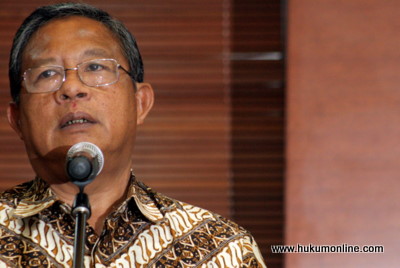
Darmin Nasution. Photo by: SGP.
The government finally launched its 10th Economic Policy Package yesterday. This new policy package is primarily focused upon two main objectives, namely improved protection for micro-, small-, and medium-scale businesses and cooperatives (UMKMK), and an amendment to the Negative Investment List (DNI).
At least 19 business sectors are now reserved for UMKMK, while new stock-ownership rules for Foreign Direct Investment (FDI) have been listed in the DNI. These new policies are reflected in the amendment to Presidential Regulation No. 39 of 2014 on the List of Business Sectors that are Closed and Conditionally-Open for Investment, which is commonly known as the DNI. These new policies were published on the official website of the Secretariate of the Cabinet on Thursday, 11 February 2016.
The new stock-ownership allowance for DNI has been set at 30% and encompasses 32 business sectors, including horticulture cultivation, horticulture seed cultivation, and so on. Three business sectors, namely distributor businesses and warehouse/storage-facility businesses, are now open to 33% stock ownership, while 100% stock ownership is now possible for cold-storage businesses.
This increase also applies to some 54 business sectors which were previously open to 49% stock ownership. Some 14 business sectors, including employment training, travel agencies, golf courses, air-transportation support services, and so forth are now open to 67% stock ownership. Meanwhile eight business sectors are now open to 100% stock ownership, including sports centers, movie-processing facilities, crumb-rubber industries, and so forth. However, there has been no change to the rules that govern 32 other business sectors, such as acupuncture services (49% stock ownership).
Moving on, out of 18 business sectors which were previously open to 51% stock ownership, ten are now open to 67% stock ownership, and these include private museums, catering services (jasa boga), conventions, exhibition and travel-incentive organizing services, as well as restaurant businesses, which are now open to 100% stock ownership. The remaining seven business sectors retain the previous 51% stock ownership rule.
Next up, 19 business sectors which were previously open to 55% stock ownership have seen an increase up to 67%, including business services and construction-consulting services with a work value of over IDR 10 billion. As for business sectors which were previously open to 65% stock ownership, three of these business sectors are now open to 67% ownership, including telecommunications network organizing businesses integrated into telecommunications service providers.
Moreover, out of eight business sectors which were previously open to 85% stock ownership, one sector (the raw-material-for-medicines industry) is now open to 100% stock ownership, while the other seven business remain at 85% due to regulatory provisions such as the prevailing laws pertaining to leasing and so forth.
And last but not least, out of some 17 business sectors which were previously open to 95% stock ownership, five business sectors, including toll-road operators, telecommunications-equipment-assessment institutions/laboratory testing, and so forth, are now open to 100% ownership. Meanwhile, the remaining 12 business sectors remain at 95%, owing to various regulatory provisions, including plantation businesses with a total land area of 25 ha or more which are integrated with processing facilities of a processing capacity equal to or exceeding a certain level, and so forth.
Commenting on this issue, Darmin Nasution, the Coordinating Minister for Economic Affairs, explained that through this 10th Economic Policy Package, the government has added another 19 business sectors onto the list of businesses reserved for UMKMK.
“These 19 business sectors comprise of business activities in the form of business services/construction-consulting services utilising simple/medium level technologies and/or having a small/medium level of risk, and/or having a work value of less than IDR 10 billion,” Minister Nasution stated.
The work-value threshold for some 39 business sectors reserved for UMKMK has also been extended from the previous threshold of IDR 1 billion to IDR 50 billion. This increase applies to construction-service businesses, including construction work undertaken on commercial buildings, healthcare-facility buildings, and so forth.
Minister Nasution further explained that the above extensions also encompassed a simplification of business classifications, such as a converging of 19 types of business service/construction-consulting services into a single type of business. “Therefore, the types of businesses reserved for UMKMKs has been compressed from 139 into 92 types,” asserted Minister Nasution.
Meanwhile, in terms of partnership schemes aimed at cooperation between domestic investments (PMDN) and FDIs for UMKMKs, some 62 types of businesses have been added to the previous 48 types of businesses, resulting in 110 types of businesses in total. These businesses include plantation seed-cultivation activities over areas of 25 ha or higher, retail trading using postal services and the internet, and so forth. UMKMK are also allowed to invest in businesses not prescribed under the DNI or by other businesses conditionally open to investment.
According to Minister Nasution, the amendment to the DNI has also been undertaken in order to put a stop to moves towards economic centralization, the fruits of which can only be enjoyed by a small number of privileged parties. It is also hoped that the amendment will eventually result in cheaper prices, including the price of medicines and healthcare equipment, which should in turn help the country to deal with the competition that it is likely to encounter under the new ASEAN Economic Community (AEC) framework.
Aside from opening up more employment opportunities and strengthening capital for the purposes of development, the amendment also encourages domestic businesses to compete and secure prominent positions in both the domestic and global markets.
“This policy does not represent liberalization, but instead represents an effort to further develop our national geo-political and geo-economic potential by encouraging UMKMKs and domestic businesses to improve their creativity, cooperation, innovation, and the ability to adopt new technologies during this almost borderless era,” concluded Minister Nasution.
(rfs/sp)
Marcell Sihombing, Fathan Qorib
Darmin Nasution. Photo by: SGP.
The government finally launched its 10th Economic Policy Package yesterday. This new policy package is primarily focused upon two main objectives, namely improved protection for micro-, small-, and medium-scale businesses and cooperatives (UMKMK), and an amendment to the Negative Investment List (DNI).
At least 19 business sectors are now reserved for UMKMK, while new stock-ownership rules for Foreign Direct Investment (FDI) have been listed in the DNI. These new policies are reflected in the amendment to Presidential Regulation No. 39 of 2014 on the List of Business Sectors that are Closed and Conditionally-Open for Investment, which is commonly known as the DNI. These new policies were published on the official website of the Secretariate of the Cabinet on Thursday, 11 February 2016.
The new stock-ownership allowance for DNI has been set at 30% and encompasses 32 business sectors, including horticulture cultivation, horticulture seed cultivation, and so on. Three business sectors, namely distributor businesses and warehouse/storage-facility businesses, are now open to 33% stock ownership, while 100% stock ownership is now possible for cold-storage businesses.
This increase also applies to some 54 business sectors which were previously open to 49% stock ownership. Some 14 business sectors, including employment training, travel agencies, golf courses, air-transportation support services, and so forth are now open to 67% stock ownership. Meanwhile eight business sectors are now open to 100% stock ownership, including sports centers, movie-processing facilities, crumb-rubber industries, and so forth. However, there has been no change to the rules that govern 32 other business sectors, such as acupuncture services (49% stock ownership).
Moving on, out of 18 business sectors which were previously open to 51% stock ownership, ten are now open to 67% stock ownership, and these include private museums, catering services (jasa boga), conventions, exhibition and travel-incentive organizing services, as well as restaurant businesses, which are now open to 100% stock ownership. The remaining seven business sectors retain the previous 51% stock ownership rule.
Next up, 19 business sectors which were previously open to 55% stock ownership have seen an increase up to 67%, including business services and construction-consulting services with a work value of over IDR 10 billion. As for business sectors which were previously open to 65% stock ownership, three of these business sectors are now open to 67% ownership, including telecommunications network organizing businesses integrated into telecommunications service providers.
Moreover, out of eight business sectors which were previously open to 85% stock ownership, one sector (the raw-material-for-medicines industry) is now open to 100% stock ownership, while the other seven business remain at 85% due to regulatory provisions such as the prevailing laws pertaining to leasing and so forth.
And last but not least, out of some 17 business sectors which were previously open to 95% stock ownership, five business sectors, including toll-road operators, telecommunications-equipment-assessment institutions/laboratory testing, and so forth, are now open to 100% ownership. Meanwhile, the remaining 12 business sectors remain at 95%, owing to various regulatory provisions, including plantation businesses with a total land area of 25 ha or more which are integrated with processing facilities of a processing capacity equal to or exceeding a certain level, and so forth.
Commenting on this issue, Darmin Nasution, the Coordinating Minister for Economic Affairs, explained that through this 10th Economic Policy Package, the government has added another 19 business sectors onto the list of businesses reserved for UMKMK.
“These 19 business sectors comprise of business activities in the form of business services/construction-consulting services utilising simple/medium level technologies and/or having a small/medium level of risk, and/or having a work value of less than IDR 10 billion,” Minister Nasution stated.
The work-value threshold for some 39 business sectors reserved for UMKMK has also been extended from the previous threshold of IDR 1 billion to IDR 50 billion. This increase applies to construction-service businesses, including construction work undertaken on commercial buildings, healthcare-facility buildings, and so forth.
Minister Nasution further explained that the above extensions also encompassed a simplification of business classifications, such as a converging of 19 types of business service/construction-consulting services into a single type of business. “Therefore, the types of businesses reserved for UMKMKs has been compressed from 139 into 92 types,” asserted Minister Nasution.
Meanwhile, in terms of partnership schemes aimed at cooperation between domestic investments (PMDN) and FDIs for UMKMKs, some 62 types of businesses have been added to the previous 48 types of businesses, resulting in 110 types of businesses in total. These businesses include plantation seed-cultivation activities over areas of 25 ha or higher, retail trading using postal services and the internet, and so forth. UMKMK are also allowed to invest in businesses not prescribed under the DNI or by other businesses conditionally open to investment.
According to Minister Nasution, the amendment to the DNI has also been undertaken in order to put a stop to moves towards economic centralization, the fruits of which can only be enjoyed by a small number of privileged parties. It is also hoped that the amendment will eventually result in cheaper prices, including the price of medicines and healthcare equipment, which should in turn help the country to deal with the competition that it is likely to encounter under the new ASEAN Economic Community (AEC) framework.
Aside from opening up more employment opportunities and strengthening capital for the purposes of development, the amendment also encourages domestic businesses to compete and secure prominent positions in both the domestic and global markets.
“This policy does not represent liberalization, but instead represents an effort to further develop our national geo-political and geo-economic potential by encouraging UMKMKs and domestic businesses to improve their creativity, cooperation, innovation, and the ability to adopt new technologies during this almost borderless era,” concluded Minister Nasution.
(rfs/sp)