


 Ada Pertanyaan? Hubungi Kami


2026 Hak Cipta Milik Hukumonline.com
Produk Pilihan


 Ada Pertanyaan? Hubungi Kami
Marcell Sihombing, Fitri N. Heriani
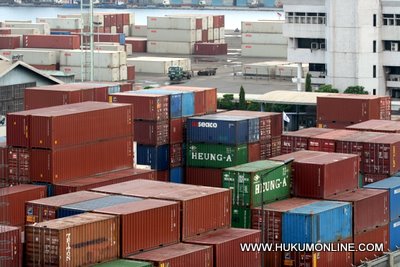
Import and Export Activities. Photo By: SGP.
In a concerted effort by the government aimed at accelerating the realization of the country’s investment targets, the Indonesia Investment Coordinating Board (BKPM) is now engaging in a cooperative effort with the Directorate General of Customs and Excise (DJBC). Under the auspices of this cooperation scheme, the BKPM may provide so-called “green company” status recommendations to certain businesses that are currently in the process of setting up their operations, and these can be used to speed up the importation of machines/equipment via the DJBC.
Franky Sibarani, the Head of the BKPM, revealed that the BKPM’s “green company” designation would mean that businesses may become eligible for certain privileges, such as exemption from the requirement to undergo physical inspections, which often end up delaying import activities. Companies in possession of such green-company status would thus only be required to undergo document inspections at customs entry points following the issuance of a Goods Release Approval Letter (Surat Persetujuan Pengeluaran Barang - SPPB), a procedure which only takes several minutes.
Mr. Sibarani explained that it was common practice to classify new businesses as high-risk companies, and that such companies normally receive a so-called “red company” designation. These red companies are obliged to undergo both physical and document inspections before SPPBs can be issued.
“This kind of processing can take between three and five days,” explained Mr. Sibarani at a press conference held at the BKPM’s Jakarta Headquarters on Monday, 14 December 2015.
Mr. Sibarani is confident that this measure will end up having a positive effect as regards the ability of new companies to speedily set up their operations. According to Sibarani, with a definite customs-clearance processing period being stated at ports of entry, the utilization of any imported machinery can be planned ahead of time.
In order to be eligible for green-company status however, a number of requirements must be first be met. For example, a company must be actively engaged in a factory’s construction phase. Moreover, the company in question must also submit their most recent Investment Activity Report (LKPM), and this report must be consistent with previous LKPMs.
A company must also make a statement that any imported goods will not be misused, and a factory construction plan, including the various plans/phases for the importation of machinery/equipment (commonly referred to as a business plan) up until the completion of the construction phase, must also be presented to the BKPM.
The BKPM has determined that initially, 48 companies will be classified as green companies and will thus be eligible to utilize the DJBC’s import-privilege facility. These companies comprise of 39 foreign-investment companies and nine domestic-investment companies. The total investment of these 48 companies amounts to IDR 127.7 trillion and 39,219 employment opportunities should eventually materialize. These 48 companies span various sectors, including transportation, textiles, farming, and many others areas of the economy, and are located in Sumatra, Java, Borneo, Sulawesi, and other areas across Indonesia.
Mr. Sibarani expressed his hoped that this new initiative would be able to improve and accelerate the investment realization of companies which have secured Principle Investment Licenses. It is anticipated that these measures will also be able to help the BKPM to achieve its investment-realization target.
“It is hoped that our 2016 investment-realization target of IDR 594.8 trillion will be successfully achieved,” asserted Mr. Sibarani.
Also commenting on this issue, Heru Pambudi, the Director General of Customs and Excise, added that companies that end up utilizing this facility would be obliged to fully implement good corporate governance (GCG) principles and to comply fully with all of the relevant laws and regulations. Mr. Pambudi also sought to remind businesses that even if they were classified as green companies, the DJBC could still undertake incidental inspections.
“Joint supervision activities may also be conducted and will hopefully see increased and improved coordination between the BKPM and the DJBC,” Mr. Pambudi concluded.
(rfs/sp)
Marcell Sihombing, Fitri N. Heriani
Import and Export Activities. Photo By: SGP.
In a concerted effort by the government aimed at accelerating the realization of the country’s investment targets, the Indonesia Investment Coordinating Board (BKPM) is now engaging in a cooperative effort with the Directorate General of Customs and Excise (DJBC). Under the auspices of this cooperation scheme, the BKPM may provide so-called “green company” status recommendations to certain businesses that are currently in the process of setting up their operations, and these can be used to speed up the importation of machines/equipment via the DJBC.
Franky Sibarani, the Head of the BKPM, revealed that the BKPM’s “green company” designation would mean that businesses may become eligible for certain privileges, such as exemption from the requirement to undergo physical inspections, which often end up delaying import activities. Companies in possession of such green-company status would thus only be required to undergo document inspections at customs entry points following the issuance of a Goods Release Approval Letter (Surat Persetujuan Pengeluaran Barang - SPPB), a procedure which only takes several minutes.
Mr. Sibarani explained that it was common practice to classify new businesses as high-risk companies, and that such companies normally receive a so-called “red company” designation. These red companies are obliged to undergo both physical and document inspections before SPPBs can be issued.
“This kind of processing can take between three and five days,” explained Mr. Sibarani at a press conference held at the BKPM’s Jakarta Headquarters on Monday, 14 December 2015.
Mr. Sibarani is confident that this measure will end up having a positive effect as regards the ability of new companies to speedily set up their operations. According to Sibarani, with a definite customs-clearance processing period being stated at ports of entry, the utilization of any imported machinery can be planned ahead of time.
In order to be eligible for green-company status however, a number of requirements must be first be met. For example, a company must be actively engaged in a factory’s construction phase. Moreover, the company in question must also submit their most recent Investment Activity Report (LKPM), and this report must be consistent with previous LKPMs.
A company must also make a statement that any imported goods will not be misused, and a factory construction plan, including the various plans/phases for the importation of machinery/equipment (commonly referred to as a business plan) up until the completion of the construction phase, must also be presented to the BKPM.
The BKPM has determined that initially, 48 companies will be classified as green companies and will thus be eligible to utilize the DJBC’s import-privilege facility. These companies comprise of 39 foreign-investment companies and nine domestic-investment companies. The total investment of these 48 companies amounts to IDR 127.7 trillion and 39,219 employment opportunities should eventually materialize. These 48 companies span various sectors, including transportation, textiles, farming, and many others areas of the economy, and are located in Sumatra, Java, Borneo, Sulawesi, and other areas across Indonesia.
Mr. Sibarani expressed his hoped that this new initiative would be able to improve and accelerate the investment realization of companies which have secured Principle Investment Licenses. It is anticipated that these measures will also be able to help the BKPM to achieve its investment-realization target.
“It is hoped that our 2016 investment-realization target of IDR 594.8 trillion will be successfully achieved,” asserted Mr. Sibarani.
Also commenting on this issue, Heru Pambudi, the Director General of Customs and Excise, added that companies that end up utilizing this facility would be obliged to fully implement good corporate governance (GCG) principles and to comply fully with all of the relevant laws and regulations. Mr. Pambudi also sought to remind businesses that even if they were classified as green companies, the DJBC could still undertake incidental inspections.
“Joint supervision activities may also be conducted and will hopefully see increased and improved coordination between the BKPM and the DJBC,” Mr. Pambudi concluded.
(rfs/sp)