


 Ada Pertanyaan? Hubungi Kami


2026 Hak Cipta Milik Hukumonline.com
Produk Pilihan


 Ada Pertanyaan? Hubungi Kami
Ari Pramuditya, Kartini L Makmur
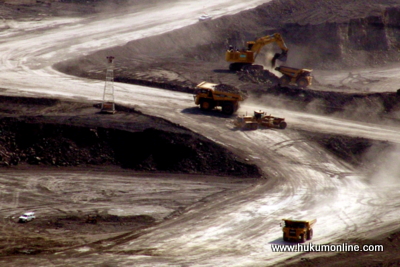
Mining site. Photo by: ADY
Criticism of banks and other financial institutions is increasing as a result of their investments in fossil fuels and other polluting sources of energy. According to Farhan Helmy, a former member of the National Council on Climate, banking and financial institutions have an important role to play in the transformation of our energy systems.
Mr. Farhan believes that institutions that provide loans to the industry should be leading the way in terms of instigating a societal paradigm shift that moves towards cleaner forms of energy, specifically from fossil fuels to more renewable sources of power.
“The flow of capital is now turning more towards green investments, and our banks and financial institutions will be at disadvantage if they cannot adapt to this change,” explained Mr. Farhan at a discussion held in Jakarta on Thursday, 6 November 2015.
In his address, Mr. Farhan outlined that green investment was now becoming a major global trend in the world and explained that the United States had just ceased construction of approximately 200 coal-fired power plants. Mr. Farhan also explained that China was starting to scale back its coal imports, while Australia had introduced a moratorium on the export of coal.
Also present at the discussion was Pius Ginting, a Study Manager for the Indonesian Forum for Environment (Wahana Lingkungan Hidup Indonesia– “WALHI”), who warned that the burning of coal could have fatal consequences and that the world’s poorer countries were at risk of major food and water shortages due to climate change if there was no reduction in our use of coal.
Mr. Ginting also explained that research carried out by the University of London demonstrated that the Earth’s temperature was sure to rise significantly in the coming decades, which in turn is likely to lead to drought.
“The study stated quite clearly that if we do not want the Earth’s temperature to rise significantly, then 85% of our remaining coal reserves should remain underground,” Mr. Ginting said.
Furthermore, Mr. Ginting also added that Indonesia was one of the world’s highest greenhouse gas emitters in terms of its use of coal. Indeed, only 15% of our remaining coal can be exploited responsibly.
Mr. Ginting expressed his concern with the proposed 35,000 megawatt (MW) project that is in the process of being launched by the government. This project will hugely increase Indonesia’s use of fossil fuels, as coal will make up approximately 60% of the energy sources that are slated to be utilized by the power project.
According to Mr. Ginting, if the government continues with the construction of the power plant, then the resulting emissions and pollution will end up having a long-term effect on Indonesia’s environment. Mr. Ginting thus believes that the financing of the power-plant project must be scrutinized and criticized.
“If we are looking to construct new power plants, then we need both national and international financing. Japan, for example, is a major player in the power-plant sector. Ironically though, just at a time when coal imports are falling all over the world, the Government, through its so-called nawacita policy, as well as other corporate initiatives, is now starting to import coal from other countries in order to compensate for our national decline in exports,” Mr. Ginting complained.
According to Mr. Ginting, the power-plant project, which is being undertaken by the Japanese, represents a huge potential problem, as the technology being used by the Japanese in Indonesia differs from that used in the Land of Rising Sun. Indeed, the technology used by the Japanese here produces ten times more greenhouse gas emissions than that used in Japan.
“Moreover, power plants in Japan produce only one twentieth of the sulfur oxide emissions that power plants in Indonesia do,” he said.
Also at the discussion was Edi Setijawan, a Deputy Director of Research and Banking Regulation for the Financial Services Authority, who stated that financing from banks that contributed to the overall emission of greenhouse gases should be comprehensively assessed, and not only from an environmental perspective.
According to Mr. Setijawan, Indonesia is currently experiencing a massive energy deficit. Moreover, the rupiah will only regain its power if the country’s energy imports decrease and the economy stabilizes as a consequence. Mr. Setijawan believes that Indonesia’s coal reserves are thus a blessing that must be used for the benefit of the country.
“Our economy will decline if we eliminate all investment in fossil-based fuels. If banks stop offering credit to the mining sector, then who else will finance our energy supply?” Mr. Setijawan concluded.
(sp)
Ari Pramuditya, Kartini L Makmur
Mining site. Photo by: ADY
Criticism of banks and other financial institutions is increasing as a result of their investments in fossil fuels and other polluting sources of energy. According to Farhan Helmy, a former member of the National Council on Climate, banking and financial institutions have an important role to play in the transformation of our energy systems.
Mr. Farhan believes that institutions that provide loans to the industry should be leading the way in terms of instigating a societal paradigm shift that moves towards cleaner forms of energy, specifically from fossil fuels to more renewable sources of power.
“The flow of capital is now turning more towards green investments, and our banks and financial institutions will be at disadvantage if they cannot adapt to this change,” explained Mr. Farhan at a discussion held in Jakarta on Thursday, 6 November 2015.
In his address, Mr. Farhan outlined that green investment was now becoming a major global trend in the world and explained that the United States had just ceased construction of approximately 200 coal-fired power plants. Mr. Farhan also explained that China was starting to scale back its coal imports, while Australia had introduced a moratorium on the export of coal.
Also present at the discussion was Pius Ginting, a Study Manager for the Indonesian Forum for Environment (Wahana Lingkungan Hidup Indonesia– “WALHI”), who warned that the burning of coal could have fatal consequences and that the world’s poorer countries were at risk of major food and water shortages due to climate change if there was no reduction in our use of coal.
Mr. Ginting also explained that research carried out by the University of London demonstrated that the Earth’s temperature was sure to rise significantly in the coming decades, which in turn is likely to lead to drought.
“The study stated quite clearly that if we do not want the Earth’s temperature to rise significantly, then 85% of our remaining coal reserves should remain underground,” Mr. Ginting said.
Furthermore, Mr. Ginting also added that Indonesia was one of the world’s highest greenhouse gas emitters in terms of its use of coal. Indeed, only 15% of our remaining coal can be exploited responsibly.
Mr. Ginting expressed his concern with the proposed 35,000 megawatt (MW) project that is in the process of being launched by the government. This project will hugely increase Indonesia’s use of fossil fuels, as coal will make up approximately 60% of the energy sources that are slated to be utilized by the power project.
According to Mr. Ginting, if the government continues with the construction of the power plant, then the resulting emissions and pollution will end up having a long-term effect on Indonesia’s environment. Mr. Ginting thus believes that the financing of the power-plant project must be scrutinized and criticized.
“If we are looking to construct new power plants, then we need both national and international financing. Japan, for example, is a major player in the power-plant sector. Ironically though, just at a time when coal imports are falling all over the world, the Government, through its so-called nawacita policy, as well as other corporate initiatives, is now starting to import coal from other countries in order to compensate for our national decline in exports,” Mr. Ginting complained.
According to Mr. Ginting, the power-plant project, which is being undertaken by the Japanese, represents a huge potential problem, as the technology being used by the Japanese in Indonesia differs from that used in the Land of Rising Sun. Indeed, the technology used by the Japanese here produces ten times more greenhouse gas emissions than that used in Japan.
“Moreover, power plants in Japan produce only one twentieth of the sulfur oxide emissions that power plants in Indonesia do,” he said.
Also at the discussion was Edi Setijawan, a Deputy Director of Research and Banking Regulation for the Financial Services Authority, who stated that financing from banks that contributed to the overall emission of greenhouse gases should be comprehensively assessed, and not only from an environmental perspective.
According to Mr. Setijawan, Indonesia is currently experiencing a massive energy deficit. Moreover, the rupiah will only regain its power if the country’s energy imports decrease and the economy stabilizes as a consequence. Mr. Setijawan believes that Indonesia’s coal reserves are thus a blessing that must be used for the benefit of the country.
“Our economy will decline if we eliminate all investment in fossil-based fuels. If banks stop offering credit to the mining sector, then who else will finance our energy supply?” Mr. Setijawan concluded.
(sp)