


 Ada Pertanyaan? Hubungi Kami


2026 Hak Cipta Milik Hukumonline.com
Produk Pilihan


 Ada Pertanyaan? Hubungi Kami
Marcell Sihombing, Fitri N. Heriani
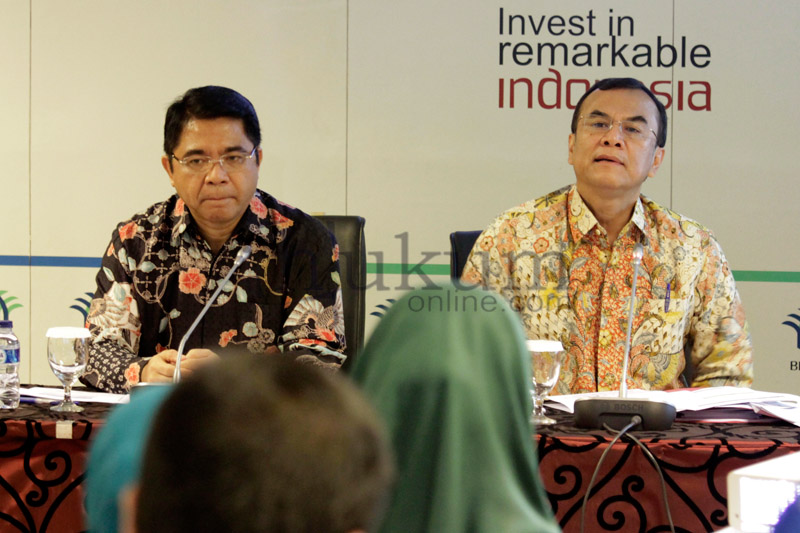
BKPM Officials. Photo by: RES
In a bid to pursue all possible avenues as regards boosting foreign investment into the country and kick starting the Indonesian economy as a whole, the Indonesia Coordinating Investment Board (BKPM) has announced a possible increase in investment from Middle-Eastern countries.
BKPM Head, Franky Sibarani, is optimistic that Middle-Eastern investment in Indonesia -especially as regards the United Arab Emirates (UAE) - may be set to increase, albeit by a relatively small amount in comparison with countries such as Japan and South Korea. President Joko Widodo’s visit to UAE last Sunday has also served to increase optimism regarding UAE investment here.
“The President’s visit hopefully piqued UAE interest with regard to investing in Indonesia,” stated Mr. Sibarani in his press release of 14 September 2015.
Mr. Sibarani also points out that, according to BKPM data, the realization of UAE investments in Indonesia during the first semester of 2015 amounted to USD 13.61 million, several times that posted during the first semester of 2014, which only amounted to USD 1.57 million.
Mr. Sibarani further revealed that the total amount of UAE investment in Indonesia for the first semesters of the 2010-2015 period amounted to some USD 107.4 million, and this is before investments in the financial and upstream oil-and-gas sectors have been added to the total.
Furthermore, applications for principal licenses from the UAE for the January-August 2015 period amounted to USD 199.80 million, which represents a 216 percent increase over last year’s total for the same period, which amounted to USD 64.9 million.
Additionally, the BKPM has also stated that the realization of investments from the Middle-East as a whole during the first semesters of the 2010-2015 period amounted to some USD 440 million, not including investment in the financial and upstream oil-and-gas sectors. These investments comprise of 235 projects, which directly employ some 6000 workers.
Also of note is the fact that investment realization from Middle-Eastern countries over the last five years has seen an average of 49 percent growth per year. Mr. Sibarani admits, however, that the abovementioned realization of investment value is still a long way from reaching maximum potential as regards Indonesian and Middle-Eastern economic cooperation. Indeed, Mr. Sibarani points out that total worldwide foreign investment by Middle-Eastern countries during the first semesters of the 2010-2015 period amounted to USD 180 billion.
In light of the above developments and figures, the BKPM is aiming to maximize the presence of the Indonesian Embassy in Abu Dhabi in order to promote Indonesian investment potential to Middle-Eastern countries.
On a positive note, the main investment sectors of most Middle-Eastern countries are in line Indonesia’s priority sectors, specifically as regards property (and the development of special-economic and industrial zones); oil, gas and mineral processing industries; the development of tourism areas; and renewable energy (geothermal, hydroelectric, solar, and biomass).
Looking further afield, the Indonesian Chamber of Commerce (KADIN) is intensifying its investment cooperation with Colombia, a country which currently holds the title of third-largest economy in Latin America. Colombia is offering business opportunities in sectors such as agro industry, and manufacturing and services, all of which offer potential profits for Indonesian companies, whether they be large-, medium- or small-scale enterprises.
ProColombia (the country’s equivalent of the BKPM) has already identified several opportunities for Indonesian companies looking to expand their businesses globally, especially as regards agro-industry sectors such as palm oil.
Indeed, according to Maria Claudia Lacouture, the President of ProColombia, in a statement made at the Indonesia-Colombia Investment Summit held in Jakarta on 14 September 2015, Colombia is a pioneering producer of high-oleat palm and boasts a sustainable and organic production system.
Mrs. Lacouture also referred to several other sectors of the Colombian economy in a bid to attract Indonesian business, including natural rubber and its derivatives, biofuel, renewable energy, fashion, IT services, software, and a number of other sectors.
Also in attendance at the recent event was Jacobus Dwihartanto, the Head of KADIN’s South American Committee, who asserted that Colombia could well become an access point to other Latin American countries that have formed trade alliances with Colombia, including Chile, Mexico, and Peru. Moreover, as Mr. Dwihartanto noted, Colombia also enjoys a Free-Trade Agreement (FTA) with the United States.
“There is great potential for Indonesian businesses in this part of the world, especially as regards the food and beverages sector, as Colombia boasts a sizeable population of 49 million citizens. Furthermore, great opportunities are also there for the taking in the Colombian furniture and automotive sectors, specifically the high demand for natural rubber from the country’s tire manufactures,” enthused Jacobus in a press release.
Commenting on the issue, KADIN’s Vice-Chair for Trade and International Economic Cooperation, Chris Kanter, asserted that, from a trade perspective, Latin America represented an important market that Indonesia should be looking to get involved with. Mr. Kanter emphasized that Colombia was similar to Indonesia with respect to its large growth and sizeable middle class, and should thus be invited to set up a product base here.
Mr. Kanter concluded that, in terms logistical transportation, the sizeable distance that lies between Indonesia and Colombia was no longer of pressing concern with regard to future economic cooperation between the two countries, as a routine flight between Indonesia and Colombia via Guangzhou in China was now operational.
(sp)
Marcell Sihombing, Fitri N. Heriani
BKPM Officials. Photo by: RES
In a bid to pursue all possible avenues as regards boosting foreign investment into the country and kick starting the Indonesian economy as a whole, the Indonesia Coordinating Investment Board (BKPM) has announced a possible increase in investment from Middle-Eastern countries.
BKPM Head, Franky Sibarani, is optimistic that Middle-Eastern investment in Indonesia -especially as regards the United Arab Emirates (UAE) - may be set to increase, albeit by a relatively small amount in comparison with countries such as Japan and South Korea. President Joko Widodo’s visit to UAE last Sunday has also served to increase optimism regarding UAE investment here.
“The President’s visit hopefully piqued UAE interest with regard to investing in Indonesia,” stated Mr. Sibarani in his press release of 14 September 2015.
Mr. Sibarani also points out that, according to BKPM data, the realization of UAE investments in Indonesia during the first semester of 2015 amounted to USD 13.61 million, several times that posted during the first semester of 2014, which only amounted to USD 1.57 million.
Mr. Sibarani further revealed that the total amount of UAE investment in Indonesia for the first semesters of the 2010-2015 period amounted to some USD 107.4 million, and this is before investments in the financial and upstream oil-and-gas sectors have been added to the total.
Furthermore, applications for principal licenses from the UAE for the January-August 2015 period amounted to USD 199.80 million, which represents a 216 percent increase over last year’s total for the same period, which amounted to USD 64.9 million.
Additionally, the BKPM has also stated that the realization of investments from the Middle-East as a whole during the first semesters of the 2010-2015 period amounted to some USD 440 million, not including investment in the financial and upstream oil-and-gas sectors. These investments comprise of 235 projects, which directly employ some 6000 workers.
Also of note is the fact that investment realization from Middle-Eastern countries over the last five years has seen an average of 49 percent growth per year. Mr. Sibarani admits, however, that the abovementioned realization of investment value is still a long way from reaching maximum potential as regards Indonesian and Middle-Eastern economic cooperation. Indeed, Mr. Sibarani points out that total worldwide foreign investment by Middle-Eastern countries during the first semesters of the 2010-2015 period amounted to USD 180 billion.
In light of the above developments and figures, the BKPM is aiming to maximize the presence of the Indonesian Embassy in Abu Dhabi in order to promote Indonesian investment potential to Middle-Eastern countries.
On a positive note, the main investment sectors of most Middle-Eastern countries are in line Indonesia’s priority sectors, specifically as regards property (and the development of special-economic and industrial zones); oil, gas and mineral processing industries; the development of tourism areas; and renewable energy (geothermal, hydroelectric, solar, and biomass).
Looking further afield, the Indonesian Chamber of Commerce (KADIN) is intensifying its investment cooperation with Colombia, a country which currently holds the title of third-largest economy in Latin America. Colombia is offering business opportunities in sectors such as agro industry, and manufacturing and services, all of which offer potential profits for Indonesian companies, whether they be large-, medium- or small-scale enterprises.
ProColombia (the country’s equivalent of the BKPM) has already identified several opportunities for Indonesian companies looking to expand their businesses globally, especially as regards agro-industry sectors such as palm oil.
Indeed, according to Maria Claudia Lacouture, the President of ProColombia, in a statement made at the Indonesia-Colombia Investment Summit held in Jakarta on 14 September 2015, Colombia is a pioneering producer of high-oleat palm and boasts a sustainable and organic production system.
Mrs. Lacouture also referred to several other sectors of the Colombian economy in a bid to attract Indonesian business, including natural rubber and its derivatives, biofuel, renewable energy, fashion, IT services, software, and a number of other sectors.
Also in attendance at the recent event was Jacobus Dwihartanto, the Head of KADIN’s South American Committee, who asserted that Colombia could well become an access point to other Latin American countries that have formed trade alliances with Colombia, including Chile, Mexico, and Peru. Moreover, as Mr. Dwihartanto noted, Colombia also enjoys a Free-Trade Agreement (FTA) with the United States.
“There is great potential for Indonesian businesses in this part of the world, especially as regards the food and beverages sector, as Colombia boasts a sizeable population of 49 million citizens. Furthermore, great opportunities are also there for the taking in the Colombian furniture and automotive sectors, specifically the high demand for natural rubber from the country’s tire manufactures,” enthused Jacobus in a press release.
Commenting on the issue, KADIN’s Vice-Chair for Trade and International Economic Cooperation, Chris Kanter, asserted that, from a trade perspective, Latin America represented an important market that Indonesia should be looking to get involved with. Mr. Kanter emphasized that Colombia was similar to Indonesia with respect to its large growth and sizeable middle class, and should thus be invited to set up a product base here.
Mr. Kanter concluded that, in terms logistical transportation, the sizeable distance that lies between Indonesia and Colombia was no longer of pressing concern with regard to future economic cooperation between the two countries, as a routine flight between Indonesia and Colombia via Guangzhou in China was now operational.
(sp)