


 Ada Pertanyaan? Hubungi Kami


2026 Hak Cipta Milik Hukumonline.com
Produk Pilihan


 Ada Pertanyaan? Hubungi Kami
Nadia Maharani
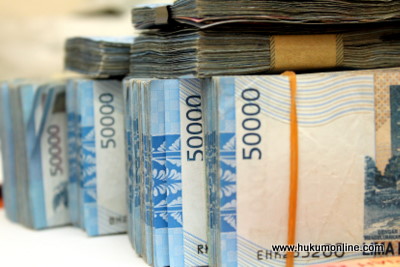 In a bid to revive the nation’s flagging economy, President Joko Widodo has challenged a number of government Ministers to formulate a grand economic policy package. After a short cabinet meeting held on 27 August, 2015, Minister Darmin Nasution (Economic Coordinator) laid out the goals of the government's comprehensive and expansive new package.
“We [the Ministers] were asked by the President to prepare a sweeping policy package capable of dealing with the current [economic] situation,” Minister Nasution explained.
Minister Nasution further elaborated that such a policy package would incorporate a number of sectors, including finance, deregulation and holiday taxes, as well as new policies. This stated objective relates to the President’s summoning of various cabinet Ministers, including the Ministers of Finance, Energy and Mineral Resources, Agriculture, Trade and Industry, and State-Owned Enterprises.
According to Minister Nasution, President Joko Widodo asked the Ministers to draft and ready a majority of the new policies over the following week. Unfortunately however, the Minister could not offer any estimation regarding the total number of policies that would eventually be issued.
Aside from aiming to improve the current economic situation, Minister Nasution also stated that the grand policy package would serve to lure a greater amount of foreign exchange into Indonesia.
Economist Rizal Halim from the University of Indonesia (UI) has previously urged the government to strengthen and consolidate its policy, while abolishing contradictory policies. Halim has also advised the government to strengthen the nation’s trust in its government by offering a positive signal to the market and society as a whole.
“The government should integrate upstream and downstream policies, and not just pursue popularity. Because the reality of the situation is that high approval ratings will not be able to deal with issues of exchange-rate pressure, cartels, food-supply scarcity, and so on,” Mr. Halim insisted on Wednesday.
According to Mr. Halim, the current economic situation needs to be looked at as an orchestra, one in which the conductor knows every note and tempo by heart. Any grand “orchestral” economic strategy, therefore, cannot flourish if there is only a sporadic application of policy, or if policy becomes too fragmented and sectoral.
With regard to the creation of specific policies, the economist stressed the difference between public need and the needs of the business community.
“In terms of society, its needs are simple and revolve around the satisfactory fulfillment of everyday requirements,” explained the economist.
In contrast, according to Mr. Halim, businesses need to prioritize a conducive business climate and activities. However, Halim also expressed his concerns regarding the situation over the forthcoming month, as scheduled payments on state and private loans become due and a number of foreign companies continue to declare bankruptcy. According to Mr. Halim, decisive and immediate action needs to be taken in order to prevent the economic outlook from worsening.
(sp)
Nadia Maharani
In a bid to revive the nation’s flagging economy, President Joko Widodo has challenged a number of government Ministers to formulate a grand economic policy package. After a short cabinet meeting held on 27 August, 2015, Minister Darmin Nasution (Economic Coordinator) laid out the goals of the government's comprehensive and expansive new package.“We [the Ministers] were asked by the President to prepare a sweeping policy package capable of dealing with the current [economic] situation,” Minister Nasution explained.
Minister Nasution further elaborated that such a policy package would incorporate a number of sectors, including finance, deregulation and holiday taxes, as well as new policies. This stated objective relates to the President’s summoning of various cabinet Ministers, including the Ministers of Finance, Energy and Mineral Resources, Agriculture, Trade and Industry, and State-Owned Enterprises.
According to Minister Nasution, President Joko Widodo asked the Ministers to draft and ready a majority of the new policies over the following week. Unfortunately however, the Minister could not offer any estimation regarding the total number of policies that would eventually be issued.
Aside from aiming to improve the current economic situation, Minister Nasution also stated that the grand policy package would serve to lure a greater amount of foreign exchange into Indonesia.
Economist Rizal Halim from the University of Indonesia (UI) has previously urged the government to strengthen and consolidate its policy, while abolishing contradictory policies. Halim has also advised the government to strengthen the nation’s trust in its government by offering a positive signal to the market and society as a whole.
“The government should integrate upstream and downstream policies, and not just pursue popularity. Because the reality of the situation is that high approval ratings will not be able to deal with issues of exchange-rate pressure, cartels, food-supply scarcity, and so on,” Mr. Halim insisted on Wednesday.
According to Mr. Halim, the current economic situation needs to be looked at as an orchestra, one in which the conductor knows every note and tempo by heart. Any grand “orchestral” economic strategy, therefore, cannot flourish if there is only a sporadic application of policy, or if policy becomes too fragmented and sectoral.
With regard to the creation of specific policies, the economist stressed the difference between public need and the needs of the business community.
“In terms of society, its needs are simple and revolve around the satisfactory fulfillment of everyday requirements,” explained the economist.
In contrast, according to Mr. Halim, businesses need to prioritize a conducive business climate and activities. However, Halim also expressed his concerns regarding the situation over the forthcoming month, as scheduled payments on state and private loans become due and a number of foreign companies continue to declare bankruptcy. According to Mr. Halim, decisive and immediate action needs to be taken in order to prevent the economic outlook from worsening.
(sp)