


 Ada Pertanyaan? Hubungi Kami


2026 Hak Cipta Milik Hukumonline.com
Produk Pilihan


 Ada Pertanyaan? Hubungi Kami
Marcell Sihombing, Kartini L. Makmur
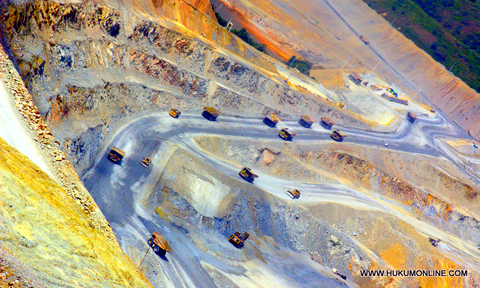 A severe drop in the price of coal is causing mining companies to discontinue their contracts and many major players in the industry have been surprised by the recent precipitous fall in the prices of oil, gas and coal. That's according to Indonesia's Minister for Energy and Mineral Resources (ESDM), Sudirman Said.
The coal price has been dropping since 2014, most notably when the price last June fell to just USD 73.64/ton. Overall, the price of coal has dropped by 19% (USD 14.05/ton) when compared with last year’s average price.
Coal is no longer as profitable as it has been in the past, nevertheless Minister Said has emphasized that the government’s continued promotion of downstream policies and extension of work contracts (KK) should ultimately boost prices, and the minister also maintains that abandoning investments would be a mistake.
“Coal mining contracts are able to generate millions of dollars in revenues, however calculations of projected profits are usually made two years prior to the end of a given contract. There is thus an anticipation of huge future profits as these are all calculated in advance,” explained Minister Said at the Office of the Director General for Minerals and Coal on Wednesday.
Minister Said asserted that the free falling coal price had not been considered a problem until small-scale mining businesses found that they could no longer sell their coal at competitive prices.
Around half of the coal businesses located in the country have experienced a reduction in their profits recently, and this in turn is discouraging coal and mining companies from applying for contract extensions, as they are failing to meet their predicted financial-performance projections. According to Minister Said this represents a kind of natural-selection process.
“This drop in price will automatically filter out some of the weaker competitors, allowing only serious businesses to remain within the coal industry. Therefore, mine owners need to be more concerned about restructuring their businesses,” stated Minister Said.
Regarding the recent reduction in profits faced by various coal-mining companies, Minister Said has urged that the companies in question remain strong and has stated that the government intends to maximize its role in order to ensure the continuous operation of these businesses. However, the minister has also stated that mining companies should not solely pursue profits but also aim for a sustainable business model instead.
Leksono Poeranto, the Director of PT Jorong Barutama Greston, has admitted that the large drop in the coal-and-mining commodity price is making companies reluctant to sign new KK and coal-mining business working contracts (Perjanjian Karya Pengusahaan Pertambangan Batu Bara – PKP2B).
Mr. Poeranto’s company is among the businesses that signed an amendment to PKP2B. According to Mr. Poeranto, despite fulfilling the necessary requirements for the signing of the PKP2B, his company nevertheless remains vigilant with regard to falling price of coal.
“Our company, which hails from Southern Borneo, needs to work on matters of innovation and efficiency so that the drop in prices doesn't hurt us too badly,” explained Mr. Poeranto.
However, Mr. Poeranto also affirmed that his company would undertake cost-efficiency measures by reducing their maintenance periods and diverting funds in order to finance production in a bid to retain their employees.
“Layoffs will not be pursued, as our profit margin has not weakened significantly. The recent situation in the market is the result of a general price reduction. When the oil price drops, all mineral businesses relating to oil and gas tend to suffer drops as well,” Mr. Poeranto concluded.
(hot/ja/sp)
Marcell Sihombing, Kartini L. Makmur
A severe drop in the price of coal is causing mining companies to discontinue their contracts and many major players in the industry have been surprised by the recent precipitous fall in the prices of oil, gas and coal. That's according to Indonesia's Minister for Energy and Mineral Resources (ESDM), Sudirman Said.The coal price has been dropping since 2014, most notably when the price last June fell to just USD 73.64/ton. Overall, the price of coal has dropped by 19% (USD 14.05/ton) when compared with last year’s average price.
Coal is no longer as profitable as it has been in the past, nevertheless Minister Said has emphasized that the government’s continued promotion of downstream policies and extension of work contracts (KK) should ultimately boost prices, and the minister also maintains that abandoning investments would be a mistake.
“Coal mining contracts are able to generate millions of dollars in revenues, however calculations of projected profits are usually made two years prior to the end of a given contract. There is thus an anticipation of huge future profits as these are all calculated in advance,” explained Minister Said at the Office of the Director General for Minerals and Coal on Wednesday.
Minister Said asserted that the free falling coal price had not been considered a problem until small-scale mining businesses found that they could no longer sell their coal at competitive prices.
Around half of the coal businesses located in the country have experienced a reduction in their profits recently, and this in turn is discouraging coal and mining companies from applying for contract extensions, as they are failing to meet their predicted financial-performance projections. According to Minister Said this represents a kind of natural-selection process.
“This drop in price will automatically filter out some of the weaker competitors, allowing only serious businesses to remain within the coal industry. Therefore, mine owners need to be more concerned about restructuring their businesses,” stated Minister Said.
Regarding the recent reduction in profits faced by various coal-mining companies, Minister Said has urged that the companies in question remain strong and has stated that the government intends to maximize its role in order to ensure the continuous operation of these businesses. However, the minister has also stated that mining companies should not solely pursue profits but also aim for a sustainable business model instead.
Leksono Poeranto, the Director of PT Jorong Barutama Greston, has admitted that the large drop in the coal-and-mining commodity price is making companies reluctant to sign new KK and coal-mining business working contracts (Perjanjian Karya Pengusahaan Pertambangan Batu Bara – PKP2B).
Mr. Poeranto’s company is among the businesses that signed an amendment to PKP2B. According to Mr. Poeranto, despite fulfilling the necessary requirements for the signing of the PKP2B, his company nevertheless remains vigilant with regard to falling price of coal.
“Our company, which hails from Southern Borneo, needs to work on matters of innovation and efficiency so that the drop in prices doesn't hurt us too badly,” explained Mr. Poeranto.
However, Mr. Poeranto also affirmed that his company would undertake cost-efficiency measures by reducing their maintenance periods and diverting funds in order to finance production in a bid to retain their employees.
“Layoffs will not be pursued, as our profit margin has not weakened significantly. The recent situation in the market is the result of a general price reduction. When the oil price drops, all mineral businesses relating to oil and gas tend to suffer drops as well,” Mr. Poeranto concluded.
(hot/ja/sp)