


 Ada Pertanyaan? Hubungi Kami


2026 Hak Cipta Milik Hukumonline.com
Produk Pilihan


 Ada Pertanyaan? Hubungi Kami
Marcell Sihombing, Muhammad Yasin
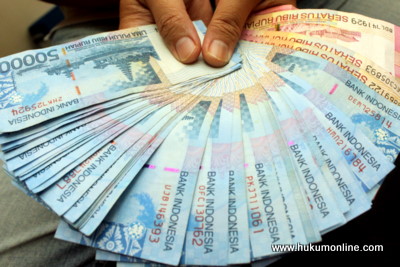 With the ultimate aim of creating a cashless society, the government is continuing to reduce the number of banknotes available for daily transactions. In order to consolidate this goal, the government is also currently preparing a Draft Bill on the Restriction of Banknote Transactions (Draft Bill).
The Draft Bill will complement existing legislation regulating banknotes, such as Law No. 7 of 2011on Currency, and Law No. 8 of 2010on the Prevention and Eradication of Money Laundering Crimes, and will restrict the use of banknotes for transactions above a certain value. The government considers such restrictions to be highly beneficial and the Draft Bill is seen as an integral part of an ongoing effort to eradicate corruption and money laundering.
In order to gain some useful input into the bill, the government and the drafting team have been holding discussions with various stakeholders over at the office of the Directorate General of Laws and Regulations (Direktorat Jenderal Peraturan Perundang-undangan/Ditjen PP).
Yunus Husein, head of the drafting team, points out that the new formulation should be applicable in various situations. Husein asserts that payment with paper money has proven itself to have a number of drawbacks, for example the causing of long queues in front of toll-road payment booths.
“Cash wastes too much energy and is inefficient,” stated Mr. Husein.
Another noted example of the problems that cash can cause are the bribery cases investigated by the Corruption Eradication Commission (KPK), many of which have garnered widespread public attention. Many perpetrators have been caught red-handed by the KPK in the process of bribing government officials with millions of rupiah in banknotes.
In line with Mr. Husein’s statement, Irvan Yustiavandana, the Director of Assessment and Research at the Indonesian Financial Transaction Reports and Analysis Centre (PPATK), has revealed that out of all the cases analyzed by his institution, corruption and money laundering activities most frequently make use of cash transactions.
For example, out of 210 Cash Financial Reports (Laporan Keuangan Tunai/LKT) analyzed by PPATK, 152 cases (72%) have had a proven connection with various illegal acts of corruption. In other words, cash transactions are frequently used in the carrying out of criminal activities. According to Mr. Yustiavandana, cash is the most viable option for corruptors who are looking to avoid being tracked by financial institutions in their transactions.
From the government’s perspective, the restriction of banknote transactions also aids in the efficiency of the printing and distribution of money. As the general usage of cash in the economy falls, Bank Indonesia is saving on the physical materials needed to print money, as well as the facilities required for its storage.
Therefore, the current Draft Bill is urgently needed in order to increase efficiency, security and transaction speed, as well as to promote the ultimate goal of a cashless society and to prevent corruption and money-laundering crimes as stipulated under the recital of the Draft Bill.
The Draft Bill includes a provision mandating a non-cash payment for every transaction above IDR 100 million. This obligation will apply to transactions between individuals, as well as transactions between individuals and financial service institutions and other kinds of goods/service providers within Indonesian territory.
Adler Haymans Manurung, a permanent member of the Indonesian Chamber of Commerce (Kamar Dagang Indonesia/Kadin), agrees that greater efficiency, especially pertaining to the printing, distribution and utilization of hard cash, will be achieved through the drafting of the new bill, however he also believes that it is also very important to raise public awareness regarding the benefits of non-cash payments. Such awareness may be achieved if the government implements a non-cash, tax-payment mechanism for individuals or company taxpayers.
The Draft Bill is already included under the 2015-2019 National Legislation Program (Prolegnas), according to Wicipto Setiadi, the Director General on Laws and Regulations at the Ministry of Law and Human Rights, who hopes that the Draft Bill will be prioritized for immediate finalization so that the discussion process may be brought to a swift conclusion. Mr. Setiadi is optimistic that the bill’s targets are achievable, as long as the formulating process goes well.
“A nudge, that is all it takes,” stated Mr. Setiadi in his opening speech at the Draft Bill socialization event.
(hot/ja/sp)
Marcell Sihombing, Muhammad Yasin
With the ultimate aim of creating a cashless society, the government is continuing to reduce the number of banknotes available for daily transactions. In order to consolidate this goal, the government is also currently preparing a Draft Bill on the Restriction of Banknote Transactions (Draft Bill).The Draft Bill will complement existing legislation regulating banknotes, such as Law No. 7 of 2011on Currency, and Law No. 8 of 2010on the Prevention and Eradication of Money Laundering Crimes, and will restrict the use of banknotes for transactions above a certain value. The government considers such restrictions to be highly beneficial and the Draft Bill is seen as an integral part of an ongoing effort to eradicate corruption and money laundering.
In order to gain some useful input into the bill, the government and the drafting team have been holding discussions with various stakeholders over at the office of the Directorate General of Laws and Regulations (Direktorat Jenderal Peraturan Perundang-undangan/Ditjen PP).
Yunus Husein, head of the drafting team, points out that the new formulation should be applicable in various situations. Husein asserts that payment with paper money has proven itself to have a number of drawbacks, for example the causing of long queues in front of toll-road payment booths.
“Cash wastes too much energy and is inefficient,” stated Mr. Husein.
Another noted example of the problems that cash can cause are the bribery cases investigated by the Corruption Eradication Commission (KPK), many of which have garnered widespread public attention. Many perpetrators have been caught red-handed by the KPK in the process of bribing government officials with millions of rupiah in banknotes.
In line with Mr. Husein’s statement, Irvan Yustiavandana, the Director of Assessment and Research at the Indonesian Financial Transaction Reports and Analysis Centre (PPATK), has revealed that out of all the cases analyzed by his institution, corruption and money laundering activities most frequently make use of cash transactions.
For example, out of 210 Cash Financial Reports (Laporan Keuangan Tunai/LKT) analyzed by PPATK, 152 cases (72%) have had a proven connection with various illegal acts of corruption. In other words, cash transactions are frequently used in the carrying out of criminal activities. According to Mr. Yustiavandana, cash is the most viable option for corruptors who are looking to avoid being tracked by financial institutions in their transactions.
From the government’s perspective, the restriction of banknote transactions also aids in the efficiency of the printing and distribution of money. As the general usage of cash in the economy falls, Bank Indonesia is saving on the physical materials needed to print money, as well as the facilities required for its storage.
Therefore, the current Draft Bill is urgently needed in order to increase efficiency, security and transaction speed, as well as to promote the ultimate goal of a cashless society and to prevent corruption and money-laundering crimes as stipulated under the recital of the Draft Bill.
The Draft Bill includes a provision mandating a non-cash payment for every transaction above IDR 100 million. This obligation will apply to transactions between individuals, as well as transactions between individuals and financial service institutions and other kinds of goods/service providers within Indonesian territory.
Adler Haymans Manurung, a permanent member of the Indonesian Chamber of Commerce (Kamar Dagang Indonesia/Kadin), agrees that greater efficiency, especially pertaining to the printing, distribution and utilization of hard cash, will be achieved through the drafting of the new bill, however he also believes that it is also very important to raise public awareness regarding the benefits of non-cash payments. Such awareness may be achieved if the government implements a non-cash, tax-payment mechanism for individuals or company taxpayers.
The Draft Bill is already included under the 2015-2019 National Legislation Program (Prolegnas), according to Wicipto Setiadi, the Director General on Laws and Regulations at the Ministry of Law and Human Rights, who hopes that the Draft Bill will be prioritized for immediate finalization so that the discussion process may be brought to a swift conclusion. Mr. Setiadi is optimistic that the bill’s targets are achievable, as long as the formulating process goes well.
“A nudge, that is all it takes,” stated Mr. Setiadi in his opening speech at the Draft Bill socialization event.
(hot/ja/sp)