


 Ada Pertanyaan? Hubungi Kami


2026 Hak Cipta Milik Hukumonline.com
Produk Pilihan


 Ada Pertanyaan? Hubungi Kami
Nadia Maharani, Agus Sahbani
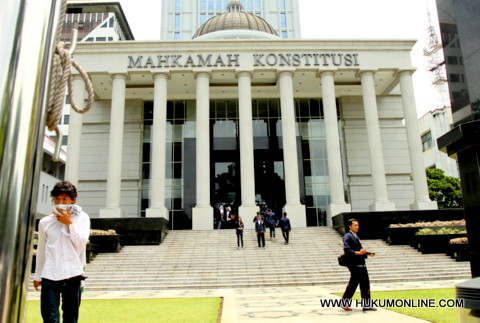 The judicial review of the Agrarian Law and Marriage Law has now moved on to the next stage at the Constitutional Court. In the wake of applicant Ike Farida giving her testimony, the Constitutional Court has invited the government to explain its stance regarding Articles 21 of the Agrarian Law, as well as Articles 29 and 35 of the Marriage Law—which are considered discriminatory by the applicant, who is married to a Japanese man.
Following Mrs. Farida’s testimony, the Government has stated that it sympathizes with the setbacks that the applicant has suffered in her bid to secure property through Indonesia’s Right To Property (Hak Milik – “HM”) and Right To Build (Hak Guna Bangunan – “HGB”) rules and that it understands the need for new legislation in order to overcome the problems that are faced by mixed-marriage couples here.
“We acknowledge the efforts made by the applicant, including her writing a letter to the Director General of Human Rights, as well as asking for a legal opinion from the Ministry of Agriculture, however justice has not been served in this instance,” explained Mualimin Abdi, the Director General of Human Rights at the Ministry of Law and Human Rights, who is representing the government in this case.
Mr. Abdi admitted that similar setbacks were faced by all mixed-marriage couples in Indonesia, but that no legal instrument was currently available to regulate the complaints reported by mixed-marriage couples. The government hopes that the Constitutional Court will be able to provide a firmer legal platform for mixed-marriage couples to stand on.
“I am certain that many Indonesians married to foreign citizens have had to endure considerable setbacks regarding the issue of property. This matter needs to be collectively brainstormed,” suggested Mr. Abdi.
In his statement for the government however, Mr. Abdi failed to provide any details as to whether or not the requested provision contradicted the 1945 Constitution. The government currently only provides support to the Constitutional Court in order to create a set of grounded principles that offer protection to every citizen.
“Once decided, further steps to manage the setbacks faced by the petitioner will be thought through in order that similar problems can be avoided in the future and so that the constitutional losses sustained by those in mixed marriages can be regained. The government has thus requested that the panel of judges make an absolute and just decision,” Mr. Abdi concluded in defense of the government’s stance.
Justice I Dewa Gede Palguna also confirmed that the case had raised government concerns about the lack of regulation regarding mixed marriages. Justice Palguna further questioned the official figures regarding Indonesian citizens, women in particular, who were married to foreign citizens.
“Does the government possess complete data on the number of mixed-marriage couples? This sociological fact should become a form of data for the government, so that some sort of presidential initiative in the form of a law to deal with this issue can be formulated, since this is a very serious matter. The Supreme Court has limited authority and the House of Representatives should also be consulted,” stated Justice Palguna.
As a wakeup call to the government, the applicant in the above case has demonstrated that any Indonesian marrying a foreign citizen without a prenuptial agreement will never be able to own property through the HM or HGB rules. The applicant has also shown that, even when a prenup. has been drawn up, mixed-marriage couples are still unable to purchase property, due to the current obligation to release such rights within a year.
As many personal stories of frustration and despair have arisen over the years as a result of the current legislation, the applicant in this case bravely decided to challenge the prevailing legal strictures due to their vague and discriminatory character.
(hot/ja/sp)
Nadia Maharani, Agus Sahbani
The judicial review of the Agrarian Law and Marriage Law has now moved on to the next stage at the Constitutional Court. In the wake of applicant Ike Farida giving her testimony, the Constitutional Court has invited the government to explain its stance regarding Articles 21 of the Agrarian Law, as well as Articles 29 and 35 of the Marriage Law—which are considered discriminatory by the applicant, who is married to a Japanese man.Following Mrs. Farida’s testimony, the Government has stated that it sympathizes with the setbacks that the applicant has suffered in her bid to secure property through Indonesia’s Right To Property (Hak Milik – “HM”) and Right To Build (Hak Guna Bangunan – “HGB”) rules and that it understands the need for new legislation in order to overcome the problems that are faced by mixed-marriage couples here.
“We acknowledge the efforts made by the applicant, including her writing a letter to the Director General of Human Rights, as well as asking for a legal opinion from the Ministry of Agriculture, however justice has not been served in this instance,” explained Mualimin Abdi, the Director General of Human Rights at the Ministry of Law and Human Rights, who is representing the government in this case.
Mr. Abdi admitted that similar setbacks were faced by all mixed-marriage couples in Indonesia, but that no legal instrument was currently available to regulate the complaints reported by mixed-marriage couples. The government hopes that the Constitutional Court will be able to provide a firmer legal platform for mixed-marriage couples to stand on.
“I am certain that many Indonesians married to foreign citizens have had to endure considerable setbacks regarding the issue of property. This matter needs to be collectively brainstormed,” suggested Mr. Abdi.
In his statement for the government however, Mr. Abdi failed to provide any details as to whether or not the requested provision contradicted the 1945 Constitution. The government currently only provides support to the Constitutional Court in order to create a set of grounded principles that offer protection to every citizen.
“Once decided, further steps to manage the setbacks faced by the petitioner will be thought through in order that similar problems can be avoided in the future and so that the constitutional losses sustained by those in mixed marriages can be regained. The government has thus requested that the panel of judges make an absolute and just decision,” Mr. Abdi concluded in defense of the government’s stance.
Justice I Dewa Gede Palguna also confirmed that the case had raised government concerns about the lack of regulation regarding mixed marriages. Justice Palguna further questioned the official figures regarding Indonesian citizens, women in particular, who were married to foreign citizens.
“Does the government possess complete data on the number of mixed-marriage couples? This sociological fact should become a form of data for the government, so that some sort of presidential initiative in the form of a law to deal with this issue can be formulated, since this is a very serious matter. The Supreme Court has limited authority and the House of Representatives should also be consulted,” stated Justice Palguna.
As a wakeup call to the government, the applicant in the above case has demonstrated that any Indonesian marrying a foreign citizen without a prenuptial agreement will never be able to own property through the HM or HGB rules. The applicant has also shown that, even when a prenup. has been drawn up, mixed-marriage couples are still unable to purchase property, due to the current obligation to release such rights within a year.
As many personal stories of frustration and despair have arisen over the years as a result of the current legislation, the applicant in this case bravely decided to challenge the prevailing legal strictures due to their vague and discriminatory character.
(hot/ja/sp)