


 Ada Pertanyaan? Hubungi Kami


2026 Hak Cipta Milik Hukumonline.com
Produk Pilihan


 Ada Pertanyaan? Hubungi Kami
Marcell Sihombing, Rofiq Hidayat
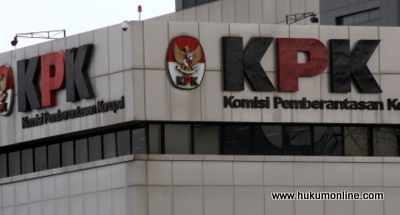 The Corruption Eradication Commission (KPK) has been the center of attention this month due to the debate on its wiretapping authority. The idea of revising KPK’s power through an amendment to Law No. 30 of 2002 on KPK (KPK Law) seems to be gathering momentum on a near daily basis.
The government, represented by the Minister of Law and Human Rights Yasonna Laoly, even suggested that the amendment to KPK Law to be included under the National Legislation Program (Prolegnas) 2015.
The parliament shares the government views and officially included the amendment on the KPK Law into the Priority Prolegnas 2015 list. The amendment replaces Draft Bill on Balancing Regional Budget, which will be put into the Priority Prolegnas in 2016 instead.
Sareh Wiyono, Chairman of the House’s Legislative Office (Baleg), explained that the amendment had already been included under the long-term National Legislation Program 2015-2019. However, Minister Laoly suggested including the draft bill in the current Priority Prolegnas due to the urgent situation.
One issue being raised is KPK’s wiretapping authority seems to violate basic human rights, as it is conducted without proper due process. There is also the need to synergize the authority to prosecute between the Attorney General Offfice and KPK.
“These arguments are the reason why Baleg agreed with the government’s suggestion to include the amendment under the 2015 Prolegnas,” said Mr. Wiyono.
Commenting on the issue, Desmon Mahesa, Deputy Chairman of Commission III, believes that the amendment will take quite some time, due to the fact that the parliament is currently discussing two other important pieces of legislation, a Draft Bill on the Criminal Code (RKUHP) and a Draft Bill on Criminal Procedural Law (RKUHAP).
Lawmaker Mahesa asserts that it is better to conclude the basic legislation first—RKUHP and RKUHAP—and then proceed to supporting legislation such as the KPK Law, Supreme Court Law, Prosecutors Law, and National Police Law.
Taking a different approach on this matter, lawmaker Masinton Pasaribu (Commission III) expressed the opinion that the amendment to the KPK Law is already included in the long-term plan, therefore there is no urgency to include it this year.
(hot/kc)
Marcell Sihombing, Rofiq Hidayat
The Corruption Eradication Commission (KPK) has been the center of attention this month due to the debate on its wiretapping authority. The idea of revising KPK’s power through an amendment to Law No. 30 of 2002 on KPK (KPK Law) seems to be gathering momentum on a near daily basis.The government, represented by the Minister of Law and Human Rights Yasonna Laoly, even suggested that the amendment to KPK Law to be included under the National Legislation Program (Prolegnas) 2015.
The parliament shares the government views and officially included the amendment on the KPK Law into the Priority Prolegnas 2015 list. The amendment replaces Draft Bill on Balancing Regional Budget, which will be put into the Priority Prolegnas in 2016 instead.
Sareh Wiyono, Chairman of the House’s Legislative Office (Baleg), explained that the amendment had already been included under the long-term National Legislation Program 2015-2019. However, Minister Laoly suggested including the draft bill in the current Priority Prolegnas due to the urgent situation.
One issue being raised is KPK’s wiretapping authority seems to violate basic human rights, as it is conducted without proper due process. There is also the need to synergize the authority to prosecute between the Attorney General Offfice and KPK.
“These arguments are the reason why Baleg agreed with the government’s suggestion to include the amendment under the 2015 Prolegnas,” said Mr. Wiyono.
Commenting on the issue, Desmon Mahesa, Deputy Chairman of Commission III, believes that the amendment will take quite some time, due to the fact that the parliament is currently discussing two other important pieces of legislation, a Draft Bill on the Criminal Code (RKUHP) and a Draft Bill on Criminal Procedural Law (RKUHAP).
Lawmaker Mahesa asserts that it is better to conclude the basic legislation first—RKUHP and RKUHAP—and then proceed to supporting legislation such as the KPK Law, Supreme Court Law, Prosecutors Law, and National Police Law.
Taking a different approach on this matter, lawmaker Masinton Pasaribu (Commission III) expressed the opinion that the amendment to the KPK Law is already included in the long-term plan, therefore there is no urgency to include it this year.
(hot/kc)