


 Ada Pertanyaan? Hubungi Kami


2026 Hak Cipta Milik Hukumonline.com
Produk Pilihan


 Ada Pertanyaan? Hubungi Kami
Marcell Sihombing, Kartini L. Makmur
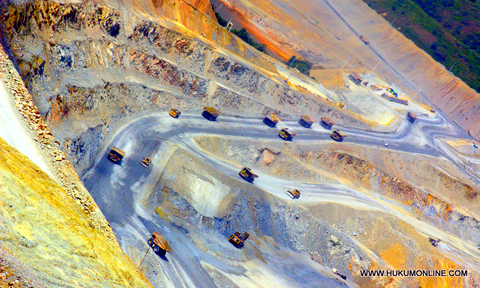 After its implementation in early 2014, the mandatory smelter policy has been the subject of controversy within the mining sector, especially for foreign mining companies. Despite criticisms, the government has decided to maintain the policy after considering its significant contribution to reducing unemployment.
Andrinof Chaniago, Minister of National Development Planning/Chairman of the National Development Planning Board, explained that the government has targeted smelter construction to provide around 350 thousand job opportunities by 2016. The government also supports mining companies that integrate downstream and upstream mining activities or add additional value to production processes.
Regarding job opportunities, the Minister has said that the government will also encourage other sectors, such as the agriculture and maritime sectors, to avoid dependency on mining activities. The agricultural sector could be developed into an agro-industry, while maritime and fisheries into fisheries or maritime industries. Tourism is also seen to have significant potential, concluded the Minister.
Bambang Gatot, Director General of Minerals and Coal, commented that smelter construction progress varies greatly. According to him, 25 out of 80 companies have already executed 80 percent of their smelter construction, while the rest are just started their projects.
Regarding such variation, Mr. Gatot thinks that the government could offer some sort of leniency to companies that have already committed in building smelter facilities. According to him, the prohibition on raw mineral exports has its own disadvantages, especially for un-substituted intermediate products. He suggesting the government could grant certain export leniency on raw minerals for companies with significant smelter construction progress.
(hot/kc)
Marcell Sihombing, Kartini L. Makmur
After its implementation in early 2014, the mandatory smelter policy has been the subject of controversy within the mining sector, especially for foreign mining companies. Despite criticisms, the government has decided to maintain the policy after considering its significant contribution to reducing unemployment.Andrinof Chaniago, Minister of National Development Planning/Chairman of the National Development Planning Board, explained that the government has targeted smelter construction to provide around 350 thousand job opportunities by 2016. The government also supports mining companies that integrate downstream and upstream mining activities or add additional value to production processes.
Regarding job opportunities, the Minister has said that the government will also encourage other sectors, such as the agriculture and maritime sectors, to avoid dependency on mining activities. The agricultural sector could be developed into an agro-industry, while maritime and fisheries into fisheries or maritime industries. Tourism is also seen to have significant potential, concluded the Minister.
Bambang Gatot, Director General of Minerals and Coal, commented that smelter construction progress varies greatly. According to him, 25 out of 80 companies have already executed 80 percent of their smelter construction, while the rest are just started their projects.
Regarding such variation, Mr. Gatot thinks that the government could offer some sort of leniency to companies that have already committed in building smelter facilities. According to him, the prohibition on raw mineral exports has its own disadvantages, especially for un-substituted intermediate products. He suggesting the government could grant certain export leniency on raw minerals for companies with significant smelter construction progress.
(hot/kc)