


 Ada Pertanyaan? Hubungi Kami


2026 Hak Cipta Milik Hukumonline.com
Produk Pilihan


 Ada Pertanyaan? Hubungi Kami
Nadia Maharani, Agus Sahbani
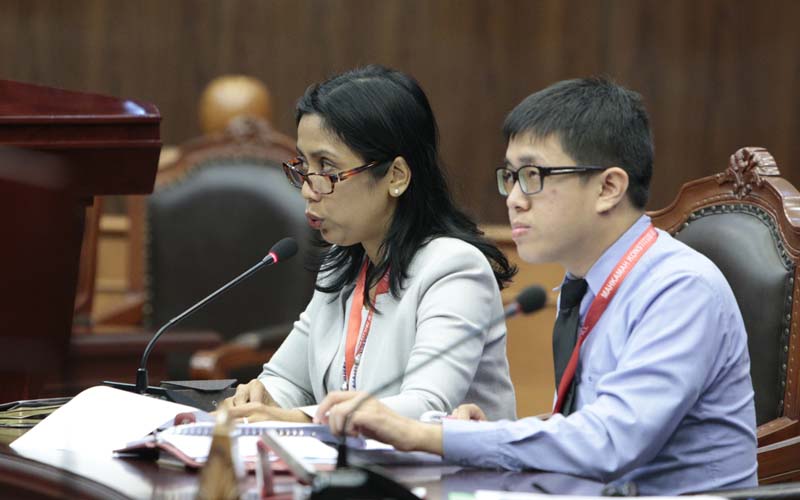 A mixed marriage couple recently filed a judicial review petition with the Constitutional Court, challenging Law No. 1 of 1974 on Marriage (Marriage Law) and Law No. 5 of 1960 of Basic Agrarian Provisions (Agrarian Law). The couple argues that both laws hamper the rights of mixed marriage couples, especially in regard to property ownership.
Ike Farida, applicant in the judicial review, said that the current legal framework hampers her to right to own an apartment in Indonesia (hak milik satuan rumah susun). She explained that the provisions on this prohibition can be found under Articles 21 and 36 of the Agrarian Law, as well as Articles 29 and 35 of the Marriage Law.
Under the Agrarian Law, Article 21 states that only Indonesian citizens have the right to property, and foreigners, including Indonesian citizens that have denounced his/her citizenship, do not have the right to hold the property in question. Further, Article 36 (1) states that the right to build (hak guna bangunan) may only be held by Indonesian citizens and Indonesian legal entities. In regard to the Marriage Law, Articles 29 and 35 provide for marriages to be conducted in front of a marriage registrar official.
In her opening statement, Mrs. Farida asserted that she never denounced her Indonesian citizenship despite being married to a Japanese man since 1990s. Mrs. Farida also provided various legal documents such including proof of citizenship.
Part of the impetus for Mrs.Farida’s legal challenged started in September 2012 when she purchased an apartment making full payment. Unfotunately, the purchase was unilaterally terminated by the leasing department due to her husband’s citizenship.
“After paying in full, the flat was never handed over, the purchase was even cancelled saying that my husband is a foreigner and there is nomarital consent.” said Ike.
The leasing department using the Agrarian Law as a basis, responded by saying that a female of Indonesian citizenship does not have the right to property or the right to build if she is married to a foreigner.
Mrs. Farida is arguing that an “Indonesian citizen” under the Agrarian Law refers to those whom are not yet married or is married to other citizens of the same nationality. In other words, this definition contradicts the objective of 1945 Constitution
“There is not a word stating having todifferentiate between an Indonesian citizen and a foreign citizen as implemented in Article 2 of Law No. 12 of 2006 on citizenship,” said Ike.
Mrs. Farida further notes a contradiction between Article 28H (4) of the 1945 Constitution stating the right to property for every Indonesian citizens, and Article 21 (3) of the Agrarian Law which excludes an Indonesian in a mixed marriage the right to property and to build.
Based on these facts, Ike Farida argues there is discrimination under both laws. Mr. Farida brought this matter to court with the hope of seeking justice as well as better defining the word “Indonesian citizen” (WNI) toavoid confusion.
(hot/kc)
Nadia Maharani, Agus Sahbani
A mixed marriage couple recently filed a judicial review petition with the Constitutional Court, challenging Law No. 1 of 1974 on Marriage (Marriage Law) and Law No. 5 of 1960 of Basic Agrarian Provisions (Agrarian Law). The couple argues that both laws hamper the rights of mixed marriage couples, especially in regard to property ownership.Ike Farida, applicant in the judicial review, said that the current legal framework hampers her to right to own an apartment in Indonesia (hak milik satuan rumah susun). She explained that the provisions on this prohibition can be found under Articles 21 and 36 of the Agrarian Law, as well as Articles 29 and 35 of the Marriage Law.
Under the Agrarian Law, Article 21 states that only Indonesian citizens have the right to property, and foreigners, including Indonesian citizens that have denounced his/her citizenship, do not have the right to hold the property in question. Further, Article 36 (1) states that the right to build (hak guna bangunan) may only be held by Indonesian citizens and Indonesian legal entities. In regard to the Marriage Law, Articles 29 and 35 provide for marriages to be conducted in front of a marriage registrar official.
In her opening statement, Mrs. Farida asserted that she never denounced her Indonesian citizenship despite being married to a Japanese man since 1990s. Mrs. Farida also provided various legal documents such including proof of citizenship.
Part of the impetus for Mrs.Farida’s legal challenged started in September 2012 when she purchased an apartment making full payment. Unfotunately, the purchase was unilaterally terminated by the leasing department due to her husband’s citizenship.
“After paying in full, the flat was never handed over, the purchase was even cancelled saying that my husband is a foreigner and there is nomarital consent.” said Ike.
The leasing department using the Agrarian Law as a basis, responded by saying that a female of Indonesian citizenship does not have the right to property or the right to build if she is married to a foreigner.
Mrs. Farida is arguing that an “Indonesian citizen” under the Agrarian Law refers to those whom are not yet married or is married to other citizens of the same nationality. In other words, this definition contradicts the objective of 1945 Constitution
“There is not a word stating having todifferentiate between an Indonesian citizen and a foreign citizen as implemented in Article 2 of Law No. 12 of 2006 on citizenship,” said Ike.
Mrs. Farida further notes a contradiction between Article 28H (4) of the 1945 Constitution stating the right to property for every Indonesian citizens, and Article 21 (3) of the Agrarian Law which excludes an Indonesian in a mixed marriage the right to property and to build.
Based on these facts, Ike Farida argues there is discrimination under both laws. Mr. Farida brought this matter to court with the hope of seeking justice as well as better defining the word “Indonesian citizen” (WNI) toavoid confusion.
(hot/kc)