


 Ada Pertanyaan? Hubungi Kami


2026 Hak Cipta Milik Hukumonline.com
Produk Pilihan


 Ada Pertanyaan? Hubungi Kami
Marcell Sihombing, Rofiq Hidayat
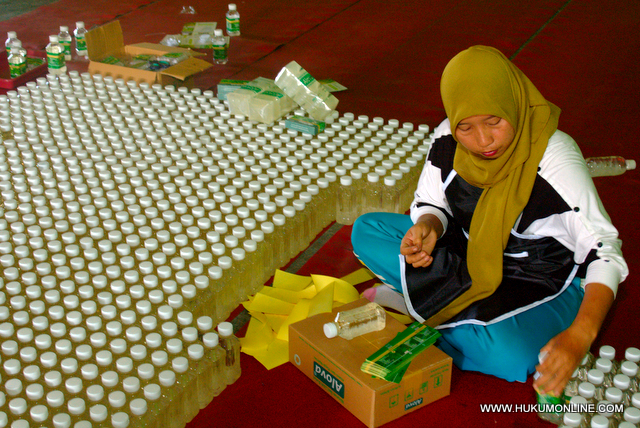 In an effort to boost and strengthen micro-small-medium businesses (UMKM), the government and the House are currently discussing a Draft Bill on Guarantees (Draft Bill). Once passed, it will help UMKMs to obtain financing facilities.
In a discussion held at the parliament, economist Ichsanurdin Noorsy pointed out several shortcomings of the Draft Bill. First, Mr. Noorsy says that the aim of the Draft Bill to protect society while broadening financing access for UMKM only solves a small part of the problem.
Mr. Noorsy explained that the Draft Bill might be limited in its contribution to preparations for the upcoming ASEAN Economic Community (AEC). He explained that domestic UMKMs would be a sacrificial lamb under the AEC, because unlike Japan or China, Indonesian UMKM have yet to be sufficiently integrated into the broader industrial sectors.
Mr. Noorsy also highlighted the fact that the Draft Bill still incorporates Law No. 17 of 2012 on Cooperatives, which has already been declared null and void by the Constitutional Court (See ILB No. 2412). Should the Draft Bill be passed, it could go straight to the Constitutional Court for this very reason.
Finally, Mr. Noorsy said that several articles remain unclear. For instance, the Financial Services Authority (OJK) was not appointed as the supervisor of guarantee institutions. This mistake may provide small gaps for foreign parties to intervene.
“This Draft Bill needs a major overhaul. The biggest mistake of this draft bill is heavy consideration on financial aspects, while neglecting UMKM’s social aspects,” Mr. Noorsy concluded.
Lawmaker Muhammad Misbakhun (Commission XI) acknowledged the Draft Bill has some shortcomings, but promised to suggest some improvements at the internal discussions at the Legislation Office (Baleg)
“We seek solutions on the guarantee institution through regulation. We are aiming to constrict the possibility of foreign interference instead of broadening it,” Mr. Misbakhun elaborated.
According to Mr. Misbakhun, the Draft Bill aims to support UMKMs. Under the Draft Bill, UMKM must pay a guarantee premium to guarantee institutions, and in return UMKMs will gain necessary financial assistance.
Mr. Misbakhun explained that the current framework on guarantees is set out in a Minister of Finance regulation, before being delegated to the Financial Services Authority (OJK). However, the parliament considers the OJK insufficient to regulate crucial matters such as guarantees, which is why the House initiated the Draft Bill.
Further explaining the Draft Bill, Mr. Misbakhun said that it provides important provisions, such as ordering regional governments to support UMKM. For instance, Pemda could establish a regional credit security (Jaminan Kredit Daerah – Jamkrida) program in their respective region, to channel capital support for UMKM.
Finally, Mr. Misbakhun said that the process of harmonizing the Draft Bill has been started. He is expecting the president will begin discussions on the Draft Bill with the parliament.
“I hope that this Draft Bill becomes the first law passed by Baleg,” concluded Mr. Misbakhun.
(hot/kc)
Marcell Sihombing, Rofiq Hidayat
In an effort to boost and strengthen micro-small-medium businesses (UMKM), the government and the House are currently discussing a Draft Bill on Guarantees (Draft Bill). Once passed, it will help UMKMs to obtain financing facilities.In a discussion held at the parliament, economist Ichsanurdin Noorsy pointed out several shortcomings of the Draft Bill. First, Mr. Noorsy says that the aim of the Draft Bill to protect society while broadening financing access for UMKM only solves a small part of the problem.
Mr. Noorsy explained that the Draft Bill might be limited in its contribution to preparations for the upcoming ASEAN Economic Community (AEC). He explained that domestic UMKMs would be a sacrificial lamb under the AEC, because unlike Japan or China, Indonesian UMKM have yet to be sufficiently integrated into the broader industrial sectors.
Mr. Noorsy also highlighted the fact that the Draft Bill still incorporates Law No. 17 of 2012 on Cooperatives, which has already been declared null and void by the Constitutional Court (See ILB No. 2412). Should the Draft Bill be passed, it could go straight to the Constitutional Court for this very reason.
Finally, Mr. Noorsy said that several articles remain unclear. For instance, the Financial Services Authority (OJK) was not appointed as the supervisor of guarantee institutions. This mistake may provide small gaps for foreign parties to intervene.
“This Draft Bill needs a major overhaul. The biggest mistake of this draft bill is heavy consideration on financial aspects, while neglecting UMKM’s social aspects,” Mr. Noorsy concluded.
Lawmaker Muhammad Misbakhun (Commission XI) acknowledged the Draft Bill has some shortcomings, but promised to suggest some improvements at the internal discussions at the Legislation Office (Baleg)
“We seek solutions on the guarantee institution through regulation. We are aiming to constrict the possibility of foreign interference instead of broadening it,” Mr. Misbakhun elaborated.
According to Mr. Misbakhun, the Draft Bill aims to support UMKMs. Under the Draft Bill, UMKM must pay a guarantee premium to guarantee institutions, and in return UMKMs will gain necessary financial assistance.
Mr. Misbakhun explained that the current framework on guarantees is set out in a Minister of Finance regulation, before being delegated to the Financial Services Authority (OJK). However, the parliament considers the OJK insufficient to regulate crucial matters such as guarantees, which is why the House initiated the Draft Bill.
Further explaining the Draft Bill, Mr. Misbakhun said that it provides important provisions, such as ordering regional governments to support UMKM. For instance, Pemda could establish a regional credit security (Jaminan Kredit Daerah – Jamkrida) program in their respective region, to channel capital support for UMKM.
Finally, Mr. Misbakhun said that the process of harmonizing the Draft Bill has been started. He is expecting the president will begin discussions on the Draft Bill with the parliament.
“I hope that this Draft Bill becomes the first law passed by Baleg,” concluded Mr. Misbakhun.
(hot/kc)