


 Ada Pertanyaan? Hubungi Kami


2026 Hak Cipta Milik Hukumonline.com
Produk Pilihan


 Ada Pertanyaan? Hubungi Kami
Robert Sidauruk, Fathan Qorib
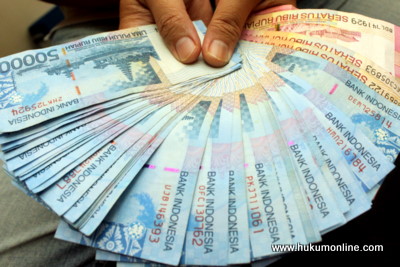 The Draft Bill on the Limitation of the Use of Banknotes in Transactions (“Draft Bill”), is currently being discussed by the government through the Directorate General of Laws and Regulations and related stakeholders. The Draft Bill is planned to be the included in the 2016 National Legislation Program.
Wicipto Setiadi, Director General of Laws and Regulations, explained that the Draft Bill aims to respond to the recent and ongoing rapid development of financial transactions, which require fast, simple, and safe payment processes.
Under the Draft Bill, it is expected that the government’s move towards a cashless society will be further realized. Moreover, the Draft Bill will also serve to prevent financial transactions related to criminal acts.
Mr. Setiadi said that at present his institution is currently drafting an academic paper on the Draft Bill and organizing inter-ministerial discussions. Once the academic paper is completed, it will then be harmonized with other laws and regulations.
“Once the harmonization process is completed, the Draft Bill will be prioritized in 2016,” explained Mr. Setiadi.
Besides drafting the academic paper, the government is also planning to initiate a comparative study of countries that have already implemented similar systems. To proceed with the plan, the Ministry of Law and Human Rights has requested the Ministry of Foreign Affairs to provide details of countries that have passed a similar law.
Puji Atmoko, Deputy Director of Bank Indonesia, explained that there are number of advatages in realizing a cashless society. First of all, non-cash transactions are more efficient as people do not need to carry cash for every transaction.
Additionally, non-cash transactions are relatively less expensive, because they eliminate the cost of printing and distributing banknotes. A final consideration is that through non-cash transactions, it will be easier for law enforcers and related institutions to trace criminal offences involving financial transactions.
Giving further details, Mr. Atmoko said that non-cash transactions will help current efforts to eradicate money laundering. Given this potential benefit, the realization of a cashless society is being fully supported by the Financial Transactions Reporting and Analysis Center.
(hot/kc)
Robert Sidauruk, Fathan Qorib
The Draft Bill on the Limitation of the Use of Banknotes in Transactions (“Draft Bill”), is currently being discussed by the government through the Directorate General of Laws and Regulations and related stakeholders. The Draft Bill is planned to be the included in the 2016 National Legislation Program.Wicipto Setiadi, Director General of Laws and Regulations, explained that the Draft Bill aims to respond to the recent and ongoing rapid development of financial transactions, which require fast, simple, and safe payment processes.
Under the Draft Bill, it is expected that the government’s move towards a cashless society will be further realized. Moreover, the Draft Bill will also serve to prevent financial transactions related to criminal acts.
Mr. Setiadi said that at present his institution is currently drafting an academic paper on the Draft Bill and organizing inter-ministerial discussions. Once the academic paper is completed, it will then be harmonized with other laws and regulations.
“Once the harmonization process is completed, the Draft Bill will be prioritized in 2016,” explained Mr. Setiadi.
Besides drafting the academic paper, the government is also planning to initiate a comparative study of countries that have already implemented similar systems. To proceed with the plan, the Ministry of Law and Human Rights has requested the Ministry of Foreign Affairs to provide details of countries that have passed a similar law.
Puji Atmoko, Deputy Director of Bank Indonesia, explained that there are number of advatages in realizing a cashless society. First of all, non-cash transactions are more efficient as people do not need to carry cash for every transaction.
Additionally, non-cash transactions are relatively less expensive, because they eliminate the cost of printing and distributing banknotes. A final consideration is that through non-cash transactions, it will be easier for law enforcers and related institutions to trace criminal offences involving financial transactions.
Giving further details, Mr. Atmoko said that non-cash transactions will help current efforts to eradicate money laundering. Given this potential benefit, the realization of a cashless society is being fully supported by the Financial Transactions Reporting and Analysis Center.
(hot/kc)