


 Ada Pertanyaan? Hubungi Kami


2026 Hak Cipta Milik Hukumonline.com
Produk Pilihan


 Ada Pertanyaan? Hubungi Kami
Robert Sidauruk, Agus Sahbani
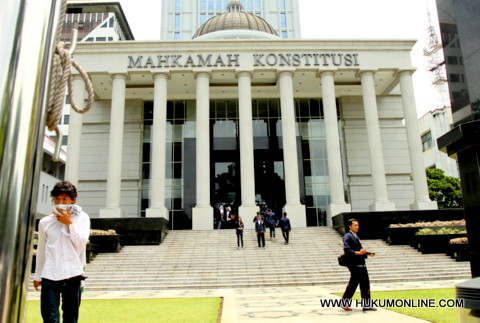 The Constitutional Court has again been asked to hear a judicial review petition on the Oil and Gas Law. This time, the Constitutional Court has to decide whether or not the levy for natural resource utilization imposed by the state to oil and gas companies is conflicts with the 1945 Constitution. Currently, this levy is provided for under the Oil and Gas Law and Law No. 20 of 1997on Non-Tax State Revenue (PNBP Law).
The judicial review petition was submitted by Bukhari, President Director of PT Gresik Migas, a regional-owned enterprise in East Java. Mr. Bukhari has asked for a review of Articles2 (3) and 3 (2) of PNBP Law, as well as Article 49 of the Oil and Gas Law, which states that non-tax state revenue can be further regulated under a government regulation. To implement these provisions, the government has issued Government Regulation No. 1 of 2006, which requires oil and gas companies to pay a levy for natural resource utilization.
The applicant believes that the delegation of authority under the Oil and Gas Law and the PNBP Law is not accordance with the 1945 Constitution, as it grants a blank check to the government to impose the levy without the participation of the House of Representatives. The applicant is further asserting that all types of Non-Tax State Revenue must be set out in a law to ensure public participation through their representative lawmakers, as stipulated under Article 23A of 1945 Constitution.
Elaborating on the constitutional loss as the basis for this judicial review, Mr. Bukhari explained that his company has to pay IDR 145 million per month or IDR 1.7 billion per year to pay for the levy. This levy must be paid despite the fact that the levy provides no direct benefits at all, as it is allocated to fund the Downstream Oil and Gas Supervisory Agency (BPH Migas).
In response to the petition, Agus Budi Wahyono, expert staff at the Ministry of Energy and Mineral Resources, claims that the levy is in accordance with the PNBP Law and Law No. 12 of 2011on Establishment of Laws and Regulations. Mr. Wahyono stated that both of the laws allow non-tax state revenue to be determined under a government regulation.
“This provision is stipulated to anticipate new types of revenue that are not determined under the law,”said Mr. Wahyono.
Mr. Wahyono also highlighted that while a government regulation on non-tax state revenue is drafted solely by the government, the fairness principle and current conditions of society must also always be taken into account.
“When determining new types of non-tax state revenue, the government is required to inform details to the House for further discussion, so it can be incorporated into the State Budget Law,”added Mr. Wahyono.
Therefore, according to Mr. Wahyono, the applicant’s arguments that Articles 2 (3), 3 (2) of PNBP Law and Articles 48 (2) and 49 of Oil and Gas Law contradict the 1945 Constitution are groundless. On the contrary, it is argued that the government regulation on non-tax state revenue that supports the PNBP Law and the Oil and Gas Law, create certainty for the state in managing its revenue as mandated by Article 23A of 1945 Constitution.
(hot/kc)
Robert Sidauruk, Agus Sahbani
The Constitutional Court has again been asked to hear a judicial review petition on the Oil and Gas Law. This time, the Constitutional Court has to decide whether or not the levy for natural resource utilization imposed by the state to oil and gas companies is conflicts with the 1945 Constitution. Currently, this levy is provided for under the Oil and Gas Law and Law No. 20 of 1997on Non-Tax State Revenue (PNBP Law).The judicial review petition was submitted by Bukhari, President Director of PT Gresik Migas, a regional-owned enterprise in East Java. Mr. Bukhari has asked for a review of Articles2 (3) and 3 (2) of PNBP Law, as well as Article 49 of the Oil and Gas Law, which states that non-tax state revenue can be further regulated under a government regulation. To implement these provisions, the government has issued Government Regulation No. 1 of 2006, which requires oil and gas companies to pay a levy for natural resource utilization.
The applicant believes that the delegation of authority under the Oil and Gas Law and the PNBP Law is not accordance with the 1945 Constitution, as it grants a blank check to the government to impose the levy without the participation of the House of Representatives. The applicant is further asserting that all types of Non-Tax State Revenue must be set out in a law to ensure public participation through their representative lawmakers, as stipulated under Article 23A of 1945 Constitution.
Elaborating on the constitutional loss as the basis for this judicial review, Mr. Bukhari explained that his company has to pay IDR 145 million per month or IDR 1.7 billion per year to pay for the levy. This levy must be paid despite the fact that the levy provides no direct benefits at all, as it is allocated to fund the Downstream Oil and Gas Supervisory Agency (BPH Migas).
In response to the petition, Agus Budi Wahyono, expert staff at the Ministry of Energy and Mineral Resources, claims that the levy is in accordance with the PNBP Law and Law No. 12 of 2011on Establishment of Laws and Regulations. Mr. Wahyono stated that both of the laws allow non-tax state revenue to be determined under a government regulation.
“This provision is stipulated to anticipate new types of revenue that are not determined under the law,”said Mr. Wahyono.
Mr. Wahyono also highlighted that while a government regulation on non-tax state revenue is drafted solely by the government, the fairness principle and current conditions of society must also always be taken into account.
“When determining new types of non-tax state revenue, the government is required to inform details to the House for further discussion, so it can be incorporated into the State Budget Law,”added Mr. Wahyono.
Therefore, according to Mr. Wahyono, the applicant’s arguments that Articles 2 (3), 3 (2) of PNBP Law and Articles 48 (2) and 49 of Oil and Gas Law contradict the 1945 Constitution are groundless. On the contrary, it is argued that the government regulation on non-tax state revenue that supports the PNBP Law and the Oil and Gas Law, create certainty for the state in managing its revenue as mandated by Article 23A of 1945 Constitution.
(hot/kc)