


 Ada Pertanyaan? Hubungi Kami


 Ada Pertanyaan? Hubungi Kami
Happy Rayna Stephany, IGAP Trisnajaya
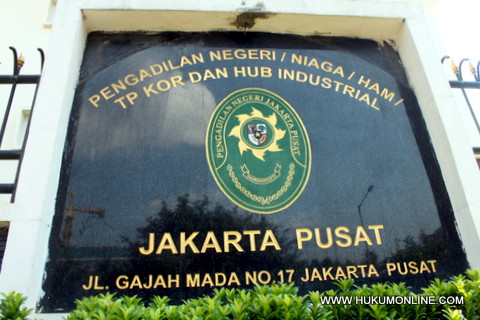 On Tuesday (8/1) the Commercial Court of Jakarta heard the response of a local beer businessman brought to court by Bavaria NV, the Dutch company that manufactures Bavaria beer and that accuses him of trademark infringement.
Bavaria NV has not been able to register their trademark in Indonesia because, according to the Directorate General of Intellectual Property Rights, the mark is registered to Murni, who—they allege—illegally copied the mark and beer product.
“Bavaria is a well-known mark which has been registered in several countries,” Bavaria NV lawyer Kurnia Adi said when interviewed by Hukumonline at the Commercial Court (8/1); “Murni has illegally copied and infringed our client’s mark.”
Bavaria beer – established in 1924 by Johannes Swinkels – has been registered in Austria, Germany, Belgium, Luxembourg, France, Italia, Portugal, England and Japan. Since 1978, Bavaria beer has been internationally known as a zero percent alcohol beer and has been exported to almost 120 countries.
Yet the mark was registered on 18 December 2008 by Murni as number IDM000187394 at the Directorate General of Intellectual Property Rights at the Ministry of Law and Human Rights.
Bavaria NV alleges that the registration was illegal, as it is not permitted to appropriate a mark in similarity, essential part, or its entirety with another’s, according to Article 6 (1) (b) of Law No. 15 of 2011 on Marks (Marks Law).
Bavaria NV went further, pointing to the Ministry of Law and Human Rights, arguing that the registration application was made in bad faith because according to Article 4 of Marks Law, Murni’s registration of the well-known mark should never have been granted by the Directorate General of Intellectual Property Rights.
A lawyer for the Ministry of Law and Human Rights, which is thus also a defendant in the case, told Hukumonline (8/1) that the mark application had successfully met formal and substantial inspection procedures at the time of registration.
A rigorous inspection process is carried out, they say, when examining whether a mark is similar in part or entirely with another’s. Registration applications are also publicly announced for 3 months to provide sufficient time for other similar mark-owners to contend and object the registration.
“Murni’s “Bavaria” mark registration was passed because there were no identical or similar marks registered at the time,” said the Ministry lawyer.
However, cancellation of a mark’s registration may be carried out within 5 years from the registration date, in accordance to Article 69 of the Marks Law. Bavaria NV thus has a little less than one year to successfully defend their trademark and, most likely, re-register it with the Ministry.
(eli)
Happy Rayna Stephany, IGAP Trisnajaya
On Tuesday (8/1) the Commercial Court of Jakarta heard the response of a local beer businessman brought to court by Bavaria NV, the Dutch company that manufactures Bavaria beer and that accuses him of trademark infringement.
Bavaria NV has not been able to register their trademark in Indonesia because, according to the Directorate General of Intellectual Property Rights, the mark is registered to Murni, who—they allege—illegally copied the mark and beer product.
“Bavaria is a well-known mark which has been registered in several countries,” Bavaria NV lawyer Kurnia Adi said when interviewed by Hukumonline at the Commercial Court (8/1); “Murni has illegally copied and infringed our client’s mark.”
Bavaria beer – established in 1924 by Johannes Swinkels – has been registered in Austria, Germany, Belgium, Luxembourg, France, Italia, Portugal, England and Japan. Since 1978, Bavaria beer has been internationally known as a zero percent alcohol beer and has been exported to almost 120 countries.
Yet the mark was registered on 18 December 2008 by Murni as number IDM000187394 at the Directorate General of Intellectual Property Rights at the Ministry of Law and Human Rights.
Bavaria NV alleges that the registration was illegal, as it is not permitted to appropriate a mark in similarity, essential part, or its entirety with another’s, according to Article 6 (1) (b) of Law No. 15 of 2011 on Marks (Marks Law).
Bavaria NV went further, pointing to the Ministry of Law and Human Rights, arguing that the registration application was made in bad faith because according to Article 4 of Marks Law, Murni’s registration of the well-known mark should never have been granted by the Directorate General of Intellectual Property Rights.
A lawyer for the Ministry of Law and Human Rights, which is thus also a defendant in the case, told Hukumonline (8/1) that the mark application had successfully met formal and substantial inspection procedures at the time of registration.
A rigorous inspection process is carried out, they say, when examining whether a mark is similar in part or entirely with another’s. Registration applications are also publicly announced for 3 months to provide sufficient time for other similar mark-owners to contend and object the registration.
“Murni’s “Bavaria” mark registration was passed because there were no identical or similar marks registered at the time,” said the Ministry lawyer.
However, cancellation of a mark’s registration may be carried out within 5 years from the registration date, in accordance to Article 69 of the Marks Law. Bavaria NV thus has a little less than one year to successfully defend their trademark and, most likely, re-register it with the Ministry.
(eli)