


 Ada Pertanyaan? Hubungi Kami


 Ada Pertanyaan? Hubungi Kami
Ady TD Achmad, IGAP Trisnajaya
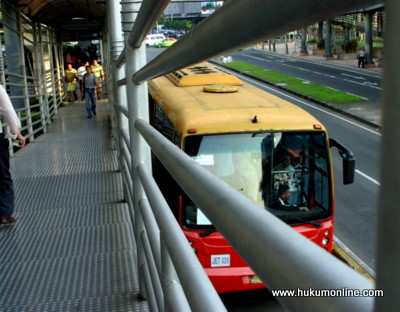 The government will focus on developing transportation infrastructure for the next two years, said Deputy Minister of Transportation Bambang Susantono during a yearly review discussion in Jakarta last week (3/1).
Transport infrastructure is crucial to economic activity, he said—especially in an archipelagic state like Indonesia.
A World Bank assessment concluded that the Indonesian economy is centralized in Java and that most other parts of Indonesia are un- or underdeveloped.
The government aims to change that, said Bambang, discussing a railway project that will link Jakarta to Surabaya, which will bolster the latter’s capacity to distribute goods to Eastern Indonesia. .
“Surabaya has always been a central hub for the distribution of goods to Eastern parts of Indonesia,” the Deputy Minister said.
Also in the planning stages are railway projects outside Java, including a track to connect industrial districts to ports in Sumatra, and a railway in Sulawesi. Tracks will also be developed to provide access to airports, including a plan to link Jakarta to Soekarno-Hatta airport.
According to the Ministry of Transportation, the government plans to build new seaports and provide support infrastructure, including new fleets of ships for transportation of goods.
To accommodate the rapid growth of air traffic—70 million Indonesians used airports in 2012—the government intends to increase airport capacity and develop related infrastructure.
“Some regions are in review to perhaps even build a new airport, for example in Yogyakarta,” said Bambang.
Meanwhile, at the same annual review meeting, M. Akbar, the Director of the Transjakarta Busway, emphasized plans to address many issues with the bus system—managament, gas refills, wait times, busway use by other vehicles and so on—and said that the DKI Jakarta government intends to take decisive action.
Indeed, Joko Widodo, the Governor of Jakarta, has previously mentioned that Jakarta will add 450 new Transjakarta buses and more than 1000 other buses for the broader transport system.
Also, to modernize the busway, the officials discussed plans to take the electronic payment card that has worked well so far in Yogyakarta and introduce it in Jakarta as well, working with the prominent banks to make ATM payment easy and decentralized.
(eli)
Ady TD Achmad, IGAP Trisnajaya
The government will focus on developing transportation infrastructure for the next two years, said Deputy Minister of Transportation Bambang Susantono during a yearly review discussion in Jakarta last week (3/1).
Transport infrastructure is crucial to economic activity, he said—especially in an archipelagic state like Indonesia.
A World Bank assessment concluded that the Indonesian economy is centralized in Java and that most other parts of Indonesia are un- or underdeveloped.
The government aims to change that, said Bambang, discussing a railway project that will link Jakarta to Surabaya, which will bolster the latter’s capacity to distribute goods to Eastern Indonesia. .
“Surabaya has always been a central hub for the distribution of goods to Eastern parts of Indonesia,” the Deputy Minister said.
Also in the planning stages are railway projects outside Java, including a track to connect industrial districts to ports in Sumatra, and a railway in Sulawesi. Tracks will also be developed to provide access to airports, including a plan to link Jakarta to Soekarno-Hatta airport.
According to the Ministry of Transportation, the government plans to build new seaports and provide support infrastructure, including new fleets of ships for transportation of goods.
To accommodate the rapid growth of air traffic—70 million Indonesians used airports in 2012—the government intends to increase airport capacity and develop related infrastructure.
“Some regions are in review to perhaps even build a new airport, for example in Yogyakarta,” said Bambang.
Meanwhile, at the same annual review meeting, M. Akbar, the Director of the Transjakarta Busway, emphasized plans to address many issues with the bus system—managament, gas refills, wait times, busway use by other vehicles and so on—and said that the DKI Jakarta government intends to take decisive action.
Indeed, Joko Widodo, the Governor of Jakarta, has previously mentioned that Jakarta will add 450 new Transjakarta buses and more than 1000 other buses for the broader transport system.
Also, to modernize the busway, the officials discussed plans to take the electronic payment card that has worked well so far in Yogyakarta and introduce it in Jakarta as well, working with the prominent banks to make ATM payment easy and decentralized.
(eli)