


 Ada Pertanyaan? Hubungi Kami


 Ada Pertanyaan? Hubungi Kami
Agus Sahbani, Andin Aditya Rahman
 Starting from 17 December 2012, the Supreme Court (“MA”) will begin implementing a new electronic case tracking application to record a case’s status as it progresses through the court, and thus help lawyers and the public to stay informed at each point in the process.
The “Sistem Informasi Penelusuran Perkara Versi 2” – or what has quickly been abbreviated to the “SIPP V. 2” system – will be fully implemented throughout Indonesia’s court system.
The application was launched in Bali and followed by a workshop with judges to educate them about how to use the new system.
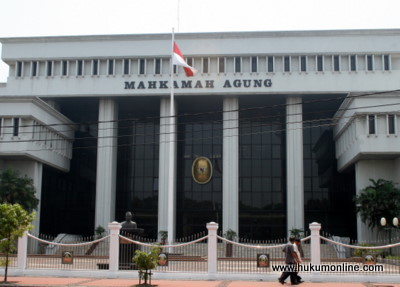
“We have launched the second version of the case tracking system at Bali, and have fine-tuned the system to ease case tracking,” said Ridwan Mansyur, Head of the Law and Public Relations Bureau, at the MA building on Friday (21/12).
Ridwan emphasized that the new case tracking system will also reduce errors when publicizing case information to the broader public. It will also help to highlight any procedural discrepancies—some of which emerge from illegal interventions in cases, where formal judgments are handed down in court but are later recorded differently on the court’s online bulletin.
Ridwan explained that there is often a significant time lapse between a decision being made and the same decision being officially published. In this time, information can be leaked and the process is open to manipulation.
“Through the SIPP system, the main aspects of every decision must be published on the website one day after the decision is made,” he said.
Additionally, a more detailed copy of every decision will be uploaded to that court’s respective website within 3 months of any decision.
Imam Anshori Saleh, Vice Chairman of the Judicial Commission, told Hukumonline (22/12) that he endorsed the system: “We are happy that the MA will make this improvement to the case tracking system,” he said. “By early 2014, every court in Indonesia will have implemented the system.”
The system launch is the culmination of a long partnership between the MA and the U.S. Agency for International Development (USAID), which has supported the application’s development to support judicial reform and public access to case information.
At the current moment, over 100 district courts are implementing the automated case tracking system.
(eli)
Agus Sahbani, Andin Aditya Rahman
Starting from 17 December 2012, the Supreme Court (“MA”) will begin implementing a new electronic case tracking application to record a case’s status as it progresses through the court, and thus help lawyers and the public to stay informed at each point in the process.
The “Sistem Informasi Penelusuran Perkara Versi 2” – or what has quickly been abbreviated to the “SIPP V. 2” system – will be fully implemented throughout Indonesia’s court system.
The application was launched in Bali and followed by a workshop with judges to educate them about how to use the new system.
“We have launched the second version of the case tracking system at Bali, and have fine-tuned the system to ease case tracking,” said Ridwan Mansyur, Head of the Law and Public Relations Bureau, at the MA building on Friday (21/12).
Ridwan emphasized that the new case tracking system will also reduce errors when publicizing case information to the broader public. It will also help to highlight any procedural discrepancies—some of which emerge from illegal interventions in cases, where formal judgments are handed down in court but are later recorded differently on the court’s online bulletin.
Ridwan explained that there is often a significant time lapse between a decision being made and the same decision being officially published. In this time, information can be leaked and the process is open to manipulation.
“Through the SIPP system, the main aspects of every decision must be published on the website one day after the decision is made,” he said.
Additionally, a more detailed copy of every decision will be uploaded to that court’s respective website within 3 months of any decision.
Imam Anshori Saleh, Vice Chairman of the Judicial Commission, told Hukumonline (22/12) that he endorsed the system: “We are happy that the MA will make this improvement to the case tracking system,” he said. “By early 2014, every court in Indonesia will have implemented the system.”
The system launch is the culmination of a long partnership between the MA and the U.S. Agency for International Development (USAID), which has supported the application’s development to support judicial reform and public access to case information.
At the current moment, over 100 district courts are implementing the automated case tracking system.
(eli)