


 Ada Pertanyaan? Hubungi Kami


 Ada Pertanyaan? Hubungi Kami
Anin Aditya Rahman
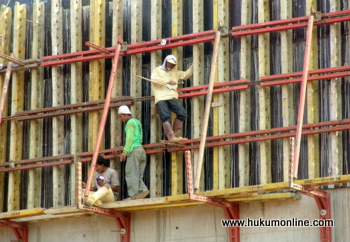 Disputes involving infrastructure and construction businesses dominated the claims filed with Indonesian National Arbitration Body (Badan Arbitrase Nasional Indonesia – BANI) during 2012.
“From approximately 50 disputes heard at BANI, most relate to infrastructure and construction businesses,” stated Vice Chairman of BANI M. Husseyn Umar, after the inauguration of the Indonesia Arbiter Institute (Institut Arbiter Indonesia), at Palembang, Saturday (15/12).
Husseyn explained that the disputes are the result of numerous companies not fulfilling their obligations under the contracts. It should also be noted that the increased number of disputes that arise in the construction industry relate to the fact that there is an increase in construction of toll roads, highways, bridges, and other infrastructure.
Businesses prefer to settle their disputes with BANI, said Husseyn, because there is transparency and the process is much faster compared to district courts.
BANI can resolve a dispute at least within four months, Husseyn explained, because Article 48 (1) of Law No. 30 of 1999 on Arbitration and Alternative Dispute Resolution stipulates that a claim will be settled within 180 days/six months.
Bambang Haryanto, Chairman of BANI Palembang, stated that many businesses in South Sumatra use arbitration and mediation in resolving their disputes.
Bambang asserted that dispute resolution in BANI is simpler and faster; however, businesses must follow the procedures or provisions under the laws on arbitration.
Eman Suparman, Chairman of the Judicial Commission, also emphasized the benefits of arbitration.
During his book review discussion titled “Arbitrase dan Dilema Penegakan Keadilan” in Palembang, Saturday (12/5), Eman stated that businesses should choose arbitration over courts in settling their business disputes.
Eman asserted that it is difficult for Indonesian courts to render fair decisions, due to judicial mafia, bribery, and corruption. He also explained that many judges in district courts do not understand commercial disputes. -- Antara
(hot/jt)
Anin Aditya Rahman
Disputes involving infrastructure and construction businesses dominated the claims filed with Indonesian National Arbitration Body (Badan Arbitrase Nasional Indonesia – BANI) during 2012.
“From approximately 50 disputes heard at BANI, most relate to infrastructure and construction businesses,” stated Vice Chairman of BANI M. Husseyn Umar, after the inauguration of the Indonesia Arbiter Institute (Institut Arbiter Indonesia), at Palembang, Saturday (15/12).
Husseyn explained that the disputes are the result of numerous companies not fulfilling their obligations under the contracts. It should also be noted that the increased number of disputes that arise in the construction industry relate to the fact that there is an increase in construction of toll roads, highways, bridges, and other infrastructure.
Businesses prefer to settle their disputes with BANI, said Husseyn, because there is transparency and the process is much faster compared to district courts.
BANI can resolve a dispute at least within four months, Husseyn explained, because Article 48 (1) of Law No. 30 of 1999 on Arbitration and Alternative Dispute Resolution stipulates that a claim will be settled within 180 days/six months.
Bambang Haryanto, Chairman of BANI Palembang, stated that many businesses in South Sumatra use arbitration and mediation in resolving their disputes.
Bambang asserted that dispute resolution in BANI is simpler and faster; however, businesses must follow the procedures or provisions under the laws on arbitration.
Eman Suparman, Chairman of the Judicial Commission, also emphasized the benefits of arbitration.
During his book review discussion titled “Arbitrase dan Dilema Penegakan Keadilan” in Palembang, Saturday (12/5), Eman stated that businesses should choose arbitration over courts in settling their business disputes.
Eman asserted that it is difficult for Indonesian courts to render fair decisions, due to judicial mafia, bribery, and corruption. He also explained that many judges in district courts do not understand commercial disputes. -- Antara
(hot/jt)