


 Ada Pertanyaan? Hubungi Kami


 Ada Pertanyaan? Hubungi Kami
Agus Sahbani, IGAP Trisnajaya
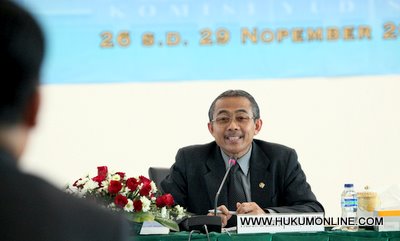 Judicial Commission (Komisi Yudisial – KY) concluded the second period open interviews of the 19 Supreme Court justice candidates, Thursday (29/11).
However, KY Chairman Eman Suparman explained that his institution will take its time to pick 15 justice candidates, which is mandated by Law No. 22 of 2004 on KY (KY Law).
Pursuant to Article 18 (5) of KY Law, KY must recommend three candidates for every vacant justice position. Currently, five justice positions in the Supreme Court are available. Therefore, KY must recommend 15 candidates to the House of Representatives (House) for the next stage of the justice selection process.
“It is hard to recommend 15 candidates. However, I have selected a few possible recommendations, but I can’t reveal the names at the moment,” said Eman.
Eman confirmed that KY will be very cautious in recommending candidates to the House because it does not want to select candidates that are not independent or have conflict of interest.
For example, in 2009, KY selected Ahmad Yamanie for the position of a justice during the Busyro Muqoddas’ administration. Later on, Ahmad Yamanie caused controversy when he changed the verdict of Hengky Gunawan, an Indonesian drug lord, from 15 to 12 years.
“We will be very careful in this selection and we will promote moral integrity, honesty, and intelligence. These will be the main considerations and if these requirements are fulfilled, the candidates will pass the selection,” Eman asserted.
The panelist team, according to Eman, will investigate whether the candidates ever received gratification. “We asked them whether they have received something. We will cross-check it with our findings,” Eman explained.
M. Jusran Thawab, one of the candidates, who is now a Jakarta Court of Appeal judge, admitted that he has been offered gratification from a party in a case. However, he never promised anything to the party before or after the decision.
“Mr. Jusran admitted that he was offered a hajj pilgrimage by the local government. However, he refused it. It is a test of their honesty,” Eman continued.
Restriction Rules
Erman further explained that the lack of candidates with integrity and quality is due to the absence of restrictions during administrative selection. Candidates who have failed before still apply for the next selection period.
“We will make new rules that will restrict candidate participation in the selection, especially for those who have failed many times. The new mechanism will allow maximum of two or three applications,” Eman said.
Ten out of 19 candidates in the latest interview have failed previous selections. There are even candidates who have failed three or four times.
For example, Nommy H.T. Siahaan, Head of Pekanbaru Court of Appeal, failed four times and Cicut Sutiarso, Director General of General Judicial Body, failed three times. The rest of the candidates have failed one time and all of them are career judges.
Djoko Sarwoko, Supreme Court’s spokesperson, explained that a lot of judges in courts of appeal are capable of becoming Supreme Court justices. However, most of them are afraid that KY will prioritize in favor of non-judge candidates.
“It is true that non-judge candidates have doctoral degrees and that they are more advanced in legal theory. Whereas career judges lack in principle, philosophy, and legal theory, which are really needed during the cassation stage,” said Djoko Sarwoko.
(hot/jt)
Agus Sahbani, IGAP Trisnajaya
Judicial Commission (Komisi Yudisial – KY) concluded the second period open interviews of the 19 Supreme Court justice candidates, Thursday (29/11).
However, KY Chairman Eman Suparman explained that his institution will take its time to pick 15 justice candidates, which is mandated by Law No. 22 of 2004 on KY (KY Law).
Pursuant to Article 18 (5) of KY Law, KY must recommend three candidates for every vacant justice position. Currently, five justice positions in the Supreme Court are available. Therefore, KY must recommend 15 candidates to the House of Representatives (House) for the next stage of the justice selection process.
“It is hard to recommend 15 candidates. However, I have selected a few possible recommendations, but I can’t reveal the names at the moment,” said Eman.
Eman confirmed that KY will be very cautious in recommending candidates to the House because it does not want to select candidates that are not independent or have conflict of interest.
For example, in 2009, KY selected Ahmad Yamanie for the position of a justice during the Busyro Muqoddas’ administration. Later on, Ahmad Yamanie caused controversy when he changed the verdict of Hengky Gunawan, an Indonesian drug lord, from 15 to 12 years.
“We will be very careful in this selection and we will promote moral integrity, honesty, and intelligence. These will be the main considerations and if these requirements are fulfilled, the candidates will pass the selection,” Eman asserted.
The panelist team, according to Eman, will investigate whether the candidates ever received gratification. “We asked them whether they have received something. We will cross-check it with our findings,” Eman explained.
M. Jusran Thawab, one of the candidates, who is now a Jakarta Court of Appeal judge, admitted that he has been offered gratification from a party in a case. However, he never promised anything to the party before or after the decision.
“Mr. Jusran admitted that he was offered a hajj pilgrimage by the local government. However, he refused it. It is a test of their honesty,” Eman continued.
Restriction Rules
Erman further explained that the lack of candidates with integrity and quality is due to the absence of restrictions during administrative selection. Candidates who have failed before still apply for the next selection period.
“We will make new rules that will restrict candidate participation in the selection, especially for those who have failed many times. The new mechanism will allow maximum of two or three applications,” Eman said.
Ten out of 19 candidates in the latest interview have failed previous selections. There are even candidates who have failed three or four times.
For example, Nommy H.T. Siahaan, Head of Pekanbaru Court of Appeal, failed four times and Cicut Sutiarso, Director General of General Judicial Body, failed three times. The rest of the candidates have failed one time and all of them are career judges.
Djoko Sarwoko, Supreme Court’s spokesperson, explained that a lot of judges in courts of appeal are capable of becoming Supreme Court justices. However, most of them are afraid that KY will prioritize in favor of non-judge candidates.
“It is true that non-judge candidates have doctoral degrees and that they are more advanced in legal theory. Whereas career judges lack in principle, philosophy, and legal theory, which are really needed during the cassation stage,” said Djoko Sarwoko.
(hot/jt)