


 Ada Pertanyaan? Hubungi Kami


 Ada Pertanyaan? Hubungi Kami
Fitri Novia Heriani, Mahinda Arkyasa
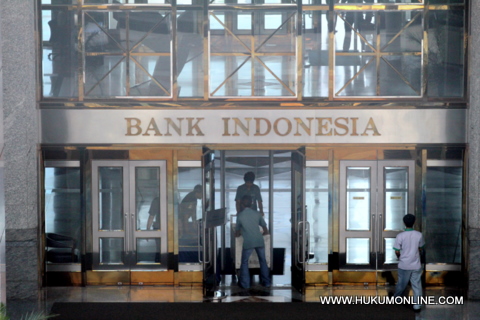 Bank Indonesia (BI) confirmed that the much anticipated regulation on multiple licensing will be issued in two weeks. This schedule is quite behind, as BI previously planned to issue the regulation in late October or early November 2012.
Despite the delay, BI Public Relations Officer Difi Johansyah confirmed that the regulation will be in force by early January 2013.
Difi stated that one of the key provisions guides the establishment of branch offices, which are set up based on banks’ tier one capital in accordance with several pre-determined zones.
“BI stipulates four categories of tier one capital,” Difi said in a press conference on Tuesday (27/11), “the categorization is also called ‘BUKU’ (Bank Umum Kelompok Usaha).”
He further explained that for BUKU 1 (one) category, a bank must have a minimum tier one capital of at least IDR 100 billion and lower than IDR 1 trillion.
Banks in BUKU 2 (two) category must have a minimum tier one capital of at least IDR 1 trillion and lower than IDR 5 trillion.
In BUKU 3 (three) category, a bank must have at least IDR 5 trillion and lower than IDR 30 trillion tier one capital.
Lastly, for BUKU 4 (four) category, a bank must have at least IDR 30 trillion tier one capital.
Banks with a higher BUKU category are allowed to offer a wider range of banking products and services.
In addition to tier one capital categories, Difi also informed that the regulation will divide Indonesia into six zones.
Zone 1 (one) includes Jakarta and foreign countries. Zone 2 (two) includes West Java, Central Java, Yogyakarta Special Region, and East Java.
Zone 3 (three) incorporates East Kalimantan, Riau Archipelago and North Sumatera, and zone 4 (four) consists of Riau, South Sumatera, Central Kalimantan, South Kalimantan, North Sulawesi, and Papua.
Zone 5 (five) includes Aceh Special Region, Jambi, West Sumatera, Bangka Belitung, Bengkulu, Lampung, West Kalimantan, and Southeast Sulawesi.
The last one is Zone 6 (six), which includes Nusa Tenggara Barat (NTB), Nusa Tenggara Timur (NTT), Central Sulawesi, Gorontalo, West Sulawesi, North Maluku, Maluku, and West Papua.
Zoning, as Difi explained, is based on the number of banks available in respective regions and market competition level. Lower zones (1 = highest, 6= lowest) indicate lower availability of banks and lower market competition level.
Through the upcoming regulation, BI is trying to promote equalization of bank availability in all regions of Indonesia.
Every bank that plans to establish a branch office must refer to the tier one capital provision in accordance with the pre-determined zones. A bank may not open branch offices in certain zones if its tier one capital is not adequate.
Furthermore, Difi stated that if a bank has established three branch offices in zone one and two, the bank is obliged to establish one branch office in each zone three, four, five, and six.
He explained that such obligation aims to improve the competitiveness of regional banks and to provide better access to banking services for the public.
Difi informed that banks must allocate a portion of their credit portfolio for development purposes, such as infrastructure. This must be done in accordance with each bank’s BUKU category.
Banks under BUKU 1 category must allocate 55% of the total credit portfolio. For BUKU 2 and BUKU 3 category banks, the allocation ratio is 60% and 65%, respectively.
Banks categorized as BUKU 4 category must allocate 70% of the credit portfolio.
However, Difi added that banks that focus on house financing for public interest will be exempted from the abovementioned obligation.
Harry Azhar Azis, Deputy Chairman of Commission XI of the House of Representatives, asserted that the requirements to open new branch offices will encourage banks to expand to remote regions and provide greater public access.
He further added that the upcoming regulation will be binding for all banks. If a bank fails to comply with the regulation provisions, BI will remove the respective bank’s director.
(hot/jt)
Fitri Novia Heriani, Mahinda Arkyasa
Bank Indonesia (BI) confirmed that the much anticipated regulation on multiple licensing will be issued in two weeks. This schedule is quite behind, as BI previously planned to issue the regulation in late October or early November 2012.
Despite the delay, BI Public Relations Officer Difi Johansyah confirmed that the regulation will be in force by early January 2013.
Difi stated that one of the key provisions guides the establishment of branch offices, which are set up based on banks’ tier one capital in accordance with several pre-determined zones.
“BI stipulates four categories of tier one capital,” Difi said in a press conference on Tuesday (27/11), “the categorization is also called ‘BUKU’ (Bank Umum Kelompok Usaha).”
He further explained that for BUKU 1 (one) category, a bank must have a minimum tier one capital of at least IDR 100 billion and lower than IDR 1 trillion.
Banks in BUKU 2 (two) category must have a minimum tier one capital of at least IDR 1 trillion and lower than IDR 5 trillion.
In BUKU 3 (three) category, a bank must have at least IDR 5 trillion and lower than IDR 30 trillion tier one capital.
Lastly, for BUKU 4 (four) category, a bank must have at least IDR 30 trillion tier one capital.
Banks with a higher BUKU category are allowed to offer a wider range of banking products and services.
In addition to tier one capital categories, Difi also informed that the regulation will divide Indonesia into six zones.
Zone 1 (one) includes Jakarta and foreign countries. Zone 2 (two) includes West Java, Central Java, Yogyakarta Special Region, and East Java.
Zone 3 (three) incorporates East Kalimantan, Riau Archipelago and North Sumatera, and zone 4 (four) consists of Riau, South Sumatera, Central Kalimantan, South Kalimantan, North Sulawesi, and Papua.
Zone 5 (five) includes Aceh Special Region, Jambi, West Sumatera, Bangka Belitung, Bengkulu, Lampung, West Kalimantan, and Southeast Sulawesi.
The last one is Zone 6 (six), which includes Nusa Tenggara Barat (NTB), Nusa Tenggara Timur (NTT), Central Sulawesi, Gorontalo, West Sulawesi, North Maluku, Maluku, and West Papua.
Zoning, as Difi explained, is based on the number of banks available in respective regions and market competition level. Lower zones (1 = highest, 6= lowest) indicate lower availability of banks and lower market competition level.
Through the upcoming regulation, BI is trying to promote equalization of bank availability in all regions of Indonesia.
Every bank that plans to establish a branch office must refer to the tier one capital provision in accordance with the pre-determined zones. A bank may not open branch offices in certain zones if its tier one capital is not adequate.
Furthermore, Difi stated that if a bank has established three branch offices in zone one and two, the bank is obliged to establish one branch office in each zone three, four, five, and six.
He explained that such obligation aims to improve the competitiveness of regional banks and to provide better access to banking services for the public.
Difi informed that banks must allocate a portion of their credit portfolio for development purposes, such as infrastructure. This must be done in accordance with each bank’s BUKU category.
Banks under BUKU 1 category must allocate 55% of the total credit portfolio. For BUKU 2 and BUKU 3 category banks, the allocation ratio is 60% and 65%, respectively.
Banks categorized as BUKU 4 category must allocate 70% of the credit portfolio.
However, Difi added that banks that focus on house financing for public interest will be exempted from the abovementioned obligation.
Harry Azhar Azis, Deputy Chairman of Commission XI of the House of Representatives, asserted that the requirements to open new branch offices will encourage banks to expand to remote regions and provide greater public access.
He further added that the upcoming regulation will be binding for all banks. If a bank fails to comply with the regulation provisions, BI will remove the respective bank’s director.
(hot/jt)