


 Ada Pertanyaan? Hubungi Kami


 Ada Pertanyaan? Hubungi Kami
Ady Thea Dian Achmad, Mahinda Arkyasa
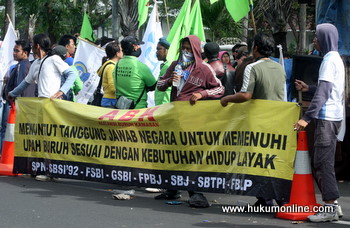 In response to the Government plan to increase regional minimum wage, Secretary of Indonesia Employers Association (Apindo) Suryadi Sasmita predicted that many small-medium enterprises will go out of business.
Suryadi explained that the increase will be considerably high, and thus, it would be difficult for small-medium businesses to implement it without suffering losses.
One of the consequences is that businesses will conduct layoffs in order to lower the number of workers, so that they can afford to pay the minimum wage.
In order to avoid negative results, the Secretary suggested that small-medium businesses must be exempted from minimum wage obligations.
Suryadi further argued that the minimum wage should be based on workers’ education level. A worker who has a bachelor degree should have a better wage as opposed to a worker who only has a high school degree.
Overall, he stated that if the Government insists on increasing the minimum wage, it should apply the increase gradually.
For example, a business should be allowed to increase its workers wage by 15% at a time, until it has the ability to fully implement the new minimum wage.
“If the full increase is applied instantaneously, [businesses] will raise an objection,” Suryadi stated in a press conference on Monday (19/11).
Chairman of Apindo Sofyan Wanandi informed that tens of thousands of workers are at risk of losing their jobs because members of Apindo are planning to conduct layoffs.
He also warned that some Apindo members are not reporting their layoff plans because they are afraid of dealing with the pressure from workers. It is possible that some businesses will layoff their workers discreetly.
Although major businesses do not have any objections against minimum wage increase, Sofyan explained that the Government must pay special attention to small-medium businesses that cannot increase the minimum wage.
He also stated that minimum wage should not be generalized within all industrial sectors.
Meanwhile, Timboel Siregar, Secretary General of Indonesian Labor Union Organization (Organisasi Serikat Pekerja Indonesia – OPSI), stated that the minimum wage increase is essential in small-medium businesses because it will boost the workers’ buying power.
Timboel argued that if small-medium businesses are exempted from minimum wage obligation, workers will have a hard time surviving.
Timboel also disagreed with the idea of gradual implementation of minimum wage, because pursuant to Minister of Manpower and Transmigration Regulation No. PER-01/MEN/1999 on Minimum Wage, minimum wage is defined as basic salary, which includes permanent allowances. Therefore, minimum wage cannot be changed before a one-year period ends.
Timboel informed that he has requested Apindo to persuade the Government to provide incentives for small-medium businesses in the form of subsidies, tax relief, cheap raw materials, and market access.
Previously, Head of Jakarta Manpower and Transmigration Office Deded Sukendar stated that small-medium businesses will not be exempted from minimum wage obligation.
He also said that a business may request a postponement of minimum wage implementation if it cannot comply.
The postponement will be issued by local government authorities after several requirements have been fulfilled.
(hot/jt)
Ady Thea Dian Achmad, Mahinda Arkyasa
In response to the Government plan to increase regional minimum wage, Secretary of Indonesia Employers Association (Apindo) Suryadi Sasmita predicted that many small-medium enterprises will go out of business.
Suryadi explained that the increase will be considerably high, and thus, it would be difficult for small-medium businesses to implement it without suffering losses.
One of the consequences is that businesses will conduct layoffs in order to lower the number of workers, so that they can afford to pay the minimum wage.
In order to avoid negative results, the Secretary suggested that small-medium businesses must be exempted from minimum wage obligations.
Suryadi further argued that the minimum wage should be based on workers’ education level. A worker who has a bachelor degree should have a better wage as opposed to a worker who only has a high school degree.
Overall, he stated that if the Government insists on increasing the minimum wage, it should apply the increase gradually.
For example, a business should be allowed to increase its workers wage by 15% at a time, until it has the ability to fully implement the new minimum wage.
“If the full increase is applied instantaneously, [businesses] will raise an objection,” Suryadi stated in a press conference on Monday (19/11).
Chairman of Apindo Sofyan Wanandi informed that tens of thousands of workers are at risk of losing their jobs because members of Apindo are planning to conduct layoffs.
He also warned that some Apindo members are not reporting their layoff plans because they are afraid of dealing with the pressure from workers. It is possible that some businesses will layoff their workers discreetly.
Although major businesses do not have any objections against minimum wage increase, Sofyan explained that the Government must pay special attention to small-medium businesses that cannot increase the minimum wage.
He also stated that minimum wage should not be generalized within all industrial sectors.
Meanwhile, Timboel Siregar, Secretary General of Indonesian Labor Union Organization (Organisasi Serikat Pekerja Indonesia – OPSI), stated that the minimum wage increase is essential in small-medium businesses because it will boost the workers’ buying power.
Timboel argued that if small-medium businesses are exempted from minimum wage obligation, workers will have a hard time surviving.
Timboel also disagreed with the idea of gradual implementation of minimum wage, because pursuant to Minister of Manpower and Transmigration Regulation No. PER-01/MEN/1999 on Minimum Wage, minimum wage is defined as basic salary, which includes permanent allowances. Therefore, minimum wage cannot be changed before a one-year period ends.
Timboel informed that he has requested Apindo to persuade the Government to provide incentives for small-medium businesses in the form of subsidies, tax relief, cheap raw materials, and market access.
Previously, Head of Jakarta Manpower and Transmigration Office Deded Sukendar stated that small-medium businesses will not be exempted from minimum wage obligation.
He also said that a business may request a postponement of minimum wage implementation if it cannot comply.
The postponement will be issued by local government authorities after several requirements have been fulfilled.
(hot/jt)