


 Ada Pertanyaan? Hubungi Kami


 Ada Pertanyaan? Hubungi Kami
Rofiq Hidayat, Mahinda Arkyasa
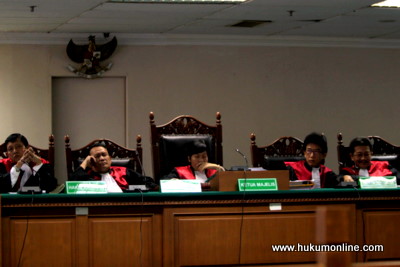 The participant pool for the selection process of Corruption Court ad hoc judges has been dominated by lawyers. Nudirman Munir, Member of Commission III of the House of Representatives (“The House”), stated that this is a common occurrence because lawyers have an in-depth understanding of the legal system.
However, even though the participants are often lawyers who understand law, it is important to improve the selection process. “The selection process conducted by the Supreme Court must be improved in order to produce judges of high integrity and quality,” he said on Monday (10/9).
Nudirman stated that in order to improve the selection process, the participants’ track records must be provided by the lawyers association. These track records will be used by the selection committee as additional data in the selection of the best candidate.
“If the track record is good, the next step is to evaluate participant’s moral values,” he said.
Meanwhile, Nasir Jamil, Deputy Chairman of Commission III of the House, stated that participants who have passed the selection process must also be trained and educated before handling corruption cases as ad hoc judges. He emphasized that being a Corruption Court judge is not a profession, but a calling.
“Candidates that have been selected must be morally educated and understand that being a judge is not a profession, it’s a calling,” he said.
Currently, Supreme Court suspended the selection process at the stage of profile assessment and participant interviewing in order to collect participants’ track records. The process, which was initially scheduled for 4-7 September 2012, was rescheduled for 17-20 September 2012.
As of today, there are four ad hoc judges for each Corruption Court located in 33 district courts. In addition, there are two ad hoc judges for each appeal court, located all over Indonesia. There are total 179 ad hoc judges in all of the Corruption Courts. Ideally, the Supreme Court needs 244 ad hoc judges for the Corruption Courts.
Rofiq Hidayat, Mahinda Arkyasa
The participant pool for the selection process of Corruption Court ad hoc judges has been dominated by lawyers. Nudirman Munir, Member of Commission III of the House of Representatives (“The House”), stated that this is a common occurrence because lawyers have an in-depth understanding of the legal system.
However, even though the participants are often lawyers who understand law, it is important to improve the selection process. “The selection process conducted by the Supreme Court must be improved in order to produce judges of high integrity and quality,” he said on Monday (10/9).
Nudirman stated that in order to improve the selection process, the participants’ track records must be provided by the lawyers association. These track records will be used by the selection committee as additional data in the selection of the best candidate.
“If the track record is good, the next step is to evaluate participant’s moral values,” he said.
Meanwhile, Nasir Jamil, Deputy Chairman of Commission III of the House, stated that participants who have passed the selection process must also be trained and educated before handling corruption cases as ad hoc judges. He emphasized that being a Corruption Court judge is not a profession, but a calling.
“Candidates that have been selected must be morally educated and understand that being a judge is not a profession, it’s a calling,” he said.
Currently, Supreme Court suspended the selection process at the stage of profile assessment and participant interviewing in order to collect participants’ track records. The process, which was initially scheduled for 4-7 September 2012, was rescheduled for 17-20 September 2012.
As of today, there are four ad hoc judges for each Corruption Court located in 33 district courts. In addition, there are two ad hoc judges for each appeal court, located all over Indonesia. There are total 179 ad hoc judges in all of the Corruption Courts. Ideally, the Supreme Court needs 244 ad hoc judges for the Corruption Courts.