


 Ada Pertanyaan? Hubungi Kami


 Ada Pertanyaan? Hubungi Kami
Fitri Novia Heriani, Mahinda Arkyasa
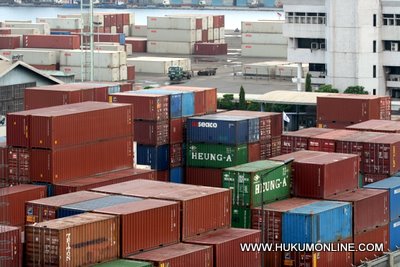 Mohammad Chatib Basri, Head of the Indonesia Investment Coordinating Board (“BKPM”), told regional economic ministers that Indonesia plans to become the investment center of the Association of South East Asian Nations (“ASEAN”) by attracting more investors and improving the overall investment climate.
“We need to focus on how to attract more investment and boost the economy,” he said in the 44th Meeting of ASEAN Ministers of Economy in Siem Reap, Cambodia, on Tuesday (28/8). He stated that Indonesia would utilize the ASEAN Investment Forum to persuade investors to come to Indonesia.
Chatib told the ministers that a license tracking system will be implemented next year to allow investors to monitor the licensing process and track the status of their applications.
“The tracking system is one of BKPM’s efforts to promote transparency and to trim the overly bureaucratic licensing system,” he explained.
Chatib does not expect the European economic crisis to reduce investors’ enthusiasm for ASEAN nations. ASEAN’s biggest appeal is its population of 600 million potential consumers, with cumulative economies of USD 1.85 trillion. Indonesia, with almost 250 million people, is the biggest market in the Southeast Asia region.
Chatib also stated that a number of Indonesian businesses are currently investing in other countries or acquiring foreign companies. “In accordance with Law No. 25 of 2007 on Investment, BKPM must facilitate Indonesian investment in foreign countries,” he said.
Earlier in the session, Surin Pitsuwan, Secretary General of ASEAN, stated that aside from being the largest consumer market, Southeast Asian countries, along with China, India, South Korea and Japan, are at the center of global research and development (R&D), possess abundant natural resources, and are the world’s richest source of investment.
“Indonesia is an R&D center for leading car manufacturers like Daihatsu, which sells cars designed specifically for the Indonesian market,” Chatib stated.
Achmad Kurniadi, Deputy of the Investment Cooperation Division of BKPM, said that in 2010, the value of foreign investment in ASEAN nations reached a record-breaking USD 75.8 billion. The European Union contributed 22% of the total value, intra-ASEAN investment contributed 16%, and Japan and the United States each contributed 11%.
According to Kurniadi, Singapore received the largest amount (USD 35.5 billion), followed by Indonesia (USD 13.3 billion), Malaysia (USD 9.1 billion), and Vietnam (USD 8 billion).
Marn-Heon Wong, an analyst from the ASEAN-Business Advisory Council (ASEAN-BAC), stated that based on a survey conducted by ASEAN-BAC for 2011-2012, Indonesia is currently leading as the country with the highest investment competitiveness among the 10 ASEAN countries. Fifty percent of 405 respondents chose Indonesia as the country for their investment.
Vietnam placed second in the survey, followed by Singapore, Thailand, and Malaysia. Meanwhile, Brunei Darussalam came in last, with 17% of respondents choosing to invest there.
(hot/AM)
Fitri Novia Heriani, Mahinda Arkyasa
Mohammad Chatib Basri, Head of the Indonesia Investment Coordinating Board (“BKPM”), told regional economic ministers that Indonesia plans to become the investment center of the Association of South East Asian Nations (“ASEAN”) by attracting more investors and improving the overall investment climate.
“We need to focus on how to attract more investment and boost the economy,” he said in the 44th Meeting of ASEAN Ministers of Economy in Siem Reap, Cambodia, on Tuesday (28/8). He stated that Indonesia would utilize the ASEAN Investment Forum to persuade investors to come to Indonesia.
Chatib told the ministers that a license tracking system will be implemented next year to allow investors to monitor the licensing process and track the status of their applications.
“The tracking system is one of BKPM’s efforts to promote transparency and to trim the overly bureaucratic licensing system,” he explained.
Chatib does not expect the European economic crisis to reduce investors’ enthusiasm for ASEAN nations. ASEAN’s biggest appeal is its population of 600 million potential consumers, with cumulative economies of USD 1.85 trillion. Indonesia, with almost 250 million people, is the biggest market in the Southeast Asia region.
Chatib also stated that a number of Indonesian businesses are currently investing in other countries or acquiring foreign companies. “In accordance with Law No. 25 of 2007 on Investment, BKPM must facilitate Indonesian investment in foreign countries,” he said.
Earlier in the session, Surin Pitsuwan, Secretary General of ASEAN, stated that aside from being the largest consumer market, Southeast Asian countries, along with China, India, South Korea and Japan, are at the center of global research and development (R&D), possess abundant natural resources, and are the world’s richest source of investment.
“Indonesia is an R&D center for leading car manufacturers like Daihatsu, which sells cars designed specifically for the Indonesian market,” Chatib stated.
Achmad Kurniadi, Deputy of the Investment Cooperation Division of BKPM, said that in 2010, the value of foreign investment in ASEAN nations reached a record-breaking USD 75.8 billion. The European Union contributed 22% of the total value, intra-ASEAN investment contributed 16%, and Japan and the United States each contributed 11%.
According to Kurniadi, Singapore received the largest amount (USD 35.5 billion), followed by Indonesia (USD 13.3 billion), Malaysia (USD 9.1 billion), and Vietnam (USD 8 billion).
Marn-Heon Wong, an analyst from the ASEAN-Business Advisory Council (ASEAN-BAC), stated that based on a survey conducted by ASEAN-BAC for 2011-2012, Indonesia is currently leading as the country with the highest investment competitiveness among the 10 ASEAN countries. Fifty percent of 405 respondents chose Indonesia as the country for their investment.
Vietnam placed second in the survey, followed by Singapore, Thailand, and Malaysia. Meanwhile, Brunei Darussalam came in last, with 17% of respondents choosing to invest there.
(hot/AM)