


 Ada Pertanyaan? Hubungi Kami


 Ada Pertanyaan? Hubungi Kami
Fitri Novia Heriani, Mahinda Arkyasa
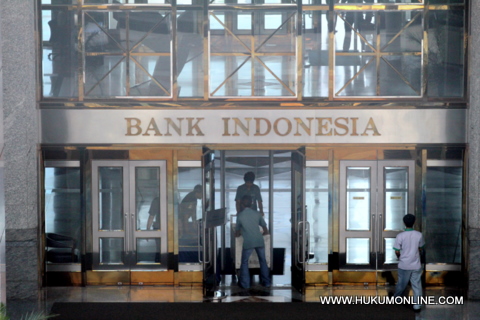 Bank Indonesia (“BI”) has decided to issue a policy on the e-money program in order to face the surge of financial transactions during the upcoming holiday feast (Lebaran). As a result, BI invited 13 banks to implement this policy.
Ronald Waas, Deputy Governor of BI, stated that there are four banks that have declared their willingness to be involved. “The four banks are PT Bank Mandiri, Bank Negara Indonesia (BNI), Bank Rakyat Indonesia (BRI), and Bank Central Asia (BCA),” he said in Jakarta, Monday (23/7).
The e-money program is an infrastructure of non-cash payment service established to anticipate non-cash transactions during Lebaran, which usually rise up to 13,7 percent from the normal days’ non-cash transactions. In addition, Ronald states that BI will optimize their performance and will be ready to work overtime in order to handle all of the transactions during the Lebaran feast period.
Banks will provide free e-money cards and will not impose any administration fees on people who want to utilize e-money as a transaction method. The program will be launched on 30 July 2012 by using a mobile cash mechanism (mobil kas keliling), which will be positioned at the Monas area, among several other places.
During the mobile cash period, people can only convert money into e-money by carrying their ATM/debit card. “E-money also provides security and convenience in a transaction. Therefore, we urge the public to utilize electronic money,” Ronald said.
Aside from the e-money program, BI will also integrate cash and non-cash payment services to raise public awareness on utilizing card-based payment instruments (APMK), especially e-money, as substitutes for banknotes and coins.
Furthermore, Ronald stated that according to the BI estimation, the requirement for money during Ramadan and Eid ul-Fitr period will reach a value of IDR 89.4 trillion, which is IDR 9.1 trillion higher compared to last year’s Ramadan and Eid ul-Fitr period outflow. Out of IDR 89.4 trillion, IDR 81.1 will be projected for large denominations (IDR 100,000; IDR 50,000; and IDR 20,000).
Meanwhile, the other IDR 8.3 trillion is projected for small denominations (IDR 10,000; IDR 5,000; IDR 2,000; and IDR 1,000) and coins. “The reserve is considered to be sufficient to fulfill the planned money projection for this period of Ramadhan and Eid,” said Ronald.
Sudaryatmo, Daily Coordinator of Indonesian Consumer Agency Foundation (YLKI), asserted that BI’s policy on e-money can be considered as inappropriate because the rate of Indonesians’ financial literacy is quite low. “BI’s proposition is ineffective,” he said.
In addition, Sudaryatmo is also concerned about the availability of facilities and infrastructure to support the program. He asserted that the e-money program could only be implemented in major cities where residents are familiar with the electronic money system and where the infrastructure is sufficient. As for remote areas, the program will not run well due to the lack of the infrastructure.
(hot/jt)
Fitri Novia Heriani, Mahinda Arkyasa
Bank Indonesia (“BI”) has decided to issue a policy on the e-money program in order to face the surge of financial transactions during the upcoming holiday feast (Lebaran). As a result, BI invited 13 banks to implement this policy.
Ronald Waas, Deputy Governor of BI, stated that there are four banks that have declared their willingness to be involved. “The four banks are PT Bank Mandiri, Bank Negara Indonesia (BNI), Bank Rakyat Indonesia (BRI), and Bank Central Asia (BCA),” he said in Jakarta, Monday (23/7).
The e-money program is an infrastructure of non-cash payment service established to anticipate non-cash transactions during Lebaran, which usually rise up to 13,7 percent from the normal days’ non-cash transactions. In addition, Ronald states that BI will optimize their performance and will be ready to work overtime in order to handle all of the transactions during the Lebaran feast period.
Banks will provide free e-money cards and will not impose any administration fees on people who want to utilize e-money as a transaction method. The program will be launched on 30 July 2012 by using a mobile cash mechanism (mobil kas keliling), which will be positioned at the Monas area, among several other places.
During the mobile cash period, people can only convert money into e-money by carrying their ATM/debit card. “E-money also provides security and convenience in a transaction. Therefore, we urge the public to utilize electronic money,” Ronald said.
Aside from the e-money program, BI will also integrate cash and non-cash payment services to raise public awareness on utilizing card-based payment instruments (APMK), especially e-money, as substitutes for banknotes and coins.
Furthermore, Ronald stated that according to the BI estimation, the requirement for money during Ramadan and Eid ul-Fitr period will reach a value of IDR 89.4 trillion, which is IDR 9.1 trillion higher compared to last year’s Ramadan and Eid ul-Fitr period outflow. Out of IDR 89.4 trillion, IDR 81.1 will be projected for large denominations (IDR 100,000; IDR 50,000; and IDR 20,000).
Meanwhile, the other IDR 8.3 trillion is projected for small denominations (IDR 10,000; IDR 5,000; IDR 2,000; and IDR 1,000) and coins. “The reserve is considered to be sufficient to fulfill the planned money projection for this period of Ramadhan and Eid,” said Ronald.
Sudaryatmo, Daily Coordinator of Indonesian Consumer Agency Foundation (YLKI), asserted that BI’s policy on e-money can be considered as inappropriate because the rate of Indonesians’ financial literacy is quite low. “BI’s proposition is ineffective,” he said.
In addition, Sudaryatmo is also concerned about the availability of facilities and infrastructure to support the program. He asserted that the e-money program could only be implemented in major cities where residents are familiar with the electronic money system and where the infrastructure is sufficient. As for remote areas, the program will not run well due to the lack of the infrastructure.
(hot/jt)