


 Ada Pertanyaan? Hubungi Kami


 Ada Pertanyaan? Hubungi Kami
Indra A Pambudy
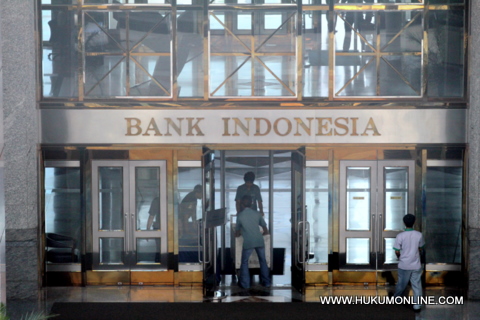 Bank Indonesia will issue a regulation to push efficiency, good corporate governance, and capitalization. It aims to create Indonesian banks that could compete against foreign banks and contribute to the national economy.
This plan is due to the condition where Indonesian banks are lagging behind, in terms of efficiency compared to their ASEAN counterparts, even if performances continue to improve.
“Low efficiency is the cause for the lag,” said BI Deputy Governor Halim Alamsyah, during banking and monetary journalism training session in Bogor, Monday (25/6).
Although the bank efficiency ratio has improved to 76.7%, as compared to April 2012, this position remains behind the banks in Malaysia, Thailand, and Singapore. Indonesian banks even remain behind Vietnam, which has the bank efficiency ratio at 46.9%.
“Though [the Indonesian banking industry] is rapidly growing, there are only four Indonesian banks in ASEAN’s top 20,” Halim added. These banks are Mandiri (9th), BRI (11th), BCA (14th), and BNI (15th).
Bank efficiency ratio measures a bank’s overhead costs as a percentage of its revenue, i.e. its ability to turn resources into revenue. In general, it measures operational costs such as salaries, rents, and other general expenses in comparison to its operational income, the 50% ratio is considered optimum. The lower the rates, the more efficient a bank becomes.
Halim explains that the inefficiency is due to high operational costs. In particular, labor, material, and service expenses. Based on BI’s data, labor expenses account for 1.29% of total assets while materials and services account for 0.54%.
“The banking industry explains that such costs result from banks’ efforts to penetrate into the regions through opening branches,” said Halim.
Such low efficiency correlates to high interest rate, which in turn results in high financing costs for the commercial activities.
High interest rates also mean that credits from bank loans account for a relatively low share of financing sources. After the 1998 financial crisis, the increase of credit-to-GDP ratio is very slow. Up to December 2011, credits stand at 29.9 % of GDP, behind the Philippines, Thailand, Malaysia, and Singapore.
The new regulation to push bank efficiency is also planned to deal with the ASEAN financial sector integration in 2020, which renders possible Qualified ASEAN Banks (“QAB”) to operate freely in the ASEAN region without barrier.
There will be large banks that will enter Indonesia, seeing that it has huge market and profitable operation with the region’s highest Return on Asset (“ROA”).
“With higher efficiency ration, those ASEAN Banks will compete and take over Indonesia’s domestic market,” he said.
For these reasons Bank Indonesia sees it necessary to issue a regulation to push efficiency, good corporate governance, and capitalizationAs a result that Indonesia’s banks can could compete against foreign banks and contribute to the economy.
(ant/hot/jt)
Indra A Pambudy
Bank Indonesia will issue a regulation to push efficiency, good corporate governance, and capitalization. It aims to create Indonesian banks that could compete against foreign banks and contribute to the national economy.
This plan is due to the condition where Indonesian banks are lagging behind, in terms of efficiency compared to their ASEAN counterparts, even if performances continue to improve.
“Low efficiency is the cause for the lag,” said BI Deputy Governor Halim Alamsyah, during banking and monetary journalism training session in Bogor, Monday (25/6).
Although the bank efficiency ratio has improved to 76.7%, as compared to April 2012, this position remains behind the banks in Malaysia, Thailand, and Singapore. Indonesian banks even remain behind Vietnam, which has the bank efficiency ratio at 46.9%.
“Though [the Indonesian banking industry] is rapidly growing, there are only four Indonesian banks in ASEAN’s top 20,” Halim added. These banks are Mandiri (9th), BRI (11th), BCA (14th), and BNI (15th).
Bank efficiency ratio measures a bank’s overhead costs as a percentage of its revenue, i.e. its ability to turn resources into revenue. In general, it measures operational costs such as salaries, rents, and other general expenses in comparison to its operational income, the 50% ratio is considered optimum. The lower the rates, the more efficient a bank becomes.
Halim explains that the inefficiency is due to high operational costs. In particular, labor, material, and service expenses. Based on BI’s data, labor expenses account for 1.29% of total assets while materials and services account for 0.54%.
“The banking industry explains that such costs result from banks’ efforts to penetrate into the regions through opening branches,” said Halim.
Such low efficiency correlates to high interest rate, which in turn results in high financing costs for the commercial activities.
High interest rates also mean that credits from bank loans account for a relatively low share of financing sources. After the 1998 financial crisis, the increase of credit-to-GDP ratio is very slow. Up to December 2011, credits stand at 29.9 % of GDP, behind the Philippines, Thailand, Malaysia, and Singapore.
The new regulation to push bank efficiency is also planned to deal with the ASEAN financial sector integration in 2020, which renders possible Qualified ASEAN Banks (“QAB”) to operate freely in the ASEAN region without barrier.
There will be large banks that will enter Indonesia, seeing that it has huge market and profitable operation with the region’s highest Return on Asset (“ROA”).
“With higher efficiency ration, those ASEAN Banks will compete and take over Indonesia’s domestic market,” he said.
For these reasons Bank Indonesia sees it necessary to issue a regulation to push efficiency, good corporate governance, and capitalizationAs a result that Indonesia’s banks can could compete against foreign banks and contribute to the economy.
(ant/hot/jt)