


 Ada Pertanyaan? Hubungi Kami


 Ada Pertanyaan? Hubungi Kami
Fitri Novia Heriani, Mahinda Arkyasa
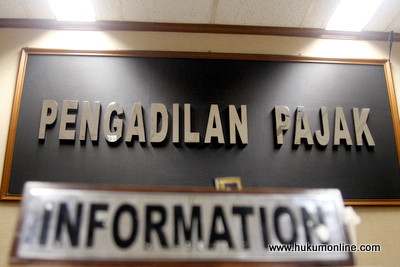 Tjip Ismail, a member of the Indonesian National Board of Arbitration (“BANI”), asserted that the present ratio between cases received by the Indonesian Tax Court and the cases that have been resolved is very much unbalanced.
In a discussion at Jakarta on Wednesday (13/6), he explained that currently, the number of cases received by the Tax Court on a daily basis can be up to 50 cases. Meanwhile, there are only 17 assemblies of judges that handle 25 cases each. This condition has slowed the assemblies for resolving tax cases.
Furthermore, Tjip added that inadequate courtrooms and lack of manpower in other fields, such as accounting, private law, state administrative law, and intellectual property rights, have also hindered the Tax Court’s ability to resolve cases.
He said that to optimize the Government revenue from the tax sector, tax cases should be resolved in a simple, quick, and low-cost way. He also said that tax trials should be held not only in Jakarta, but in other regions. “That way, cases can be effectively resolved,” he said.
In addition, new judges must be recruited by involving the Supreme Court and Constitutional Court to ensure the recruitment’s transparency. Simpler decision drafts should be made and the supervision on the court registrar in completing the decisions should be improved.
Aside from the technical issues, Tjip also stated that the inconsistency between laws and regulations have contributed to the problem. For example, Law No. 14 of 2002 on Tax Court stated that a tax court decision may be reviewed, while Law No. 6 of 1983 on General Provisions and Procedures, as amended by Law No. 16 of 2009, allows applications for appeal for tax court decisions.
Catur Rini Widodari, Director of Objections and Appeals at the Directorate General of Tax (“Directorate General”), explained that the numbers of tax cases received by the Directorate General are increasing annually. As per 2010, the Directorate General has received 16,617 cases – 6,988 have been resolved, 9,629 are unresolved.
“The numbers of cases does increase annually. However, not all of them came from one tax subject, sometimes there are two or three cases submitted by one tax subject,” she said at the same event.
Rini confirmed that most of the cases received by the Directorate General will be transferred to the Tax Court if a tax subject objects the Directorate General Decision and decides to apply for an appeal.
She expects that tax subjects do not immediately submit their cases to the Tax Court, because the Directorate General has provided teams to discuss objections on certain Directorate General decisions.
(hot/jt)
Fitri Novia Heriani, Mahinda Arkyasa
Tjip Ismail, a member of the Indonesian National Board of Arbitration (“BANI”), asserted that the present ratio between cases received by the Indonesian Tax Court and the cases that have been resolved is very much unbalanced.
In a discussion at Jakarta on Wednesday (13/6), he explained that currently, the number of cases received by the Tax Court on a daily basis can be up to 50 cases. Meanwhile, there are only 17 assemblies of judges that handle 25 cases each. This condition has slowed the assemblies for resolving tax cases.
Furthermore, Tjip added that inadequate courtrooms and lack of manpower in other fields, such as accounting, private law, state administrative law, and intellectual property rights, have also hindered the Tax Court’s ability to resolve cases.
He said that to optimize the Government revenue from the tax sector, tax cases should be resolved in a simple, quick, and low-cost way. He also said that tax trials should be held not only in Jakarta, but in other regions. “That way, cases can be effectively resolved,” he said.
In addition, new judges must be recruited by involving the Supreme Court and Constitutional Court to ensure the recruitment’s transparency. Simpler decision drafts should be made and the supervision on the court registrar in completing the decisions should be improved.
Aside from the technical issues, Tjip also stated that the inconsistency between laws and regulations have contributed to the problem. For example, Law No. 14 of 2002 on Tax Court stated that a tax court decision may be reviewed, while Law No. 6 of 1983 on General Provisions and Procedures, as amended by Law No. 16 of 2009, allows applications for appeal for tax court decisions.
Catur Rini Widodari, Director of Objections and Appeals at the Directorate General of Tax (“Directorate General”), explained that the numbers of tax cases received by the Directorate General are increasing annually. As per 2010, the Directorate General has received 16,617 cases – 6,988 have been resolved, 9,629 are unresolved.
“The numbers of cases does increase annually. However, not all of them came from one tax subject, sometimes there are two or three cases submitted by one tax subject,” she said at the same event.
Rini confirmed that most of the cases received by the Directorate General will be transferred to the Tax Court if a tax subject objects the Directorate General Decision and decides to apply for an appeal.
She expects that tax subjects do not immediately submit their cases to the Tax Court, because the Directorate General has provided teams to discuss objections on certain Directorate General decisions.
(hot/jt)