


 Ada Pertanyaan? Hubungi Kami


 Ada Pertanyaan? Hubungi Kami
Fitri Novia Heriani, Mahinda Arkyasa
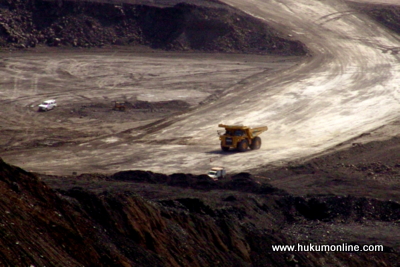 The Government finally decided to allow export of raw materials and mineral ores. The Government came under heavy fire from the mining sector when, three months ago, the Minister of Energy and Mineral Resources issued Regulation No. 7 of 2012 on Value Added Minerals and Coal Through Mineral Processing and Refinement (“Regulation”) that restricts mining companies from exporting raw materials and mineral ores.
Even though mining businesses are now allowed to export, a 20 percent export duty will be imposed on 14 minerals that are stipulated in the Regulation. These minerals are copper, gold, silver, tin, lead and zinc, chromium, molybdenum, platinum, bauxites, iron ore, iron sand, nickel and/or cobalt, manganese and antimony.
“The amount has been negotiated with mining companies,” said Jero Wacik, Minister of Energy and Mineral Resources (ESDM) in a press conference on Friday (4/5), at Jakarta.
In addition to paying the export duty, mining companies must fulfill other requirements, including submitting a proposal that describes their programs, especially for building smelters.
“Mining companies must obtain a clean and clear certificate from the Directorate General of Minerals and Coal of the Ministry of Energy and Mineral Resources,” Jero said.
Mining companies are also required to sign an integrity statement that stipulates an environmental protection agreement, a compliance statement to the 20 percent export duty, and a commitment statement to stop exporting raw minerals in 2014.
Jero said that 84 proposals have been received by the Ministry of ESDM since the issuance of the Regulation.
Thamrin Sihite, Director General of the Directorate of Minerals and Coal, reiterated that the mineral export permit will only be valid until 2014. Afterwards, mining companies will be restricted from exporting any raw minerals and will have to domestically refine them before exporting.
Meanwhile, Bobby Fadhillah, Deputy Chairman of the Indonesian Nickel Association (Asosiasi Nikel Indonesia – ANI), said that the 20 percent export duty is acceptable, “as long as export is allowed,” he said.
He explained that mining businesses agreed to the export duty because it is the lowest figure stipulated in the Mining Law, which is set between 20 to 50 percent.
(hot/am)
Fitri Novia Heriani, Mahinda Arkyasa
The Government finally decided to allow export of raw materials and mineral ores. The Government came under heavy fire from the mining sector when, three months ago, the Minister of Energy and Mineral Resources issued Regulation No. 7 of 2012 on Value Added Minerals and Coal Through Mineral Processing and Refinement (“Regulation”) that restricts mining companies from exporting raw materials and mineral ores.
Even though mining businesses are now allowed to export, a 20 percent export duty will be imposed on 14 minerals that are stipulated in the Regulation. These minerals are copper, gold, silver, tin, lead and zinc, chromium, molybdenum, platinum, bauxites, iron ore, iron sand, nickel and/or cobalt, manganese and antimony.
“The amount has been negotiated with mining companies,” said Jero Wacik, Minister of Energy and Mineral Resources (ESDM) in a press conference on Friday (4/5), at Jakarta.
In addition to paying the export duty, mining companies must fulfill other requirements, including submitting a proposal that describes their programs, especially for building smelters.
“Mining companies must obtain a clean and clear certificate from the Directorate General of Minerals and Coal of the Ministry of Energy and Mineral Resources,” Jero said.
Mining companies are also required to sign an integrity statement that stipulates an environmental protection agreement, a compliance statement to the 20 percent export duty, and a commitment statement to stop exporting raw minerals in 2014.
Jero said that 84 proposals have been received by the Ministry of ESDM since the issuance of the Regulation.
Thamrin Sihite, Director General of the Directorate of Minerals and Coal, reiterated that the mineral export permit will only be valid until 2014. Afterwards, mining companies will be restricted from exporting any raw minerals and will have to domestically refine them before exporting.
Meanwhile, Bobby Fadhillah, Deputy Chairman of the Indonesian Nickel Association (Asosiasi Nikel Indonesia – ANI), said that the 20 percent export duty is acceptable, “as long as export is allowed,” he said.
He explained that mining businesses agreed to the export duty because it is the lowest figure stipulated in the Mining Law, which is set between 20 to 50 percent.
(hot/am)