


 Ada Pertanyaan? Hubungi Kami


 Ada Pertanyaan? Hubungi Kami
Fitri Novia Heriani, Batara Parlindungan
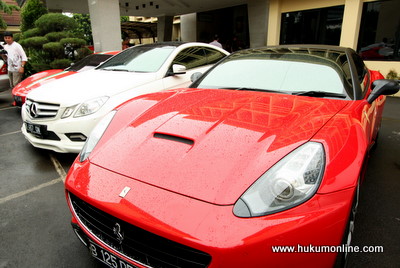 Indonesia is a market for many industrial products from other countries, from electronics to automotive. Unfortunately, the government has not adequately standardized consumer safety requirements for many imported products.
"The government must have better standardization of automotive products in order to ensure the safety of customers," said automotive analyst Pramod Jhoni, in a discussion in Jakarta, on Sunday (6/5).
One of the functions of standardization is to filter products to ensure that they are of high quality and meet safety standards.
Lately, many automotive consumers in Indonesia have felt aggrieved because of poor product safety, and some have brought cases to the courts. Jhoni cited two lawsuits filed against the Nissan Corporation related to their vehicles.
The first case involves the Nissan March, which is advertised as a fuel-efficient vehicle, but in reality, consumes a lot of fuel. The second case involves the Nissan Juke, which allegedly caused one driver to lose his life because the car was unsafe.
"This is the importance of automotive standards, to prevent things like this from happening in the future," said Jhoni.
He said that the government must give serious attention to the products that are imported into Indonesia. Every country has the right to regulate the products that will be consumed by its people. He cited the application of standardization in the U.S. as an example of an effective safety standards system.
"As a country that has so many consumers, the government must establish the same obligations as in the U.S.," said Jhoni.
So far, automotive products that come to Indonesia only follow global standards. As an automotive expert, Jhoni felt that the standards do not guarantee the safety of consumers, especially for the products that come from Japan.
For example, in Japanese automotive products that come to Indonesia, the batteries are located close to the vehicle engine. This, he says, could theoretically cause the car to burn if there is a spark in the engine.
This is in contrast with European automotive products, which put batteries in the car seat, or even in the back of the car, to maintain the safety of the consumer. However, Jhoni admitted that European products have a high price disparity compared to Japanese products.
"Japanese Cars marketed in the U.S. are different than products that marketed in Asia," he added.
He also criticized the automakers that only carry out tests on the car when the engine is off, not on.
"The government must also include this issue in the standards for automotive products in Indonesia," said Jhoni.
Sudaryatmo, Chairman of the Indonesian Consumers Foundation (Yayasan Lembaga Konsumen Indonesia/YLKI), said that the complaints coming into the YLKI concerning automotive products are normally associated with product defects, while complaints related to car advertising rarely come to YLKI.
Concerning the case of Nissan Juke, Sudaryatmo hopes that the police do not close the case immediately, because there is an element of negligence which causes loss of life in this case.
"The police must conduct further investigation to find whether or not the negligence of the manufacturer had an impact on this case," he said.
Agreeing with Jhoni, he said that the location of the battery can be seen as an indication of negligence that committed by the car manufacturer. So far, he said, the Nissan case only proceeded as a civil trial, but he thought it would be better if it proceeded under the criminal law.
In addition, he expects the government will establish a special institution to be put in charge of researching car accident cases. According to Sudaryatmo, it could facilitate the government and the public obtaining necessary information on automotive products.
(hot/am)
Fitri Novia Heriani, Batara Parlindungan
Indonesia is a market for many industrial products from other countries, from electronics to automotive. Unfortunately, the government has not adequately standardized consumer safety requirements for many imported products.
"The government must have better standardization of automotive products in order to ensure the safety of customers," said automotive analyst Pramod Jhoni, in a discussion in Jakarta, on Sunday (6/5).
One of the functions of standardization is to filter products to ensure that they are of high quality and meet safety standards.
Lately, many automotive consumers in Indonesia have felt aggrieved because of poor product safety, and some have brought cases to the courts. Jhoni cited two lawsuits filed against the Nissan Corporation related to their vehicles.
The first case involves the Nissan March, which is advertised as a fuel-efficient vehicle, but in reality, consumes a lot of fuel. The second case involves the Nissan Juke, which allegedly caused one driver to lose his life because the car was unsafe.
"This is the importance of automotive standards, to prevent things like this from happening in the future," said Jhoni.
He said that the government must give serious attention to the products that are imported into Indonesia. Every country has the right to regulate the products that will be consumed by its people. He cited the application of standardization in the U.S. as an example of an effective safety standards system.
"As a country that has so many consumers, the government must establish the same obligations as in the U.S.," said Jhoni.
So far, automotive products that come to Indonesia only follow global standards. As an automotive expert, Jhoni felt that the standards do not guarantee the safety of consumers, especially for the products that come from Japan.
For example, in Japanese automotive products that come to Indonesia, the batteries are located close to the vehicle engine. This, he says, could theoretically cause the car to burn if there is a spark in the engine.
This is in contrast with European automotive products, which put batteries in the car seat, or even in the back of the car, to maintain the safety of the consumer. However, Jhoni admitted that European products have a high price disparity compared to Japanese products.
"Japanese Cars marketed in the U.S. are different than products that marketed in Asia," he added.
He also criticized the automakers that only carry out tests on the car when the engine is off, not on.
"The government must also include this issue in the standards for automotive products in Indonesia," said Jhoni.
Sudaryatmo, Chairman of the Indonesian Consumers Foundation (Yayasan Lembaga Konsumen Indonesia/YLKI), said that the complaints coming into the YLKI concerning automotive products are normally associated with product defects, while complaints related to car advertising rarely come to YLKI.
Concerning the case of Nissan Juke, Sudaryatmo hopes that the police do not close the case immediately, because there is an element of negligence which causes loss of life in this case.
"The police must conduct further investigation to find whether or not the negligence of the manufacturer had an impact on this case," he said.
Agreeing with Jhoni, he said that the location of the battery can be seen as an indication of negligence that committed by the car manufacturer. So far, he said, the Nissan case only proceeded as a civil trial, but he thought it would be better if it proceeded under the criminal law.
In addition, he expects the government will establish a special institution to be put in charge of researching car accident cases. According to Sudaryatmo, it could facilitate the government and the public obtaining necessary information on automotive products.
(hot/am)