


 Ada Pertanyaan? Hubungi Kami


2026 Hak Cipta Milik Hukumonline.com
Produk Pilihan


 Ada Pertanyaan? Hubungi Kami
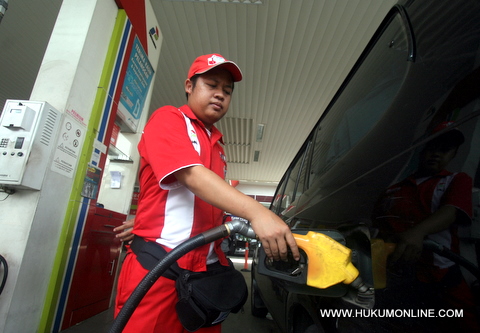 In early January 2012, President Susilo Bambang Yudhoyono announced that the Government will implement a mixed-energy policy that involves converting fuel (BBM) into gas fuel (BBG). The policy is intended to harmonize the competing goals of energy sufficiency and environmental conservation.
The government will provide 250 thousand converter kits and advises vehicle owners to convert BBM to BBG. The government chose to promote BBG, because it is considered to be eco-friendly and is available domestically.
However, the Indonesian Compressed Natural Gas Businesses Association (APCNGI) asserted that the diversification remains uncertain. This sentiment was expressed during a seminar in Jakarta, Monday (26/3).
Dani Praditya, Chairman of APCNGI, said that the lack of certainty in government policies on energy diversification creates uncertainty. Dani, however, explained that the Government has taken the right step and emphasized that APCNGI will support the plan.
He also confirmed that APCNGI is capable of establishing new gas refueling stations (Stasiun Pengisian Bahan Bakar Gas – SPBG) to carry out the plan. “We are ready to support the government’s program,” Dani said.
Currently, APCNGI owns 20 SPBGs, supported by 300 compressed natural gas transporter vehicles spread out across Java and Sumatera. These facilities and vehicles are capable of producing 60 mmscfd (million standard cubic feet per day) of BBG.
APCNGI said that it can support the conversion of 25 thousand out of 191 thousand public transportation vehicles, in 2012. “We hope the government will not offer this opportunity to foreign companies,” Dani said.
Meanwhile, Cahyo, an entrepreneur in the conversion business claimed that he has converted 1725 taxis since 2007, but complained about infrastructure and price issues related to BBM to BBG conversion. The refueling process in a SPBG could take three hours. Furthermore, he says “the public won’t use BBG unless there is a significant gap price between BBG and BBM”.
(Fitri Novia Heriani / Mahinda Arkyasa)
In early January 2012, President Susilo Bambang Yudhoyono announced that the Government will implement a mixed-energy policy that involves converting fuel (BBM) into gas fuel (BBG). The policy is intended to harmonize the competing goals of energy sufficiency and environmental conservation.
The government will provide 250 thousand converter kits and advises vehicle owners to convert BBM to BBG. The government chose to promote BBG, because it is considered to be eco-friendly and is available domestically.
However, the Indonesian Compressed Natural Gas Businesses Association (APCNGI) asserted that the diversification remains uncertain. This sentiment was expressed during a seminar in Jakarta, Monday (26/3).
Dani Praditya, Chairman of APCNGI, said that the lack of certainty in government policies on energy diversification creates uncertainty. Dani, however, explained that the Government has taken the right step and emphasized that APCNGI will support the plan.
He also confirmed that APCNGI is capable of establishing new gas refueling stations (Stasiun Pengisian Bahan Bakar Gas – SPBG) to carry out the plan. “We are ready to support the government’s program,” Dani said.
Currently, APCNGI owns 20 SPBGs, supported by 300 compressed natural gas transporter vehicles spread out across Java and Sumatera. These facilities and vehicles are capable of producing 60 mmscfd (million standard cubic feet per day) of BBG.
APCNGI said that it can support the conversion of 25 thousand out of 191 thousand public transportation vehicles, in 2012. “We hope the government will not offer this opportunity to foreign companies,” Dani said.
Meanwhile, Cahyo, an entrepreneur in the conversion business claimed that he has converted 1725 taxis since 2007, but complained about infrastructure and price issues related to BBM to BBG conversion. The refueling process in a SPBG could take three hours. Furthermore, he says “the public won’t use BBG unless there is a significant gap price between BBG and BBM”.
(Fitri Novia Heriani / Mahinda Arkyasa)