


 Ada Pertanyaan? Hubungi Kami


 Ada Pertanyaan? Hubungi Kami
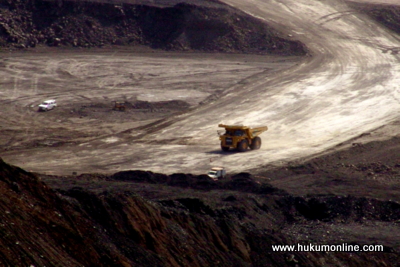 MS Hidayat, Minister of Industry, said that businesses are extensively mining for export purposes, because imports will no longer be allowed starting 2014.
This is the main reason the Minister of Energy and Mineral Resources (ESDM) issued Regulation No. 7 of 2012 on Increasing Value-Added to Minerals Through Processing and Refining (Regulation).
The Regulation stipulates that mining business permit (IUP) holders are forbidden from selling raw minerals or mineral ores to foreign countries starting May 2012.
“Ore deposits will only last five years if the exports do not change. Currently, 20 tons are exported every year. So, the Regulation is necessary to protect national interests,” Hidayat asserted.
As reported before, mining businesses have criticized the Regulation, saying some provisions could shut down medium to small sized enterprises.
Natsir Mansyur, Deputy Chairman of the Indonesian Chamber of Commerce and Industry (Kadin), said that the Minister of ESDM Jero Wacik should revise Article 21 of the Regulation. Otherwise, he predicts the country will lose about 20 percent of its revenue, or about USD 46 billion based on export revenue projections for 2012.
Article 21 of the regulation forbids IUP holders from selling raw minerals or mineral ores to foreign countries, starting three months after the regulation was issued. “This means our mining products can’t be exported and this could hurt export targets,” he said.
The Indonesian Nickel Association (Asosiasi Nikel Indonesia – ANI) also criticized the Regulation. ANI even planned to file a petition for judicial review of the Regulation. Shelby Ihsan Saleh, Chairman of ANI, said that mining businesses and local governments have urged the government to postpone implementation of the Regulation.
“If the government insists on implementing the regulation, we will take legal action, either collectively or individually,” said Shelby.
Businesses and local government officials asserted that the Regulation was a government effort to take over local government authority. Shelby also argued that it contradicts Law No. 32 of 2004 on Regional Government. He also added that the Regulation would create overlapping authority between the government and local governments.
Furthermore, Shelby highlighted Article 8 (4), which states that Special Production Operation Mining Business Permits (IUP Operasi Produksi Khusus) for processing and refining have to be issued by the Directorate General of Minerals and Coal on behalf of the Minister of ESDM, Governor, or Mayor/Regent.
Shelby asserted that Article 8 contradicts Article 14 (1) (m) and (2) of Law No. 30 of 2004 on Regional Governance. Article 14 (1) (m) states that capital investment administration businesses within a Regency/City—which includes license/permit issuance—fall within regional governments’ authority.
Meanwhile, Asfihani, a member of Commission VII of the House of Representatives, urged businesses to review their obligations stipulated in Law No. 4 of 2009 on Mineral and Coal Mining. He argued that businesses are only concerned about profits. “They mine and sell mine products as much as they can, if this continues, we will run out of minerals in 2014,” he concluded.
(M Agus Yozami / ANT / Mahinda Arkyasa)
MS Hidayat, Minister of Industry, said that businesses are extensively mining for export purposes, because imports will no longer be allowed starting 2014.
This is the main reason the Minister of Energy and Mineral Resources (ESDM) issued Regulation No. 7 of 2012 on Increasing Value-Added to Minerals Through Processing and Refining (Regulation).
The Regulation stipulates that mining business permit (IUP) holders are forbidden from selling raw minerals or mineral ores to foreign countries starting May 2012.
“Ore deposits will only last five years if the exports do not change. Currently, 20 tons are exported every year. So, the Regulation is necessary to protect national interests,” Hidayat asserted.
As reported before, mining businesses have criticized the Regulation, saying some provisions could shut down medium to small sized enterprises.
Natsir Mansyur, Deputy Chairman of the Indonesian Chamber of Commerce and Industry (Kadin), said that the Minister of ESDM Jero Wacik should revise Article 21 of the Regulation. Otherwise, he predicts the country will lose about 20 percent of its revenue, or about USD 46 billion based on export revenue projections for 2012.
Article 21 of the regulation forbids IUP holders from selling raw minerals or mineral ores to foreign countries, starting three months after the regulation was issued. “This means our mining products can’t be exported and this could hurt export targets,” he said.
The Indonesian Nickel Association (Asosiasi Nikel Indonesia – ANI) also criticized the Regulation. ANI even planned to file a petition for judicial review of the Regulation. Shelby Ihsan Saleh, Chairman of ANI, said that mining businesses and local governments have urged the government to postpone implementation of the Regulation.
“If the government insists on implementing the regulation, we will take legal action, either collectively or individually,” said Shelby.
Businesses and local government officials asserted that the Regulation was a government effort to take over local government authority. Shelby also argued that it contradicts Law No. 32 of 2004 on Regional Government. He also added that the Regulation would create overlapping authority between the government and local governments.
Furthermore, Shelby highlighted Article 8 (4), which states that Special Production Operation Mining Business Permits (IUP Operasi Produksi Khusus) for processing and refining have to be issued by the Directorate General of Minerals and Coal on behalf of the Minister of ESDM, Governor, or Mayor/Regent.
Shelby asserted that Article 8 contradicts Article 14 (1) (m) and (2) of Law No. 30 of 2004 on Regional Governance. Article 14 (1) (m) states that capital investment administration businesses within a Regency/City—which includes license/permit issuance—fall within regional governments’ authority.
Meanwhile, Asfihani, a member of Commission VII of the House of Representatives, urged businesses to review their obligations stipulated in Law No. 4 of 2009 on Mineral and Coal Mining. He argued that businesses are only concerned about profits. “They mine and sell mine products as much as they can, if this continues, we will run out of minerals in 2014,” he concluded.
(M Agus Yozami / ANT / Mahinda Arkyasa)