


 Ada Pertanyaan? Hubungi Kami


 Ada Pertanyaan? Hubungi Kami
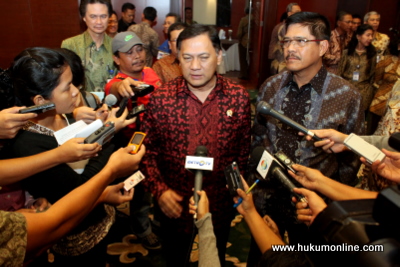 Commission XI of the House approved 176 out of 500 articles on the List of Problems (Daftar Inventarisasi Masalah - DIM) for the Draft Bill on State and Regional Receivables. Agus Martowardojo, Minister of Finance, explained that the Draft Bill is important, because many state-owned companies (BUMN) and regionally-owned companies (BUMD) have trouble collecting receivables.
"The approvals are a good thing. I hoped that discussion over the Draft Bill would generate more recommendations," Agus said at the House Secretariat, Thursday (2/2).
The Draft Bill is also important, because it encourages BUMN and BUMD to improve their businesses. It should be noted that the government and regional governments do not fully control BUMNs and BUMDs anymore, since many private parties are involved in these companies.
Agus hopes that BUMNs and BUMDs will be able to manage their own receivables after the Draft Bill is passed, reducing concerns about state losses. BUMNs and BUMDs, Agus further explained, have always complained that their receivables are categorized as state receivables.
Soepomo, Director of Receivables, explained that the state had 150.000 debtors and uncollected receivables amounted to IDR 57 trillion, in 2011. Most of the debt should be collected from Indonesian Bank Restructuring Agency (Badan Penyehatan Perbankan Nasional - BPPN).
Muhammad Hatta, a member of Commission XI, agreed that BUMN/BUMD receivables should be separated from state receivables. "When BUMN/BUMD generate a profit, the state will enjoy it, and vice versa. That's why, BUMN/BUMD receivables can't be considered state receivables," Hatta asserted.
Commission XI invited the State-Owned Bank Association (Himpunan Bank Milik Negara) to discuss the Draft Bill on 24 October 2011. The Association consists of Bank BNI, Bank BTN, Bank Mandiri, and Bank BRI.
Meanwhile, Bambang Sutrisno, Secretary General of the Indonesian Sharia Bank Association, explained some issues regarding the Draft Bill. First, he explained that executorial authority means that there is a separation of powers between judicial institutions and receivable management officers.
Second, he said the Bill needs to prevent a moral hazard issue. According to Bambang, regional receivables are determined by regional policy. Therefore, a moral hazard will be created if receivables are settled by the government.
Third, Bambang asserted that the receivable settlement process in the Draft Bill is too simple. "The settlement should consider many factors," Bambang said.
(M Agus Yozami / Pirhot Nababan)
Commission XI of the House approved 176 out of 500 articles on the List of Problems (Daftar Inventarisasi Masalah - DIM) for the Draft Bill on State and Regional Receivables. Agus Martowardojo, Minister of Finance, explained that the Draft Bill is important, because many state-owned companies (BUMN) and regionally-owned companies (BUMD) have trouble collecting receivables.
"The approvals are a good thing. I hoped that discussion over the Draft Bill would generate more recommendations," Agus said at the House Secretariat, Thursday (2/2).
The Draft Bill is also important, because it encourages BUMN and BUMD to improve their businesses. It should be noted that the government and regional governments do not fully control BUMNs and BUMDs anymore, since many private parties are involved in these companies.
Agus hopes that BUMNs and BUMDs will be able to manage their own receivables after the Draft Bill is passed, reducing concerns about state losses. BUMNs and BUMDs, Agus further explained, have always complained that their receivables are categorized as state receivables.
Soepomo, Director of Receivables, explained that the state had 150.000 debtors and uncollected receivables amounted to IDR 57 trillion, in 2011. Most of the debt should be collected from Indonesian Bank Restructuring Agency (Badan Penyehatan Perbankan Nasional - BPPN).
Muhammad Hatta, a member of Commission XI, agreed that BUMN/BUMD receivables should be separated from state receivables. "When BUMN/BUMD generate a profit, the state will enjoy it, and vice versa. That's why, BUMN/BUMD receivables can't be considered state receivables," Hatta asserted.
Commission XI invited the State-Owned Bank Association (Himpunan Bank Milik Negara) to discuss the Draft Bill on 24 October 2011. The Association consists of Bank BNI, Bank BTN, Bank Mandiri, and Bank BRI.
Meanwhile, Bambang Sutrisno, Secretary General of the Indonesian Sharia Bank Association, explained some issues regarding the Draft Bill. First, he explained that executorial authority means that there is a separation of powers between judicial institutions and receivable management officers.
Second, he said the Bill needs to prevent a moral hazard issue. According to Bambang, regional receivables are determined by regional policy. Therefore, a moral hazard will be created if receivables are settled by the government.
Third, Bambang asserted that the receivable settlement process in the Draft Bill is too simple. "The settlement should consider many factors," Bambang said.
(M Agus Yozami / Pirhot Nababan)