


 Ada Pertanyaan? Hubungi Kami


 Ada Pertanyaan? Hubungi Kami
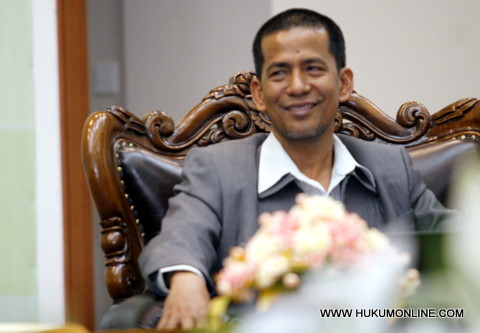 Saldi Isra, a state law expert, asserted that Article 14 (e) and (f) of Law No. 33 of 2004 on the Financial Balance Between State and Local Government (“Law 33/2004”), created a loophole that harmed oil and gas producing regions.
“The reason is the existence of the phrase ‘other fees',” he said during a judical review trial at the Constitutional Court (MK), Tuesday (1/2). According to Saldi, these fees are collected before revenue is shared with oil and gas mining regions, and the phrase can be used as a way to reduce local distribution percentages.
Saldi said that Article 14 (e) and (f) of Law 33/2004 contradict Article 18A of the 1945 Constitution, which states that utilization of natural resources must be regulated and implemented fairly and in a balanced manner. “It is hard to argue that Article 14 (e) and (f) doesn’t violate the 1945 Constitution,” he asserted.
He added, revising oil and gas revenue-sharing (DBH) would be better. “Experts agreed that MK is the perfect institution to communicate that idea,” he said.
Article 14 (e) and (f) also contradicts Article 18 (2), Article 28D (1), and Article 28I (2) of the 1945 Constitution, due to discriminatory management of some oil and gas producing regions.
East Kalimantan Governor Awang Faroek Ishak admitted that his province has been underdeveloped for 65 years. The province cannot even supply basic needs for the people living there. “We demand fair oil and gas revenue-sharing. Look at Kutai Kertanegara, the people are poor and they can’t enjoy clean water and good roads,” he said after the judicial review trial. Nevertheless, he will respect MK’s decision, no matter what the outcome is.
The request for judicial review was submitted by members of the United People of Kalimantan Assembly (Majelis Rakyat Kalimantan Bersatu –MRKTB). The members of MRKTB are Sundy Ingan (head of Sungai Bawang village), Andu (farmer from Badak Baru village), and Luther Kombong, H Awang Ferdian Hidayat, Muslihuddin Abdurrasyid and Bambang Susilo (members of the Regional Representatives).
The applicants believe their constitutional rights were harmed, because of Article 14 (e) and (f) of the Law 33/2004. Eighty-four percent of oil DBH goes to the government and 15.5 percent goes to local government. Meanwhile, 69.5 percent of natural gas DBH goes to the government and 30.5 percent goes to local government.
The applicants consider the revenue-sharing percentage to be unfair, and too low to improve people's quality of life. Furthermore, the applicants' region suffers from low standards of living and social degradation, because it is a public mining area.
The applicants asked MK to declare Article 14 (e) and (f) of Law 33/2004 unconstitutional and not binding. Furthermore, they also asked for enforcement of the revenue sharing arrangement stipulated in Law No. 11 of 2006 on Aceh Government and/or Law No. 21 of 2001 on Special Autonomy for Papua.
(Agus Sahbani / Mahinda Arkyasa)
Saldi Isra, a state law expert, asserted that Article 14 (e) and (f) of Law No. 33 of 2004 on the Financial Balance Between State and Local Government (“Law 33/2004”), created a loophole that harmed oil and gas producing regions.
“The reason is the existence of the phrase ‘other fees',” he said during a judical review trial at the Constitutional Court (MK), Tuesday (1/2). According to Saldi, these fees are collected before revenue is shared with oil and gas mining regions, and the phrase can be used as a way to reduce local distribution percentages.
Saldi said that Article 14 (e) and (f) of Law 33/2004 contradict Article 18A of the 1945 Constitution, which states that utilization of natural resources must be regulated and implemented fairly and in a balanced manner. “It is hard to argue that Article 14 (e) and (f) doesn’t violate the 1945 Constitution,” he asserted.
He added, revising oil and gas revenue-sharing (DBH) would be better. “Experts agreed that MK is the perfect institution to communicate that idea,” he said.
Article 14 (e) and (f) also contradicts Article 18 (2), Article 28D (1), and Article 28I (2) of the 1945 Constitution, due to discriminatory management of some oil and gas producing regions.
East Kalimantan Governor Awang Faroek Ishak admitted that his province has been underdeveloped for 65 years. The province cannot even supply basic needs for the people living there. “We demand fair oil and gas revenue-sharing. Look at Kutai Kertanegara, the people are poor and they can’t enjoy clean water and good roads,” he said after the judicial review trial. Nevertheless, he will respect MK’s decision, no matter what the outcome is.
The request for judicial review was submitted by members of the United People of Kalimantan Assembly (Majelis Rakyat Kalimantan Bersatu –MRKTB). The members of MRKTB are Sundy Ingan (head of Sungai Bawang village), Andu (farmer from Badak Baru village), and Luther Kombong, H Awang Ferdian Hidayat, Muslihuddin Abdurrasyid and Bambang Susilo (members of the Regional Representatives).
The applicants believe their constitutional rights were harmed, because of Article 14 (e) and (f) of the Law 33/2004. Eighty-four percent of oil DBH goes to the government and 15.5 percent goes to local government. Meanwhile, 69.5 percent of natural gas DBH goes to the government and 30.5 percent goes to local government.
The applicants consider the revenue-sharing percentage to be unfair, and too low to improve people's quality of life. Furthermore, the applicants' region suffers from low standards of living and social degradation, because it is a public mining area.
The applicants asked MK to declare Article 14 (e) and (f) of Law 33/2004 unconstitutional and not binding. Furthermore, they also asked for enforcement of the revenue sharing arrangement stipulated in Law No. 11 of 2006 on Aceh Government and/or Law No. 21 of 2001 on Special Autonomy for Papua.
(Agus Sahbani / Mahinda Arkyasa)