


 Ada Pertanyaan? Hubungi Kami


 Ada Pertanyaan? Hubungi Kami
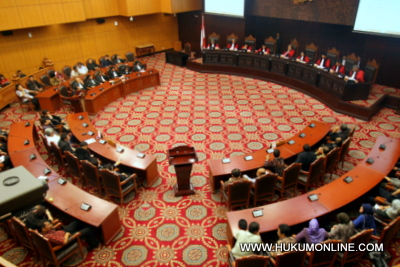 The acquisition of Indosiar, a privately-owned TV station, by PT. Elang Mahkota Teknologi Tbk, the owner of the SCTV station, has led to a judicial review request. The Independent Coalition for the Democratization of Broadcasting (KIDP) filed a request for the Constitutional Court to review Article 18 (1) and Article 34 (4) of Law No. 32 of 2002 on Broadcasting (“Broadcasting Law”).
KIDP argued that the above mentioned articles are interpreted unilaterally by either corporations or individuals, which results in concentrated ownership of TV stations and radio stations by small number of businessmen.
As a result, KIDP says press independence is threatened and there is a monopoly on information. Therefore, KIDP asked the Constitutional Court to declare that unilateral interpretation of Article 18 (1) and 34 (4) of the Broadcasting Law is unconstitutional.
On the other hand, the government argued that Article 18 (1) of the Broadcasting Law does leave any room for unilateral interpretation since there is an official interpretation of the Broadcasting Law in Government Regulation No. 50 of 2005 on Organizing Private Broadcasting Enterprises (“PP 50/2005”).
“When drafting PP 50/2005, the government paid a lot of attention to issues such as monopolies and business competition,” says Syukri Batubara, Director General of Postal and Information Technology Organizing, at the Constitutional Court, in Jakarta, Tuesday (10/1).
In response to the monopoly issue, Syukri said that not all broadcasting companies broadcast similar material. The media, he said, also broadcasts educational, healthy entertainment, and social control programs, in addition to distributing information.
Therefore, Syukri asserted, judicial review of Article 18 (1) of the Broadcasting Law is not about a constitutional norm. “The implementation [of Article 18] depends on a court process and decisions from the Business Competition Supervisory Commission (KPPU),” said Syukri.
Moreover, he said there is no need to interpret the phrase “other party” under Article 34 (4) of Broadcasting Law. Article 34 (4) states that a Broadcasting License (Izin Penyelenggaran Penyiaran – IPP) cannot be transferredto any party, including a media owner or private broadcasting enterprise.
“It is reasonable for the Constitutional Court to reject the applicant's application. Therefore, Article 18 (1) and 34 (4) of the Broadcasting Law do not need to be interpreted,” he pleaded.
Yusril Ihza Mahendra, MNC Group’s legal counsel, echoed the government’s position. He asserted that Article 18 (1) was implemented by PP 50/2005. However, the applicant didnot mentionanythingabout PP 50/2005.
Moreover, Yusril stated that the judicial review of Article 18 (1) was rejectedby Constitutional Court Decision No.005/PUU-I/2003. In the decision, the Constitutional Court argued that Article 18 (1) and other articles were intended to prevent information monopolies.
The Constitutional Court, Yusril explained, decided the case before PP 50/2005 was issued. Thus, the Courthas already interpreted Article 18 (1) of the Broadcasting Lawand concluded that it is meant to prevent monopolies. “The Court’s considerationwasaccomodated inPP 50/2005,” he concluded.
(Agus Sahbani / Mahinda Arkyasa / Aurora Meliala)
The acquisition of Indosiar, a privately-owned TV station, by PT. Elang Mahkota Teknologi Tbk, the owner of the SCTV station, has led to a judicial review request. The Independent Coalition for the Democratization of Broadcasting (KIDP) filed a request for the Constitutional Court to review Article 18 (1) and Article 34 (4) of Law No. 32 of 2002 on Broadcasting (“Broadcasting Law”).
KIDP argued that the above mentioned articles are interpreted unilaterally by either corporations or individuals, which results in concentrated ownership of TV stations and radio stations by small number of businessmen.
As a result, KIDP says press independence is threatened and there is a monopoly on information. Therefore, KIDP asked the Constitutional Court to declare that unilateral interpretation of Article 18 (1) and 34 (4) of the Broadcasting Law is unconstitutional.
On the other hand, the government argued that Article 18 (1) of the Broadcasting Law does leave any room for unilateral interpretation since there is an official interpretation of the Broadcasting Law in Government Regulation No. 50 of 2005 on Organizing Private Broadcasting Enterprises (“PP 50/2005”).
“When drafting PP 50/2005, the government paid a lot of attention to issues such as monopolies and business competition,” says Syukri Batubara, Director General of Postal and Information Technology Organizing, at the Constitutional Court, in Jakarta, Tuesday (10/1).
In response to the monopoly issue, Syukri said that not all broadcasting companies broadcast similar material. The media, he said, also broadcasts educational, healthy entertainment, and social control programs, in addition to distributing information.
Therefore, Syukri asserted, judicial review of Article 18 (1) of the Broadcasting Law is not about a constitutional norm. “The implementation [of Article 18] depends on a court process and decisions from the Business Competition Supervisory Commission (KPPU),” said Syukri.
Moreover, he said there is no need to interpret the phrase “other party” under Article 34 (4) of Broadcasting Law. Article 34 (4) states that a Broadcasting License (Izin Penyelenggaran Penyiaran – IPP) cannot be transferredto any party, including a media owner or private broadcasting enterprise.
“It is reasonable for the Constitutional Court to reject the applicant's application. Therefore, Article 18 (1) and 34 (4) of the Broadcasting Law do not need to be interpreted,” he pleaded.
Yusril Ihza Mahendra, MNC Group’s legal counsel, echoed the government’s position. He asserted that Article 18 (1) was implemented by PP 50/2005. However, the applicant didnot mentionanythingabout PP 50/2005.
Moreover, Yusril stated that the judicial review of Article 18 (1) was rejectedby Constitutional Court Decision No.005/PUU-I/2003. In the decision, the Constitutional Court argued that Article 18 (1) and other articles were intended to prevent information monopolies.
The Constitutional Court, Yusril explained, decided the case before PP 50/2005 was issued. Thus, the Courthas already interpreted Article 18 (1) of the Broadcasting Lawand concluded that it is meant to prevent monopolies. “The Court’s considerationwasaccomodated inPP 50/2005,” he concluded.
(Agus Sahbani / Mahinda Arkyasa / Aurora Meliala)