


 Ada Pertanyaan? Hubungi Kami


 Ada Pertanyaan? Hubungi Kami
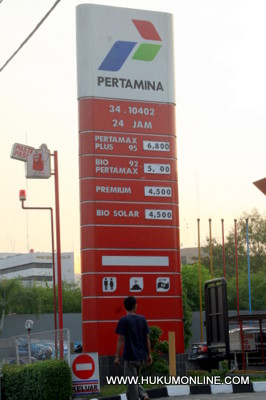 The government plan to restrict subsidized fuel consumption, especially for private cars in Java-Bali, has been heavily criticized. Under the government plan, private cars in Java and Bali must use Pertamax instead of Premium fuel, starting on 1 April 2012. The government has allocated IDR 123,559 trillion for subsidized fuel in the 2012 State Budget, to purchase about 40 million kiloliters of oil.
The policy will be implemented in other regions, such as Sumatra, Kalimantan, Sulawesi, Papua and Maluku, in 2013 and 2014. Only public transportation, public service vehicles and motorcycles will be allowed to use subsidized fuel.
Aria Bima, Deputy Chairman of Commission VI at the House of Representatives, claims that the policy will cause chaos. It is ironic, said Aria, that people are prohibited from buying subsidized fuel (Premium fuel) for private cars, but they find it difficult to buy unsubsidized fuel (Pertamax type) at gas stations.
“The same thing also happened with LPG [liquid petroleum gas, red.]. Most car owners can not refuel their cars since LPG is rarely provided by gas stations,” said Aria in Jakarta, Tuesday (10/1).
He is also worried about the conversion policy, which will probably be implemented in April 2010. Arla is concerned that the policy will cause long queues in stations and lead to chaos. He insists that the government must suspend the policy and review it.
Aria is against the conversion policy for several reasons. First, he said, the policy requires people to buy an expensive imported converter kit that can cost up to IDR 15 million per kit. Second, there are not enough stations that provide LPG. Indonesia only has 16 stations that provide LPG. All of them are located in Jakarta and only eight are operating.
Moreover, Aria asserted that the subsidized fuel restriction will reduce the competitiveness of Indonesian products, because it will increase production costs. “Small businesses and farmers use cars for their daily activities. Car owners are not always from high-income brackets,” he added.
However, Satya W Yudha, member of Commission VII, has not taken a position on this issue yet. Satya said that government does not need the parliament’s approval to cut subsidized fuel consumption. However, when it comes to policy implementation, the government has to inform the parliament.
On the other hand, many parties recommended raising fuel prices, rather than restricting fuel consumption. According to Tulus Abadi, a member of the Indonesian Consumers Organization’s (Yayasan Lembaga Konsumen Indonesia – YLKI) organizing committee, the fuel restriction policy is dominated by political interests instead of public interests.
Tulus also said a fuel restriction would cause social problems, since regional subsidized fuel prices are more expensive than the original price. Besides, there is no significant effort to prevent fuel smuggling, such as in Kalimantan.
Furthermore, Komaidi Notononegoro, Deputy Director of the Reform Miners Institute, said that the decision not to increase fuel prices will cause difficulties for the government itself. “In an economic context, raising the price of fuel is the simplest and most rational option. But it is different in the political context,” Komaidi asserted.
(M Agus Yozami / Aurora Meliala)
The government plan to restrict subsidized fuel consumption, especially for private cars in Java-Bali, has been heavily criticized. Under the government plan, private cars in Java and Bali must use Pertamax instead of Premium fuel, starting on 1 April 2012. The government has allocated IDR 123,559 trillion for subsidized fuel in the 2012 State Budget, to purchase about 40 million kiloliters of oil.
The policy will be implemented in other regions, such as Sumatra, Kalimantan, Sulawesi, Papua and Maluku, in 2013 and 2014. Only public transportation, public service vehicles and motorcycles will be allowed to use subsidized fuel.
Aria Bima, Deputy Chairman of Commission VI at the House of Representatives, claims that the policy will cause chaos. It is ironic, said Aria, that people are prohibited from buying subsidized fuel (Premium fuel) for private cars, but they find it difficult to buy unsubsidized fuel (Pertamax type) at gas stations.
“The same thing also happened with LPG [liquid petroleum gas, red.]. Most car owners can not refuel their cars since LPG is rarely provided by gas stations,” said Aria in Jakarta, Tuesday (10/1).
He is also worried about the conversion policy, which will probably be implemented in April 2010. Arla is concerned that the policy will cause long queues in stations and lead to chaos. He insists that the government must suspend the policy and review it.
Aria is against the conversion policy for several reasons. First, he said, the policy requires people to buy an expensive imported converter kit that can cost up to IDR 15 million per kit. Second, there are not enough stations that provide LPG. Indonesia only has 16 stations that provide LPG. All of them are located in Jakarta and only eight are operating.
Moreover, Aria asserted that the subsidized fuel restriction will reduce the competitiveness of Indonesian products, because it will increase production costs. “Small businesses and farmers use cars for their daily activities. Car owners are not always from high-income brackets,” he added.
However, Satya W Yudha, member of Commission VII, has not taken a position on this issue yet. Satya said that government does not need the parliament’s approval to cut subsidized fuel consumption. However, when it comes to policy implementation, the government has to inform the parliament.
On the other hand, many parties recommended raising fuel prices, rather than restricting fuel consumption. According to Tulus Abadi, a member of the Indonesian Consumers Organization’s (Yayasan Lembaga Konsumen Indonesia – YLKI) organizing committee, the fuel restriction policy is dominated by political interests instead of public interests.
Tulus also said a fuel restriction would cause social problems, since regional subsidized fuel prices are more expensive than the original price. Besides, there is no significant effort to prevent fuel smuggling, such as in Kalimantan.
Furthermore, Komaidi Notononegoro, Deputy Director of the Reform Miners Institute, said that the decision not to increase fuel prices will cause difficulties for the government itself. “In an economic context, raising the price of fuel is the simplest and most rational option. But it is different in the political context,” Komaidi asserted.
(M Agus Yozami / Aurora Meliala)