


 Ada Pertanyaan? Hubungi Kami


 Ada Pertanyaan? Hubungi Kami
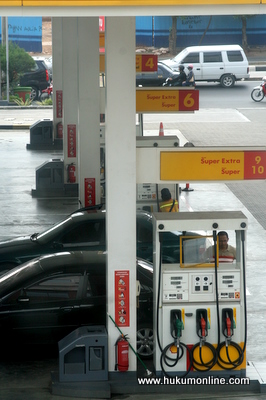 Mardani Ali Sera, member of Commission VII of the House of Representatives, said that it is better for the government to increase the price of fuel rather than restricting fuel consumption. He explained that the subsidized fuel issue will not be resolved entirely in 2012; therefore, a restriction is not the right solution.
Mardani said, inadequate refinery capacity results in fuel importation. Indonesia consumes 1,4-1,5 million barrels of fuel per day; however, available refineries can only produce 1,1 million barrels.
“They have been operating at maximum capacity, so we have to import 400 thousand barrels a day. That is why fuel price increases of about IDR 500 - 1000 are better, and we can save IDR 38 billion on fuel imports,” said Mardani, a PKS politician, in Jakarta, Saturday (7/1).
The Indonesian Consumers Organization (Yayasan Lembaga Konsumen Indonesia – YLKI) came to the same conclusion. According to Tulus Abadi, a member of YLKI’s organizing committee, the fuel restriction policy is dominated by political interests, instead of public interests.
Tulus also said a fuel restriction would cause social problems, since regional subsidized fuel prices are more expensive than the original price. Besides, there is no significant effort to prevent fuel smuggling, such as in Kalimantan.
“Fuel smuggling is ongoing, meanwhile the price is still high. Distortions will definitely occur if the government restricts fuel use rather than increasing the price,” he added.
The government insists on implementing fuel restrictions this year. Widjajono Partowidagdo, the Deputy Minister of Energy and Mineral Resources, said that the public can shift to alternative energy such as gas. Widjajono asserted that there are not many non-renewable energy reserves in Indonesia such as oil. Widjajono estimated fuel restrictions will result in savings worth IDR 230 trillion.
“The funds saved can be used for highways, railroads, and public facilities,” he said.
The fuel restriction policy will be implemented on 1 April 2012 and will be applied in Java and Bali. However, Komaidi Notononegoro, Deputy Director of the Reform Miners Institute, said that the decision not to increase fuel prices will cause difficulties for the government itself.
“In an economic context, raising the price of fuel is the simplest and most rational option. But it is different in the political context,” Komaidi asserted.
(M. Agus Yozami / Aurora Meliala)
Mardani Ali Sera, member of Commission VII of the House of Representatives, said that it is better for the government to increase the price of fuel rather than restricting fuel consumption. He explained that the subsidized fuel issue will not be resolved entirely in 2012; therefore, a restriction is not the right solution.
Mardani said, inadequate refinery capacity results in fuel importation. Indonesia consumes 1,4-1,5 million barrels of fuel per day; however, available refineries can only produce 1,1 million barrels.
“They have been operating at maximum capacity, so we have to import 400 thousand barrels a day. That is why fuel price increases of about IDR 500 - 1000 are better, and we can save IDR 38 billion on fuel imports,” said Mardani, a PKS politician, in Jakarta, Saturday (7/1).
The Indonesian Consumers Organization (Yayasan Lembaga Konsumen Indonesia – YLKI) came to the same conclusion. According to Tulus Abadi, a member of YLKI’s organizing committee, the fuel restriction policy is dominated by political interests, instead of public interests.
Tulus also said a fuel restriction would cause social problems, since regional subsidized fuel prices are more expensive than the original price. Besides, there is no significant effort to prevent fuel smuggling, such as in Kalimantan.
“Fuel smuggling is ongoing, meanwhile the price is still high. Distortions will definitely occur if the government restricts fuel use rather than increasing the price,” he added.
The government insists on implementing fuel restrictions this year. Widjajono Partowidagdo, the Deputy Minister of Energy and Mineral Resources, said that the public can shift to alternative energy such as gas. Widjajono asserted that there are not many non-renewable energy reserves in Indonesia such as oil. Widjajono estimated fuel restrictions will result in savings worth IDR 230 trillion.
“The funds saved can be used for highways, railroads, and public facilities,” he said.
The fuel restriction policy will be implemented on 1 April 2012 and will be applied in Java and Bali. However, Komaidi Notononegoro, Deputy Director of the Reform Miners Institute, said that the decision not to increase fuel prices will cause difficulties for the government itself.
“In an economic context, raising the price of fuel is the simplest and most rational option. But it is different in the political context,” Komaidi asserted.
(M. Agus Yozami / Aurora Meliala)