


 Ada Pertanyaan? Hubungi Kami


 Ada Pertanyaan? Hubungi Kami
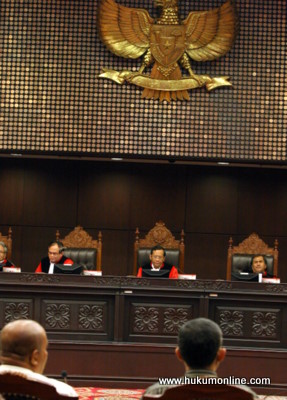 The government believes Article 4 (1) of Law No. 3 of 1992 on Workers Social Security (Jamsostek) and Article 13 (1) Law No. 40/2004 on the National Social Security System (SJSN) is already sufficient in protecting workers. The two articles require that employers register their employees in the Jamsostek program.
“As stipulated in Article 29 of Law No. 3/1992, if employers does not obey the obligation there will be penalties. Therefore, the judicial review of this regulation is about implementation rather than constitutional norms,” said Wahyu Indrawati, Director of Wages and Social Security at the Ministry of Labor and Transmigration, during a judicial review trial in the Constitutional Court, Tuesday (6/12).
The judicial review of Article 4 (1) of the Jamsostek Law and Article 13 (1) of SJSN Law was filed by M Komaruddin (Chairman of Ikatan Serikat Buruh Indonesia-ISBI), M Hafidz, and Yuliyanti (PT Megah Buana employees). The articles regards to employer’s obligation to register their employees in a social security program.
However, there are many employers who do not register their workers in the program, which provides insurance for accidents, health, pensions, longevity and death. Therefore, the articles are detrimental to an applicant's constitutional rights, which are regulated in Article 28H paragraph (3) of the 1945 Constitution.
Wahyu asserted that an employer’s obligation under Article 4 (1) of the Jamsostek Law and Article 13 (1) of SJSN Law is a form of legal certainty and protection for workers. "Those articles are consistent with Article 28D paragraph (1) of the 1945 Constitution," Wahyu said.
Article 4 (1) of Jamsostek Law and Article 13 (1) of SJSN Law, said Wahyu, are in accordance with the principle of clarity and certainty; therefore, the articles do not require further interpretation. These two articles are in line with the constitutional mandate, providing protection to every person, especially workers/labors.
(Agus Sahbani / Aurora Meliala)
The government believes Article 4 (1) of Law No. 3 of 1992 on Workers Social Security (Jamsostek) and Article 13 (1) Law No. 40/2004 on the National Social Security System (SJSN) is already sufficient in protecting workers. The two articles require that employers register their employees in the Jamsostek program.
“As stipulated in Article 29 of Law No. 3/1992, if employers does not obey the obligation there will be penalties. Therefore, the judicial review of this regulation is about implementation rather than constitutional norms,” said Wahyu Indrawati, Director of Wages and Social Security at the Ministry of Labor and Transmigration, during a judicial review trial in the Constitutional Court, Tuesday (6/12).
The judicial review of Article 4 (1) of the Jamsostek Law and Article 13 (1) of SJSN Law was filed by M Komaruddin (Chairman of Ikatan Serikat Buruh Indonesia-ISBI), M Hafidz, and Yuliyanti (PT Megah Buana employees). The articles regards to employer’s obligation to register their employees in a social security program.
However, there are many employers who do not register their workers in the program, which provides insurance for accidents, health, pensions, longevity and death. Therefore, the articles are detrimental to an applicant's constitutional rights, which are regulated in Article 28H paragraph (3) of the 1945 Constitution.
Wahyu asserted that an employer’s obligation under Article 4 (1) of the Jamsostek Law and Article 13 (1) of SJSN Law is a form of legal certainty and protection for workers. "Those articles are consistent with Article 28D paragraph (1) of the 1945 Constitution," Wahyu said.
Article 4 (1) of Jamsostek Law and Article 13 (1) of SJSN Law, said Wahyu, are in accordance with the principle of clarity and certainty; therefore, the articles do not require further interpretation. These two articles are in line with the constitutional mandate, providing protection to every person, especially workers/labors.
(Agus Sahbani / Aurora Meliala)