


 Ada Pertanyaan? Hubungi Kami


 Ada Pertanyaan? Hubungi Kami
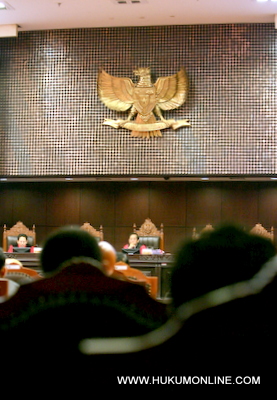 During a judicial review trial in the Constitutional Court, Wednesday (7/12), the government argued that the policy on financial relations between the central government and regional governments is in accordance with prevailing laws and regulations. This includes the oil and gas revenue sharing fund (dana bagi hasil – DBH) percentage.
"Calculation of DBH in the natural resources sector involved all of the stakeholders, such as the Upstream Oil and Gas Supervisory Agency [BP Migas]; Ministry of Energy and Mineral Resources, Ministry of Interior Affairs, and also the producing regions," said KA Badarudding, Acting Secretary General of the Ministry of Finance.
Badaruddin said there was no causal relationship between social and environmental problems and the DBH percentage for oil and gas mining activities. "The limited funds allocated to local governments are not the only reason for the low social welfare of East Kalimantan society," said Badaruddin.
It also depends on the distribution of the Regional Revenue and Expenditure Budget (APBD). For example, in 2008, the total revenue for East Kalimantan province was IDR 21,9 trillion. In 2011, it increased to IDR 26, 33 trillion.
"Most of East Kalimantan’s revenue is generated from DBH, which was IDR 13,5 billion or 61,7 percent in 2009 and IDR 61,1 trillion or 61,2 percent in 2011. However, the APBD distribution are still limited," Badaruddin said.
According to him, the low social welfare level along with social and environmental degradation are caused by mining companies, not the lack of DBH sharing percentage between central and local governments.
"Therefore Article 14 (e) and (f) of Law No. 33 of 2004 on the Financial Balance Between Central and Local Governments, does not contradict Article 1 (1); Article 18A (2); and Article 33 (1), (3), (4) of the 1945 Constitution," Badaruddin said.
The judicial review petition for Article 14 (e) and (f) of Law 33/2004 was filed by Kalimantan United People's Assembly (Majelis Rakyat Kalimantan Bersatu – MRKTB), Sundy Ingan (Head of the Sungai Bawang Village), Andu (farmer from Desa Badak Baru), and members of the Regional Representative Council, Luther Kombong, H Awang Ferdian Hidayat, and Bambang Susilo.
The applicants felt that Article 14 (e) and (f) of Law 33/2004, which stipulates that the revenue sharing in the oil sector is set at 84,5 percent for the government and 15,5 percent for regions, violated their constitutional rights. Furthermore, revenue sharing in the natural gas sector is set at 69,5 percent for the government and 30,5 percent for regions.
The applicants believe that the percentage is unfair, does not provide legal certainty, is discriminatory, and does not reflect the use of natural resources for the people’s benefit. Moreover, the applicant’s come from a general mining area that has experienced social and environmental problems that are directly or indirectly related to mining activities.
As a result, the applicants asked the Constitutional Court to find that Article 14 (e) and (f) of Law 33/2004 contradict Article 1 (1), Article 18A (2), and Article 33 of the 1945 Constitution. In addition, the applicants also requested that Article 14 (e) and (f) be revoked and have no binding force.
In addition, the applicants asked the Court to apply the provisions on revenue sharing which favors special regions such as Aceh and Papua, respectively Law No. 11 of 2006 on Aceh Governance and Law No. 21 of 2001 on Special Autonomy for Papua Province.
(Agus Sahbani / Aurora Meliala)
During a judicial review trial in the Constitutional Court, Wednesday (7/12), the government argued that the policy on financial relations between the central government and regional governments is in accordance with prevailing laws and regulations. This includes the oil and gas revenue sharing fund (dana bagi hasil – DBH) percentage.
"Calculation of DBH in the natural resources sector involved all of the stakeholders, such as the Upstream Oil and Gas Supervisory Agency [BP Migas]; Ministry of Energy and Mineral Resources, Ministry of Interior Affairs, and also the producing regions," said KA Badarudding, Acting Secretary General of the Ministry of Finance.
Badaruddin said there was no causal relationship between social and environmental problems and the DBH percentage for oil and gas mining activities. "The limited funds allocated to local governments are not the only reason for the low social welfare of East Kalimantan society," said Badaruddin.
It also depends on the distribution of the Regional Revenue and Expenditure Budget (APBD). For example, in 2008, the total revenue for East Kalimantan province was IDR 21,9 trillion. In 2011, it increased to IDR 26, 33 trillion.
"Most of East Kalimantan’s revenue is generated from DBH, which was IDR 13,5 billion or 61,7 percent in 2009 and IDR 61,1 trillion or 61,2 percent in 2011. However, the APBD distribution are still limited," Badaruddin said.
According to him, the low social welfare level along with social and environmental degradation are caused by mining companies, not the lack of DBH sharing percentage between central and local governments.
"Therefore Article 14 (e) and (f) of Law No. 33 of 2004 on the Financial Balance Between Central and Local Governments, does not contradict Article 1 (1); Article 18A (2); and Article 33 (1), (3), (4) of the 1945 Constitution," Badaruddin said.
The judicial review petition for Article 14 (e) and (f) of Law 33/2004 was filed by Kalimantan United People's Assembly (Majelis Rakyat Kalimantan Bersatu – MRKTB), Sundy Ingan (Head of the Sungai Bawang Village), Andu (farmer from Desa Badak Baru), and members of the Regional Representative Council, Luther Kombong, H Awang Ferdian Hidayat, and Bambang Susilo.
The applicants felt that Article 14 (e) and (f) of Law 33/2004, which stipulates that the revenue sharing in the oil sector is set at 84,5 percent for the government and 15,5 percent for regions, violated their constitutional rights. Furthermore, revenue sharing in the natural gas sector is set at 69,5 percent for the government and 30,5 percent for regions.
The applicants believe that the percentage is unfair, does not provide legal certainty, is discriminatory, and does not reflect the use of natural resources for the people’s benefit. Moreover, the applicant’s come from a general mining area that has experienced social and environmental problems that are directly or indirectly related to mining activities.
As a result, the applicants asked the Constitutional Court to find that Article 14 (e) and (f) of Law 33/2004 contradict Article 1 (1), Article 18A (2), and Article 33 of the 1945 Constitution. In addition, the applicants also requested that Article 14 (e) and (f) be revoked and have no binding force.
In addition, the applicants asked the Court to apply the provisions on revenue sharing which favors special regions such as Aceh and Papua, respectively Law No. 11 of 2006 on Aceh Governance and Law No. 21 of 2001 on Special Autonomy for Papua Province.
(Agus Sahbani / Aurora Meliala)