


 Ada Pertanyaan? Hubungi Kami


 Ada Pertanyaan? Hubungi Kami
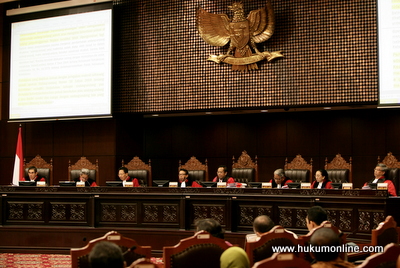 Indonesia's Constitutional Court (MK) held the first trial session to review Article 62 (1) in conjunction with Article 8 (1) (j) of Law No. 8 of 1999 on Consumer Protection. The General Chairman of the Indonesian Advocates Organization (OAI), Virza Roy Hizzal, submitted the petition, which questions the application of criminal sanctions to businesses that sell goods/services that do not have an Indonesian language manual.
“The criminal sanctions stipulated in Article 62 (1) in conjunction with Article 8 (1) of Consumer Protection Law are excessive and open to multiple interpretations,” said the lawyer for the petitioner, Hadi Sahroni, during the preliminary examination hearing led by M Alim, Thursday (27/10).
Article 62 (1) states, “businesses that violate the provisions in Article 8, Article 9, Article 10, Article 13 (2), Article 15, Article 17 (1) (a), Article 17 (1) (b), Article 17 (1) (c), Article 17 (1) (d), Article 17 (1) (e), Article 17 (2) and Article 18 shall be punished by a maximum of five years of imprisonment or by a maximum of IDR two billion of fines.”
Article 8 (1) (j) states, “Businesses are prohibited from producing and/or selling goods and services that do not have Indonesian language information and/or manuals as stipulated by existing law.”
Hadi asserted that applying criminal sanctionsto private conduct is not right. “Applying criminal sanctions and criminal fines for businesses that sell is not right. Sales and purchases are stipulated in Book III of the Indonesian Civil Code, sale and purchase include the commitment (Perikatan) elements. There is no need for criminal sanctions for those who breach [a sale and purchase contract],” he said.
According to Hadi, criminal sanctions for violating consumer information rights should only be applied to businesses that fail to deliver goods/services as offered/promoted. This is stipulated in Article 8 (1) (f), Article 9, and Article 10 of the Consumer Protection Law.
“Article 62 (1) in conjunction with Article 8 (1) (j) conflicts with the benefit principle, because it [the Consumer Protection Law] uses criminal sanctions as the first resort (Premium Remedium), without utilizing complaint and warning mechanisms that are usually found in the Indonesia Civil Law. Complaint and warning mechanisms can give businesses an opportunity to fix their mistakes.
Hadi argued, criminal sanctions that negate civil options can make the public afraid to conduct business. “Using criminal sanctions as the first resort conflicts with the balance and fairness principles,” he said.
He continued toexplain, the law enforcers who arrested the iPad sellers have violate thesentence “as stipulated by existing law” under Article 8 (j) of the Consumer Protection Law, since the Minister of Trade had already issued Minister of Trade Regulation No. 19/M-DAG/Per/5/2009, which does not require iPads have an Indonesian language manual and guarantee cards/sales guarantees.
As a result, Article 62 (1) in conjunction with Article 8 (1) (j) of the Consumer Protection Law conflicts with Article 1 (3), Article 27 (1), Article 28D (1), Article 28C, and Article 28G (1) of the Constitution. These Articles create uncertainty. “These articles should be revoked,” Hadi demanded.
One of the judges in this case, Hamdan Zoelva, recommends that the petitioners elaborate on two points the freedom of contract and safe guarding public interests. “You should elaborate on both points,” Hamdan suggested.
Meanwhile, Anwar Usman criticized the petitioner’s statement of claim (petitum) to the court. The petitioner requested that the court declare that all iPad Apple Products don’t have to be sold with an Indonesia language manual, in accordance with Minister of Trade Regulation No. 19/M-DAG/Per/5/2009. “The statement of claim is uncommon,” he said.
It should be noted that the petition is in response to the iPad cases, where law enforcers apprehended iPad sellers who failed to provide an Indonesian manual for their products by targeting iPad sellers who promoted their products on the www.kaskus.us website.
Several iPad sellers are already on trial. Wiwi Siswanto was sentenced to six months of imprisonment. However this Tuesday (25/10), Dian Yudha Negara and Randy Lesther Samusamu were acquitted by the court.
Previously, Dian and Randy were sentenced to five months in prison by the Central Jakarta District Court. In addition, there are ongoing cases in the South Jakarta District Court against Charlie Sianipar, and a case in the West Jakarta District Court against CalvilWinoto.
(Agus Sahbani / Adi Condro Bawono)
Indonesia's Constitutional Court (MK) held the first trial session to review Article 62 (1) in conjunction with Article 8 (1) (j) of Law No. 8 of 1999 on Consumer Protection. The General Chairman of the Indonesian Advocates Organization (OAI), Virza Roy Hizzal, submitted the petition, which questions the application of criminal sanctions to businesses that sell goods/services that do not have an Indonesian language manual.
“The criminal sanctions stipulated in Article 62 (1) in conjunction with Article 8 (1) of Consumer Protection Law are excessive and open to multiple interpretations,” said the lawyer for the petitioner, Hadi Sahroni, during the preliminary examination hearing led by M Alim, Thursday (27/10).
Article 62 (1) states, “businesses that violate the provisions in Article 8, Article 9, Article 10, Article 13 (2), Article 15, Article 17 (1) (a), Article 17 (1) (b), Article 17 (1) (c), Article 17 (1) (d), Article 17 (1) (e), Article 17 (2) and Article 18 shall be punished by a maximum of five years of imprisonment or by a maximum of IDR two billion of fines.”
Article 8 (1) (j) states, “Businesses are prohibited from producing and/or selling goods and services that do not have Indonesian language information and/or manuals as stipulated by existing law.”
Hadi asserted that applying criminal sanctionsto private conduct is not right. “Applying criminal sanctions and criminal fines for businesses that sell is not right. Sales and purchases are stipulated in Book III of the Indonesian Civil Code, sale and purchase include the commitment (Perikatan) elements. There is no need for criminal sanctions for those who breach [a sale and purchase contract],” he said.
According to Hadi, criminal sanctions for violating consumer information rights should only be applied to businesses that fail to deliver goods/services as offered/promoted. This is stipulated in Article 8 (1) (f), Article 9, and Article 10 of the Consumer Protection Law.
“Article 62 (1) in conjunction with Article 8 (1) (j) conflicts with the benefit principle, because it [the Consumer Protection Law] uses criminal sanctions as the first resort (Premium Remedium), without utilizing complaint and warning mechanisms that are usually found in the Indonesia Civil Law. Complaint and warning mechanisms can give businesses an opportunity to fix their mistakes.
Hadi argued, criminal sanctions that negate civil options can make the public afraid to conduct business. “Using criminal sanctions as the first resort conflicts with the balance and fairness principles,” he said.
He continued toexplain, the law enforcers who arrested the iPad sellers have violate thesentence “as stipulated by existing law” under Article 8 (j) of the Consumer Protection Law, since the Minister of Trade had already issued Minister of Trade Regulation No. 19/M-DAG/Per/5/2009, which does not require iPads have an Indonesian language manual and guarantee cards/sales guarantees.
As a result, Article 62 (1) in conjunction with Article 8 (1) (j) of the Consumer Protection Law conflicts with Article 1 (3), Article 27 (1), Article 28D (1), Article 28C, and Article 28G (1) of the Constitution. These Articles create uncertainty. “These articles should be revoked,” Hadi demanded.
One of the judges in this case, Hamdan Zoelva, recommends that the petitioners elaborate on two points the freedom of contract and safe guarding public interests. “You should elaborate on both points,” Hamdan suggested.
Meanwhile, Anwar Usman criticized the petitioner’s statement of claim (petitum) to the court. The petitioner requested that the court declare that all iPad Apple Products don’t have to be sold with an Indonesia language manual, in accordance with Minister of Trade Regulation No. 19/M-DAG/Per/5/2009. “The statement of claim is uncommon,” he said.
It should be noted that the petition is in response to the iPad cases, where law enforcers apprehended iPad sellers who failed to provide an Indonesian manual for their products by targeting iPad sellers who promoted their products on the www.kaskus.us website.
Several iPad sellers are already on trial. Wiwi Siswanto was sentenced to six months of imprisonment. However this Tuesday (25/10), Dian Yudha Negara and Randy Lesther Samusamu were acquitted by the court.
Previously, Dian and Randy were sentenced to five months in prison by the Central Jakarta District Court. In addition, there are ongoing cases in the South Jakarta District Court against Charlie Sianipar, and a case in the West Jakarta District Court against CalvilWinoto.
(Agus Sahbani / Adi Condro Bawono)