


 Ada Pertanyaan? Hubungi Kami


 Ada Pertanyaan? Hubungi Kami
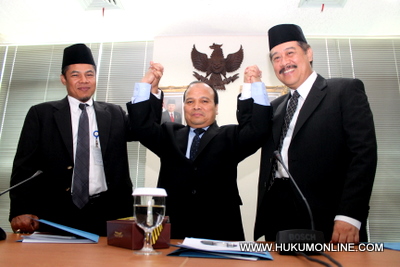 Muhammad Yusuf was inaugurated as the Head of the Indonesian Financial Transaction Reports and Analysis Center (Pusat Pelaporan dan Transaksi Keuangan - PPATK) by the President, on Tuesday (25/10). He replaced Yunus Husein, who left the position to participate in the selection process for Corruption Eradication Commission (Komisi Pemberantasan Korupsi – KPK) Commissioners.
Before he was appointed as head of PPATK, Yusuf was PPATK’s Director of Law and Regulations. Yusuf, who is an active public prosecutor, had contributed to drafting Law No. 8 of 2010 on Money Laundering, which gave PPATK more power. Yusuf made two noticeable contributions to the law.
He suggested that PPATK should have the authority to block bank accounts and the authority to recommend that law enforecers use wiretaps during an investigation. This authority was given for the purpose of carrying out PPATK’s functions which are to analyze, to report and to examine financial information.
Besides the two new authorities, which were advocated by Yusuf, it should be noted that PPATK’s main function is to prevent and eradicate money laundering. Yusuf wants financial service providers to implement the “Know Your Customer” principle, which is a prevention measure to protect financial service providers.
Yusuf also expects that financial service providers to become more cooperative and report every suspicious transaction that they encounter. He highlighted that, PPATK would soon implement the Single Identify Number (SIN) concept. “Because we found several accounts opened under false identities,” he said, in a telephone conversation.
In eradicating money laundering, law enforcement should use PPATK analysis reports as a reference, Yusuf explained. Where ideally, a law enforcer would follow up on reports of a suspicious financial transaction. In addition, Yusuf also plans to optimize coordination between law enforcement. “We also hope that there will be many law enforcers who are willing to use the Money Laundering Law, especially provisions regarding the reverse burden of proof and asset seizures.”
As of now PPATK has formed partnerships with law enforcement institutions, such as the National Police, Public Prosecutor’s Office, and Corruption Eradication Commission. However, there is one aspect that has not been executed effectively, namely assistance.
PPATK is looking for a more effective way to provide assistance. “Maybe [PPATK can provide assistance] by having routine meetings every two months, or routine meetings based on cases. We will figure out which method is more effective,” he said. However, Yusuf confirmed that PPATK has carried out the assistance efforts.
To provide examples, Yusuf mentioned two cases: the Attorney General’s investigation about the Batubara Regency Government corruption case, and the National Police investigation regarding the El Nusa fund embezzlement.
The Right Choice
Yusuf’s last post in the Public Prosecutor’s Office was as the Deputy of Special Crime within the DKI Jakarta Chief Prosecutor's Office. In addition, he was the public prosecutor responsible for handling corruption cases involving former Indonesia president Suharto. After that, he started his career at PPATK.
Even though Yusuf worked at PPATK, he continues to be a public prosecutor. “[I am] still an active public prosecutor. My public prosecutor status is still active, because the status has never been revoked, and [I] have never been dismissed,” he said. Yusuf continued to explain that even though he is still an active public prosecutor, he is no longer directed by the Attorney General Office. “It’s relinquished [ed.from Public Prosecutor’ Office]. just like my rank in PPATK.”
Yusuf has received support from several leaders within the Attorney General’s Office. Among others are, Deputy Attorney General- Agung Darmono and Deputy Attorney General for Supervision, Marwan Effendy. Darmono said Yusuf was one of his men when he worked in the DKI Jakarta Chief Prosecutor’s Office. “I am certain he has the right qualities. The president has made the right choice by appointing him to be the head of PPATK, because he meets all requirements. Both competency and integrity [requirements],” Darmono said.
Darmono hopes PPATK will have an active role in recovering state assets and eradicating corruption, under Yusuf’s leadership. Similar comments were made by Marwan. The former Deputy Attorney General for Special Crimes said that Yusuf was the right choice to lead PPATK. In addition to having a good track record, Yusuf was also involved in drafting the New Money Laundering Law.
However, previously there were questions about Yusuf’s track record. Even though Yusuf denied it, he was once mentioned as one of the public prosecutors that were arrested in 1997. In 1997, five public prosecutors responsible for the Nyo Beng Seng case regarding a bookie were arrested.
The five public prosecutors were the Section Chief of Crimes Against Individuals and Properties Division within the DKI Jakarta Chief Prosecutor’s Office Jurnalis Kamaru, Jhonny Siahaan, Harun Husain, Haruddin, Andhi Nirwanto and M. Yusuf. Afrizal a staff member at the DKI Jakarta Chief Prosecutor’ Office was also arrested.
The five public prosecutors allegedly manipulated the Kikie Aryanto Police Interrogation Report (Berita Acara Pemeriksaan – BAP). At the time, Kikie was on the wanted list. Suspicions about BAP manipulation became greater because, Kikie’s status at the time was a fugitive. In addition, public prosecutors were unable to bring Kikie to court.
(Fitri Noviar Heriyani/Adi Condro Bawono)
Muhammad Yusuf was inaugurated as the Head of the Indonesian Financial Transaction Reports and Analysis Center (Pusat Pelaporan dan Transaksi Keuangan - PPATK) by the President, on Tuesday (25/10). He replaced Yunus Husein, who left the position to participate in the selection process for Corruption Eradication Commission (Komisi Pemberantasan Korupsi – KPK) Commissioners.
Before he was appointed as head of PPATK, Yusuf was PPATK’s Director of Law and Regulations. Yusuf, who is an active public prosecutor, had contributed to drafting Law No. 8 of 2010 on Money Laundering, which gave PPATK more power. Yusuf made two noticeable contributions to the law.
He suggested that PPATK should have the authority to block bank accounts and the authority to recommend that law enforecers use wiretaps during an investigation. This authority was given for the purpose of carrying out PPATK’s functions which are to analyze, to report and to examine financial information.
Besides the two new authorities, which were advocated by Yusuf, it should be noted that PPATK’s main function is to prevent and eradicate money laundering. Yusuf wants financial service providers to implement the “Know Your Customer” principle, which is a prevention measure to protect financial service providers.
Yusuf also expects that financial service providers to become more cooperative and report every suspicious transaction that they encounter. He highlighted that, PPATK would soon implement the Single Identify Number (SIN) concept. “Because we found several accounts opened under false identities,” he said, in a telephone conversation.
In eradicating money laundering, law enforcement should use PPATK analysis reports as a reference, Yusuf explained. Where ideally, a law enforcer would follow up on reports of a suspicious financial transaction. In addition, Yusuf also plans to optimize coordination between law enforcement. “We also hope that there will be many law enforcers who are willing to use the Money Laundering Law, especially provisions regarding the reverse burden of proof and asset seizures.”
As of now PPATK has formed partnerships with law enforcement institutions, such as the National Police, Public Prosecutor’s Office, and Corruption Eradication Commission. However, there is one aspect that has not been executed effectively, namely assistance.
PPATK is looking for a more effective way to provide assistance. “Maybe [PPATK can provide assistance] by having routine meetings every two months, or routine meetings based on cases. We will figure out which method is more effective,” he said. However, Yusuf confirmed that PPATK has carried out the assistance efforts.
To provide examples, Yusuf mentioned two cases: the Attorney General’s investigation about the Batubara Regency Government corruption case, and the National Police investigation regarding the El Nusa fund embezzlement.
The Right Choice
Yusuf’s last post in the Public Prosecutor’s Office was as the Deputy of Special Crime within the DKI Jakarta Chief Prosecutor's Office. In addition, he was the public prosecutor responsible for handling corruption cases involving former Indonesia president Suharto. After that, he started his career at PPATK.
Even though Yusuf worked at PPATK, he continues to be a public prosecutor. “[I am] still an active public prosecutor. My public prosecutor status is still active, because the status has never been revoked, and [I] have never been dismissed,” he said. Yusuf continued to explain that even though he is still an active public prosecutor, he is no longer directed by the Attorney General Office. “It’s relinquished [ed.from Public Prosecutor’ Office]. just like my rank in PPATK.”
Yusuf has received support from several leaders within the Attorney General’s Office. Among others are, Deputy Attorney General- Agung Darmono and Deputy Attorney General for Supervision, Marwan Effendy. Darmono said Yusuf was one of his men when he worked in the DKI Jakarta Chief Prosecutor’s Office. “I am certain he has the right qualities. The president has made the right choice by appointing him to be the head of PPATK, because he meets all requirements. Both competency and integrity [requirements],” Darmono said.
Darmono hopes PPATK will have an active role in recovering state assets and eradicating corruption, under Yusuf’s leadership. Similar comments were made by Marwan. The former Deputy Attorney General for Special Crimes said that Yusuf was the right choice to lead PPATK. In addition to having a good track record, Yusuf was also involved in drafting the New Money Laundering Law.
However, previously there were questions about Yusuf’s track record. Even though Yusuf denied it, he was once mentioned as one of the public prosecutors that were arrested in 1997. In 1997, five public prosecutors responsible for the Nyo Beng Seng case regarding a bookie were arrested.
The five public prosecutors were the Section Chief of Crimes Against Individuals and Properties Division within the DKI Jakarta Chief Prosecutor’s Office Jurnalis Kamaru, Jhonny Siahaan, Harun Husain, Haruddin, Andhi Nirwanto and M. Yusuf. Afrizal a staff member at the DKI Jakarta Chief Prosecutor’ Office was also arrested.
The five public prosecutors allegedly manipulated the Kikie Aryanto Police Interrogation Report (Berita Acara Pemeriksaan – BAP). At the time, Kikie was on the wanted list. Suspicions about BAP manipulation became greater because, Kikie’s status at the time was a fugitive. In addition, public prosecutors were unable to bring Kikie to court.
(Fitri Noviar Heriyani/Adi Condro Bawono)