


 Ada Pertanyaan? Hubungi Kami


 Ada Pertanyaan? Hubungi Kami
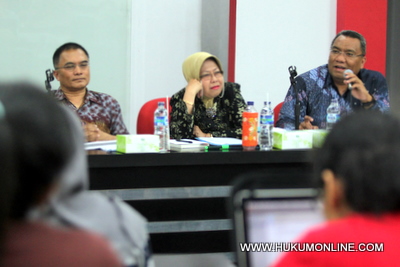 Rising cell phone credit fraud and thievery has affected many consumers like Feri Kuncoro, who recently filed a report against an Indonesian cell phone provider for fraudulent credit deductions. Surprisingly, the cell phone provider responded by filing a report against Feri Kuncoro for defamation.
According to Heri Tjandrasari, a lecturer from the Universitas Indonesia law faculty, providers do not have the right to file a report against consumers. Operators and content providers are only allowed to respond with an explanation and defense. If the allegation cannot be proven, the reported party may also have rehabilitation rights.
In accordance with Law No. 8 of 1999 on Consumer Protection (“Consumer Protection Law”), “Operators do not have the right to file a report. In this case, they should prove the allegation is false,” commented Heri at a seminar, last Friday (21/10).
According to David ML Tobing, the operator violated Article 15 of the Consumer Protection Law. “Consumers have the rights to comfort and security. If the provider continuously sends irrelevant text messages to consumers, it will disturb consumer comfort. Moreover, the provider has no right to file a report against consumers,” he said.
The Indonesia Telecommunication Regulatory Agency (Badan Regulasi Telekomunikasi Indonesia – BRTI) is finally reacting to complaints about cell phone credit fraud. Irwan Kusnadi, the deputy of BRTI, says that they have granted a request for a moratorium on content offers via text messages.
“The first step of course is to try to put a stop to the problems. Then, for the long term, BRTI is currently discussing and formulating future regulations,” Irawan said.
So far, BRTI has asked operators to stop offering content for an indefinite time. BRTI then asked cell phone operators to deactivate all content services by Tuesday (19/10). BRTI also asked operators to calculate consumer cell phone credit deductions. Operators are required to reimburse consumers for their losses.
“Operators and content providers must follow all four points once a week, and [ed.they should] continue doing this until the end of December 2011,” said Irwan. Although BRTI is only responsible for licensing, Irwan explained that BRTI can issue a warning or revoke a permit if an operator deviates from these requirements.
According to Edmon Makarim, a lecturer from Universitas Indonesia law faculty, cellular phone operator has committed at least two violations. First, the providers are leaking personal consumer data to content providers. Second, operators are disturbing consumers comfort. In addition, free text message policies that are given to consumers by operators should be reviewed, because they can be misused and disturb others.
Ibrahim Jamal, who represents the Ministry of Communication and Information, (Kemkominfo) explained that investors who want to establish a cell phone business should register with the Ministry of Communication and Information, in accordance with Law No. 36 of 1999 on Telecommunication. They should also obtain an operating license, where afterward they are allowed to establish a subsidiary company, which services are content (content provider).
According to Ibrahim, operators can not be prohibited from offering content via text messages completely, because content providers are important subsidiary businesses for cellular phone operators.
“While the moratorium is in effect, we will find a way to prevent content providers from repeating their actions. But we can’t apply the moratorium forever. Hopefully this case will encourage people to file a report when they suffer losses,” said Ibrahim.
(Fitri Novia Heriani / Adi Condro Bawono)
Rising cell phone credit fraud and thievery has affected many consumers like Feri Kuncoro, who recently filed a report against an Indonesian cell phone provider for fraudulent credit deductions. Surprisingly, the cell phone provider responded by filing a report against Feri Kuncoro for defamation.
According to Heri Tjandrasari, a lecturer from the Universitas Indonesia law faculty, providers do not have the right to file a report against consumers. Operators and content providers are only allowed to respond with an explanation and defense. If the allegation cannot be proven, the reported party may also have rehabilitation rights.
In accordance with Law No. 8 of 1999 on Consumer Protection (“Consumer Protection Law”), “Operators do not have the right to file a report. In this case, they should prove the allegation is false,” commented Heri at a seminar, last Friday (21/10).
According to David ML Tobing, the operator violated Article 15 of the Consumer Protection Law. “Consumers have the rights to comfort and security. If the provider continuously sends irrelevant text messages to consumers, it will disturb consumer comfort. Moreover, the provider has no right to file a report against consumers,” he said.
The Indonesia Telecommunication Regulatory Agency (Badan Regulasi Telekomunikasi Indonesia – BRTI) is finally reacting to complaints about cell phone credit fraud. Irwan Kusnadi, the deputy of BRTI, says that they have granted a request for a moratorium on content offers via text messages.
“The first step of course is to try to put a stop to the problems. Then, for the long term, BRTI is currently discussing and formulating future regulations,” Irawan said.
So far, BRTI has asked operators to stop offering content for an indefinite time. BRTI then asked cell phone operators to deactivate all content services by Tuesday (19/10). BRTI also asked operators to calculate consumer cell phone credit deductions. Operators are required to reimburse consumers for their losses.
“Operators and content providers must follow all four points once a week, and [ed.they should] continue doing this until the end of December 2011,” said Irwan. Although BRTI is only responsible for licensing, Irwan explained that BRTI can issue a warning or revoke a permit if an operator deviates from these requirements.
According to Edmon Makarim, a lecturer from Universitas Indonesia law faculty, cellular phone operator has committed at least two violations. First, the providers are leaking personal consumer data to content providers. Second, operators are disturbing consumers comfort. In addition, free text message policies that are given to consumers by operators should be reviewed, because they can be misused and disturb others.
Ibrahim Jamal, who represents the Ministry of Communication and Information, (Kemkominfo) explained that investors who want to establish a cell phone business should register with the Ministry of Communication and Information, in accordance with Law No. 36 of 1999 on Telecommunication. They should also obtain an operating license, where afterward they are allowed to establish a subsidiary company, which services are content (content provider).
According to Ibrahim, operators can not be prohibited from offering content via text messages completely, because content providers are important subsidiary businesses for cellular phone operators.
“While the moratorium is in effect, we will find a way to prevent content providers from repeating their actions. But we can’t apply the moratorium forever. Hopefully this case will encourage people to file a report when they suffer losses,” said Ibrahim.
(Fitri Novia Heriani / Adi Condro Bawono)