


 Ada Pertanyaan? Hubungi Kami


 Ada Pertanyaan? Hubungi Kami
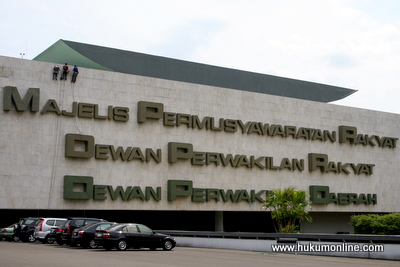 A number of international law and international relations experts have been invited to the Legislative Body of the House of Representatives to discuss the revision of Law No. 24 of 2000 on International Treaties. After inviting Prof. Aleksius Jemadu and Prof. Etty R. Agoes, the Legislative Body invited former Head Drafter of the Law on International Treaties Harry P. Haryono. The House of Representatives intends to include private international agreements in the upcoming revision.
The Legislative Body addressed a question to Harry related to contractual issues with international corporations in Indonesia, such as Freeport and Newmont. Harry, a member of the Faculty of Law at Universitas Indonesia assessed that it would be difficult to accommodate these contractual issues in the International Treaty Law amendment.
“A contract with Freeport and Newmont is not regulated by this [International Treaty] Law. It is private international matter. While this [International Treaty] Law is a public law in nature,” explained Harry, who is also a former Indonesian Ambassador for Portugal in the meeting room of the Legislative Body, Wednesday (12/10).
Furthermore, Harry explained that the International Treaty Law cover agreements between Indonesia and other countries, or agreements with International organizations, such as ASEAN. Having said this, a contract with an international corporation does not fall within the scope of public international law, hence it does not need to be regulated in the upcoming revision.
Member of the Legislative Body, Dhiana Anwar admitted that a contract between Indonesia and foreign corporation is considered to be a private matter. However, she assumed that the contracts also involve public interests, such as Indonesian labor and foreign labor. The problem is that Indonesian employees are often underpaid, leading to tensions in a company’s operations.
“If [the contract between Indonesia and a foreign corporation] cannot be regulated under the revised version of this Law, then which regulation can we add it to?” asked Anwar, a politician from the Democratic Party.
Ibnu Multazam, a member of the Legislative Body from the National Awakening Party (PKB), asked for further elaboration from Harry on whether the International Treaty Law merely addresses public matters. “[I’m wondering] whether these private international agreements are included in the scope of this [International Treaty] Law? Please elaborate more!” asked Ibnu.
Harry reconfirmed that an international contract that has private characteristics does not fall within the scope of this Law. He admitted that in the Freeport or Newmont case, public interests intersect with private matters. However, he said it is inappropriate if private matters are mixed up with public matters in the same law.
“This can be incorporated into the Mining Law or Oil and Gas Law. Those two laws should be improved because contracts between Indonesia and foreign corporations should be regulated under those laws,” he firmly stated.
The 1945 Constitutional Foundation
Member of the Legislative Body from the Prosperous Justice Party (PKS), Bukhori Yusuf disagreed, referencing Article 11 (1) and (2) of 1945 Constitution to support his legal argument.
Article 11(1) states:
“The President with the prior approval of the House of Representatives may declare war, make peace, and conclude treaties with other countries.”
Furthermore, Article 11(2) states:
“The President in making other international agreements that will have an extensive and fundamental impact on the lives of people, which is linked to the states financial burden, and/or that will require an amendment to or the enactment of a law, shall obtain the approval of the House of Representatives.”
According to Bukhori, Article 11 (1) deals with public law, while Article 11 (2) is addresses private matters. “Why can’t private and public matters be combined? Even the 1945 Constitution mandates both,” explained Bukhori.
Harry recognized that the current International Treaty Law only accommodates Article 11 (1) of the 1945 Constitution, while the provisions of Article 11 (2) have not been accommodated. However, Harry insisted that issues that are public and private law in nature can not be jointly regulated. “[If it’s not possible to be unified] they can be regulated by other laws,” he stated.
(Ali Salmande / Josephine Hadiwijaya)
A number of international law and international relations experts have been invited to the Legislative Body of the House of Representatives to discuss the revision of Law No. 24 of 2000 on International Treaties. After inviting Prof. Aleksius Jemadu and Prof. Etty R. Agoes, the Legislative Body invited former Head Drafter of the Law on International Treaties Harry P. Haryono. The House of Representatives intends to include private international agreements in the upcoming revision.
The Legislative Body addressed a question to Harry related to contractual issues with international corporations in Indonesia, such as Freeport and Newmont. Harry, a member of the Faculty of Law at Universitas Indonesia assessed that it would be difficult to accommodate these contractual issues in the International Treaty Law amendment.
“A contract with Freeport and Newmont is not regulated by this [International Treaty] Law. It is private international matter. While this [International Treaty] Law is a public law in nature,” explained Harry, who is also a former Indonesian Ambassador for Portugal in the meeting room of the Legislative Body, Wednesday (12/10).
Furthermore, Harry explained that the International Treaty Law cover agreements between Indonesia and other countries, or agreements with International organizations, such as ASEAN. Having said this, a contract with an international corporation does not fall within the scope of public international law, hence it does not need to be regulated in the upcoming revision.
Member of the Legislative Body, Dhiana Anwar admitted that a contract between Indonesia and foreign corporation is considered to be a private matter. However, she assumed that the contracts also involve public interests, such as Indonesian labor and foreign labor. The problem is that Indonesian employees are often underpaid, leading to tensions in a company’s operations.
“If [the contract between Indonesia and a foreign corporation] cannot be regulated under the revised version of this Law, then which regulation can we add it to?” asked Anwar, a politician from the Democratic Party.
Ibnu Multazam, a member of the Legislative Body from the National Awakening Party (PKB), asked for further elaboration from Harry on whether the International Treaty Law merely addresses public matters. “[I’m wondering] whether these private international agreements are included in the scope of this [International Treaty] Law? Please elaborate more!” asked Ibnu.
Harry reconfirmed that an international contract that has private characteristics does not fall within the scope of this Law. He admitted that in the Freeport or Newmont case, public interests intersect with private matters. However, he said it is inappropriate if private matters are mixed up with public matters in the same law.
“This can be incorporated into the Mining Law or Oil and Gas Law. Those two laws should be improved because contracts between Indonesia and foreign corporations should be regulated under those laws,” he firmly stated.
The 1945 Constitutional Foundation
Member of the Legislative Body from the Prosperous Justice Party (PKS), Bukhori Yusuf disagreed, referencing Article 11 (1) and (2) of 1945 Constitution to support his legal argument.
Article 11(1) states:
“The President with the prior approval of the House of Representatives may declare war, make peace, and conclude treaties with other countries.”
Furthermore, Article 11(2) states:
“The President in making other international agreements that will have an extensive and fundamental impact on the lives of people, which is linked to the states financial burden, and/or that will require an amendment to or the enactment of a law, shall obtain the approval of the House of Representatives.”
According to Bukhori, Article 11 (1) deals with public law, while Article 11 (2) is addresses private matters. “Why can’t private and public matters be combined? Even the 1945 Constitution mandates both,” explained Bukhori.
Harry recognized that the current International Treaty Law only accommodates Article 11 (1) of the 1945 Constitution, while the provisions of Article 11 (2) have not been accommodated. However, Harry insisted that issues that are public and private law in nature can not be jointly regulated. “[If it’s not possible to be unified] they can be regulated by other laws,” he stated.
(Ali Salmande / Josephine Hadiwijaya)