


 Ada Pertanyaan? Hubungi Kami


 Ada Pertanyaan? Hubungi Kami
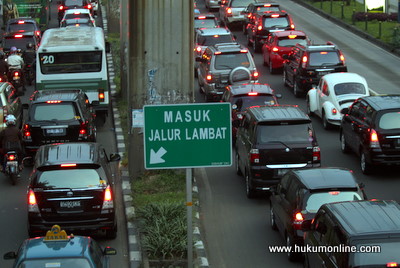 Starting in April 2012, the government plans to restrict premium fuel subsidies for personal vehicles, in order to economize and reduce the consumption of subsidized fuel. However, this plan is pointless if the government does not revise Presidential Regulation No. 9 of 2006.
The government is unlikely to increase fuel prices in the near future. Instead, the government will try to settle the fuel issue next year by restricting the consumption of subsidized fuel.
“The government suggests restricting subsidized fuel by restricting the consumption of subsidized fuel for four-wheeled personal vehicles in Java and Bali starting April 2012,” said Minister of Finance, Agus Martowardojo, in the House of Representatives, Monday (10/10).
According to Agus, the consumption of premium fuel increases 8% each year. If there are no restrictions, the total consumption of subsidized fuel could reach 43,7 million kiloliters (KL) in 2012.
Consumption of premium could reach 28,1 million KL, while diesel fuel and kerosene consumption could reach about 15,6 million KL. These consumption levels are higher than quota for this year, which is set at 40 million KL.
Agus explained that the restriction on subsidized fuel for four-wheeled vehicles in Java and Bali in 2012, would decrease total subsidized fuel consumption to 37,8 million KL (22,2 million KL of premium fuel and 15,6 million KL of kerosene and diesel fuel).
He is convinced that the government will save IDR 4,9 trillion in 2012 by implementing the restriction. “Therefore, the total [cost of] subsidized fuel (in 2012) will be IDR 118,7 trillion, lower than the initial proposal of IDR 123,6 trillion,” said Agus.
In fact, restrictions on subsidized fuel consumption are not a new concept. The government has been discussing restrictions since the beginning of 2011. In early 2011, the government planned to implement a subsidized fuel restriction policy in April 2011. Although this never happened.
In the House of Representatives, Minister of Energy and Mineral Resources (ESDM), Darwin Zahedy Saleh said that implementing the subsidized fuel restriction requires a new legal framework. He suggested revising the relevant regulation related to subsidized fuel to clearly stipulate who is entitled to buy subsidized fuel.
“The Ministry of ESDM also has an agreement with the Ministry of Domestic Affairs to make regional governments actively control the consumption of subsidized fuel,” said Darwin.
Head of the Downstream Oil and Gas Supervisory Agency (BPH Migas), Tubagus Haryono added that the plan to restrict the consumption of subsidized fuel next year would not be effective if President Regulation No. 9 of 2006 on the Amendment of Presidential Regulation No. 55 of 2005 on Domestic Fuel Retail Sales Prices is not revised.
According to Tubagus, luxury car owners will still be able to buy subsidized fuel, because the current regulation does not prohibit this behavior. The Presidential Regulation will be revised to regulate who is entitled to consume subsidized fuel and who is prohibited from consuming subsidized fuel. He believes that BPH Migas could strictly monitor and decrease the consumption of subsidized fuel if Presidential Regulation No. 9 of 2006 is revised.
“The policy [on restricting subsidized fuel consumption] could be effective if the government regulation is revised and clearly states who is eligible to receive subsidized fuel,” he explained.
(M Agus Yozami / Josephine Hadiwijaya)
Starting in April 2012, the government plans to restrict premium fuel subsidies for personal vehicles, in order to economize and reduce the consumption of subsidized fuel. However, this plan is pointless if the government does not revise Presidential Regulation No. 9 of 2006.
The government is unlikely to increase fuel prices in the near future. Instead, the government will try to settle the fuel issue next year by restricting the consumption of subsidized fuel.
“The government suggests restricting subsidized fuel by restricting the consumption of subsidized fuel for four-wheeled personal vehicles in Java and Bali starting April 2012,” said Minister of Finance, Agus Martowardojo, in the House of Representatives, Monday (10/10).
According to Agus, the consumption of premium fuel increases 8% each year. If there are no restrictions, the total consumption of subsidized fuel could reach 43,7 million kiloliters (KL) in 2012.
Consumption of premium could reach 28,1 million KL, while diesel fuel and kerosene consumption could reach about 15,6 million KL. These consumption levels are higher than quota for this year, which is set at 40 million KL.
Agus explained that the restriction on subsidized fuel for four-wheeled vehicles in Java and Bali in 2012, would decrease total subsidized fuel consumption to 37,8 million KL (22,2 million KL of premium fuel and 15,6 million KL of kerosene and diesel fuel).
He is convinced that the government will save IDR 4,9 trillion in 2012 by implementing the restriction. “Therefore, the total [cost of] subsidized fuel (in 2012) will be IDR 118,7 trillion, lower than the initial proposal of IDR 123,6 trillion,” said Agus.
In fact, restrictions on subsidized fuel consumption are not a new concept. The government has been discussing restrictions since the beginning of 2011. In early 2011, the government planned to implement a subsidized fuel restriction policy in April 2011. Although this never happened.
In the House of Representatives, Minister of Energy and Mineral Resources (ESDM), Darwin Zahedy Saleh said that implementing the subsidized fuel restriction requires a new legal framework. He suggested revising the relevant regulation related to subsidized fuel to clearly stipulate who is entitled to buy subsidized fuel.
“The Ministry of ESDM also has an agreement with the Ministry of Domestic Affairs to make regional governments actively control the consumption of subsidized fuel,” said Darwin.
Head of the Downstream Oil and Gas Supervisory Agency (BPH Migas), Tubagus Haryono added that the plan to restrict the consumption of subsidized fuel next year would not be effective if President Regulation No. 9 of 2006 on the Amendment of Presidential Regulation No. 55 of 2005 on Domestic Fuel Retail Sales Prices is not revised.
According to Tubagus, luxury car owners will still be able to buy subsidized fuel, because the current regulation does not prohibit this behavior. The Presidential Regulation will be revised to regulate who is entitled to consume subsidized fuel and who is prohibited from consuming subsidized fuel. He believes that BPH Migas could strictly monitor and decrease the consumption of subsidized fuel if Presidential Regulation No. 9 of 2006 is revised.
“The policy [on restricting subsidized fuel consumption] could be effective if the government regulation is revised and clearly states who is eligible to receive subsidized fuel,” he explained.
(M Agus Yozami / Josephine Hadiwijaya)