


 Ada Pertanyaan? Hubungi Kami


 Ada Pertanyaan? Hubungi Kami
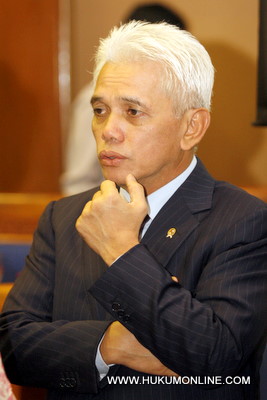 Improving the tax ratio in the 2012 State Revenue and Expenditure Budget Draft (RAPBN 2012) relies on the tax census. This was said by Hatta Rajasa, Coordinating Minister for Economic Affairs, in Jakarta, (23/9).
He said that the escalation of middle-class citizens, as documented by the Indonesian Statistics (Biro Pusat Statistik - BPS) census, will have an impact on the tax ratio. The BPS census was also integrated with taxpayer data.
"Ideally tax census, along with the increase of middle-class citizens, will be reflected in the tax ratio," he explained.
At the RAPBN 2012 meeting, last Tuesday, the House of Representatives (DPR) and government agreed to improve the tax ratio, from 0,06 percent to 12,66 percent. "The state must optimize income, which amounts to IDR 5 trillion with that tax ratio figure. It is achievable," Hatta said.
Hatta further referred to the BPS census, which shows that the number of middle-class citizens is increasing by eight to nine million people per year. However, in contrast, the number of registered taxpayers is still under ten million. "There is still a chance to improve the number of taxpayers," Hatta emphasized.
Therefore, Hatta asserted, tax officers should be more creative about registering new taxpayers. Tax officers and the Directorate General of Tax engage in outreach activities to encourage taxpayers. "We need preparation, awareness, familiarization (sosialisasi), and a good policy," Hatta said.
As previously reported, the Directorate General of Tax will conduct a tax census by the end of September 2011. Ahmad Fuad Rahmany, Director General of Tax, said that only 8,5 million individual taxpayers have been registered, although Indonesia has 110 million of active workers.
"The ratio between tax assessment letter to the active workers only reached 7,73 percent. It is very low," Fuad said.
Moreover, Ahmad explained, there are only 466 thousand of company taxpayers that have been registered; whilst Indonesia has 12,9 million of permanent and active companies. "The ratio for company only reached 3,6 percent. It is the reason why we only have 11-12 percent of tax ratio on APBN, whilst other countries reached 14 percent," Fuad asserted.
The National Tax Census, Fuad said, will be conducted by 299 Tax Service Offices throughout the country. Every office will form 10 Census Organizer Units (Unit Pelaksana Sensus - UPS). "Each census location will be determined by the scale of priority, based on business areas, real estate areas, and high rise building," Fuad explained.
Fuad said that tax census is one of the efforts to improve the revenue from tax, and also to reaffirm tax payment fairness in Indonesia.
Until recently, there are many companies and businesses that failed to pay their tax obligation. Self-assessment system is misused by them. On the other hand, employee's tax has been cutted already by the government, after the calculation of non-taxable income (pendapatan tidak kena pajak - PTKP).
"This is not fair. Workers and employees are only awarded with small amount of salary and the company cutted the tax from them; whilst their company didn't pay its obligation," Fuad asserted.
Fuad said further that Directorate General of Tax set the target, from the census, at 1,5 to 2 million taxpayers to be registered. "The target is for the last three months in 2011," Fuad said.
On the other hand, Indonesia Taxpayers Association (Asosiasi Pembayar Pajak Indonesia - APPI), said its hesitation towards the census. Sasmito Hadinagoro, Secretary General of APPI, Indonesia has other problems that are more crucial to be solved, in order to improve taxation system and revenue from tax.
"Don't make administrative issue as a distraction. It won't solve tax problems, and it is not a perfect solution to improve the taxation system," he asserted.
Sasmito, further asserted that the Ministry should just focus on the April’s 2010 President Directive regarding tax mafia. "Detain all the tax mafia and the corrupted public officials, just solve tax cases like Asian Agri and others. That method will serve better in regaining public's trust," he said.
(M. Vareno Tarnes / Pirhot Nababan)
Improving the tax ratio in the 2012 State Revenue and Expenditure Budget Draft (RAPBN 2012) relies on the tax census. This was said by Hatta Rajasa, Coordinating Minister for Economic Affairs, in Jakarta, (23/9).
He said that the escalation of middle-class citizens, as documented by the Indonesian Statistics (Biro Pusat Statistik - BPS) census, will have an impact on the tax ratio. The BPS census was also integrated with taxpayer data.
"Ideally tax census, along with the increase of middle-class citizens, will be reflected in the tax ratio," he explained.
At the RAPBN 2012 meeting, last Tuesday, the House of Representatives (DPR) and government agreed to improve the tax ratio, from 0,06 percent to 12,66 percent. "The state must optimize income, which amounts to IDR 5 trillion with that tax ratio figure. It is achievable," Hatta said.
Hatta further referred to the BPS census, which shows that the number of middle-class citizens is increasing by eight to nine million people per year. However, in contrast, the number of registered taxpayers is still under ten million. "There is still a chance to improve the number of taxpayers," Hatta emphasized.
Therefore, Hatta asserted, tax officers should be more creative about registering new taxpayers. Tax officers and the Directorate General of Tax engage in outreach activities to encourage taxpayers. "We need preparation, awareness, familiarization (sosialisasi), and a good policy," Hatta said.
As previously reported, the Directorate General of Tax will conduct a tax census by the end of September 2011. Ahmad Fuad Rahmany, Director General of Tax, said that only 8,5 million individual taxpayers have been registered, although Indonesia has 110 million of active workers.
"The ratio between tax assessment letter to the active workers only reached 7,73 percent. It is very low," Fuad said.
Moreover, Ahmad explained, there are only 466 thousand of company taxpayers that have been registered; whilst Indonesia has 12,9 million of permanent and active companies. "The ratio for company only reached 3,6 percent. It is the reason why we only have 11-12 percent of tax ratio on APBN, whilst other countries reached 14 percent," Fuad asserted.
The National Tax Census, Fuad said, will be conducted by 299 Tax Service Offices throughout the country. Every office will form 10 Census Organizer Units (Unit Pelaksana Sensus - UPS). "Each census location will be determined by the scale of priority, based on business areas, real estate areas, and high rise building," Fuad explained.
Fuad said that tax census is one of the efforts to improve the revenue from tax, and also to reaffirm tax payment fairness in Indonesia.
Until recently, there are many companies and businesses that failed to pay their tax obligation. Self-assessment system is misused by them. On the other hand, employee's tax has been cutted already by the government, after the calculation of non-taxable income (pendapatan tidak kena pajak - PTKP).
"This is not fair. Workers and employees are only awarded with small amount of salary and the company cutted the tax from them; whilst their company didn't pay its obligation," Fuad asserted.
Fuad said further that Directorate General of Tax set the target, from the census, at 1,5 to 2 million taxpayers to be registered. "The target is for the last three months in 2011," Fuad said.
On the other hand, Indonesia Taxpayers Association (Asosiasi Pembayar Pajak Indonesia - APPI), said its hesitation towards the census. Sasmito Hadinagoro, Secretary General of APPI, Indonesia has other problems that are more crucial to be solved, in order to improve taxation system and revenue from tax.
"Don't make administrative issue as a distraction. It won't solve tax problems, and it is not a perfect solution to improve the taxation system," he asserted.
Sasmito, further asserted that the Ministry should just focus on the April’s 2010 President Directive regarding tax mafia. "Detain all the tax mafia and the corrupted public officials, just solve tax cases like Asian Agri and others. That method will serve better in regaining public's trust," he said.
(M. Vareno Tarnes / Pirhot Nababan)