


 Ada Pertanyaan? Hubungi Kami


 Ada Pertanyaan? Hubungi Kami
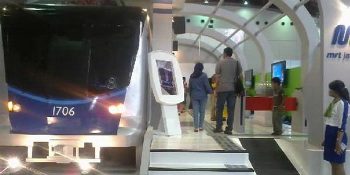 PT. Mass Rapid Transit (MRT) Jakarta believes it willnot be constrained with land acquisitionissues. All underground lines for the MRT corridor arelocated beneath government controlled roads.
Eddi Santosa,the Director of Planning and corporate functions of PT MRT Jakartamade this assertion in an interview with hukumonline, Monday 19/9. During the interview at his office, Eddie saidthe land for the underground MRT corridors isowned by the DKI Jakarta Provincial Government. “The corridorsarenot related to any building above it, except the highway, whichalso belongs to the government,” he said.
At least, Eddi continued, for phase I, the construction of the MRT corridor from Lebak Bulus to the Hotel Indonesia Roundabout does not require any land aquisitions. Thelengthwill be15.2 km, consistingof 9.2 km of elevated corridors and 6 km of undergroundcorridors. Six of thethirteen planned stations will beunderground. The sixundergroundMRT stations are located in SenayanRoundabout, Istora, Bendungan Hilir, Setiabudi, Dukuh Atas, andHotel Indonesia Roundabout.Underground lines will beginaftertheSisingamangaraja station.
Eddi confirmed, that theentire basement for MRT corridor purposes is not related to the foundations of nearby buildings. The plan is to construct the MRT corridors 21 meters below the ground. The only problemso far is the Bendungan Hilir line, this is due to theSemanggi bridge support cables and water pipes from Kalimalang to Pejompongan, which depth is 2 meters and it intersectswith the corridorline.
The corridor will be deeper in these areas. “But the rest of the corridor is below the highway and there is no contactwith the foundations of surrounding buildings so there is no need for any land acquisition. All the land is still owned by the DKI Jakarta Provincial Government” he explained.
Eddi’s assertionis justified by Arie Hutagalung, aland law expert atthe Universitas Indonesia. According to her, as longasthe MRT corridor uses underground space, and are not private properties. Land acquisitionsis not required. It is suffice for PT MRT to simply request permits from the government.
“Land and underground space belong to the state. It iscontrolled by the state, itshould be licensed. For phase I, thelines are undernational roads, so the permit will be requested to the Central Government, which is represented by theNational Land Agency,” he said to hukumonline.
Permission from the Minister of Youth and Sports Affair
Although MRT doesnot need to acquire land, relocating the Lebak Bulus stadium could potentially pose a problem. Thestadium must berelocatedso the space can be used for terminalsand also asMRT depot. In order to relocate the stadium, MRT must find other land as a substitute for a football stadium.
However, Eddie asserted that the football stadium and the Lebak Bulus terminal isowned by the Jakarta Special Area Provincial Government.”So both relocationscan also be done internally. The terminal is governed bythe Transportation Office (DinasTransportasi), the stadium is under the authority of the Sports Unit (Dinas Olahraga) at the Provincial Government. Therefore there will be no be any transactionswhich by nature is public domain,” he explained.
So far, said Eddi, there have been discussions with the Ministry of Youth and Sports. As mandated by Law No. 3 of 2005 on National Sports System, sports infrastructure facilities may not be relocated withoutpermission from the Minister of Youth and Sports.
“It is already taken care of by the Sport Unit under the coordination of Public welfare assistance of the Jakarta Special Area Provincial Government. There must be a recommendation from the Minister of Youth and Sports as mandated by the Law. Thisis an ongoing process, we’ve had two meetingsbeforethe Secretary of Ministry of Youth and Sports and in principle there was no objection,” he concluded.
(M VarenoTarnes/Adi Condro Bawono)
PT. Mass Rapid Transit (MRT) Jakarta believes it willnot be constrained with land acquisitionissues. All underground lines for the MRT corridor arelocated beneath government controlled roads.
Eddi Santosa,the Director of Planning and corporate functions of PT MRT Jakartamade this assertion in an interview with hukumonline, Monday 19/9. During the interview at his office, Eddie saidthe land for the underground MRT corridors isowned by the DKI Jakarta Provincial Government. “The corridorsarenot related to any building above it, except the highway, whichalso belongs to the government,” he said.
At least, Eddi continued, for phase I, the construction of the MRT corridor from Lebak Bulus to the Hotel Indonesia Roundabout does not require any land aquisitions. Thelengthwill be15.2 km, consistingof 9.2 km of elevated corridors and 6 km of undergroundcorridors. Six of thethirteen planned stations will beunderground. The sixundergroundMRT stations are located in SenayanRoundabout, Istora, Bendungan Hilir, Setiabudi, Dukuh Atas, andHotel Indonesia Roundabout.Underground lines will beginaftertheSisingamangaraja station.
Eddi confirmed, that theentire basement for MRT corridor purposes is not related to the foundations of nearby buildings. The plan is to construct the MRT corridors 21 meters below the ground. The only problemso far is the Bendungan Hilir line, this is due to theSemanggi bridge support cables and water pipes from Kalimalang to Pejompongan, which depth is 2 meters and it intersectswith the corridorline.
The corridor will be deeper in these areas. “But the rest of the corridor is below the highway and there is no contactwith the foundations of surrounding buildings so there is no need for any land acquisition. All the land is still owned by the DKI Jakarta Provincial Government” he explained.
Eddi’s assertionis justified by Arie Hutagalung, aland law expert atthe Universitas Indonesia. According to her, as longasthe MRT corridor uses underground space, and are not private properties. Land acquisitionsis not required. It is suffice for PT MRT to simply request permits from the government.
“Land and underground space belong to the state. It iscontrolled by the state, itshould be licensed. For phase I, thelines are undernational roads, so the permit will be requested to the Central Government, which is represented by theNational Land Agency,” he said to hukumonline.
Permission from the Minister of Youth and Sports Affair
Although MRT doesnot need to acquire land, relocating the Lebak Bulus stadium could potentially pose a problem. Thestadium must berelocatedso the space can be used for terminalsand also asMRT depot. In order to relocate the stadium, MRT must find other land as a substitute for a football stadium.
However, Eddie asserted that the football stadium and the Lebak Bulus terminal isowned by the Jakarta Special Area Provincial Government.”So both relocationscan also be done internally. The terminal is governed bythe Transportation Office (DinasTransportasi), the stadium is under the authority of the Sports Unit (Dinas Olahraga) at the Provincial Government. Therefore there will be no be any transactionswhich by nature is public domain,” he explained.
So far, said Eddi, there have been discussions with the Ministry of Youth and Sports. As mandated by Law No. 3 of 2005 on National Sports System, sports infrastructure facilities may not be relocated withoutpermission from the Minister of Youth and Sports.
“It is already taken care of by the Sport Unit under the coordination of Public welfare assistance of the Jakarta Special Area Provincial Government. There must be a recommendation from the Minister of Youth and Sports as mandated by the Law. Thisis an ongoing process, we’ve had two meetingsbeforethe Secretary of Ministry of Youth and Sports and in principle there was no objection,” he concluded.
(M VarenoTarnes/Adi Condro Bawono)