


 Ada Pertanyaan? Hubungi Kami


 Ada Pertanyaan? Hubungi Kami
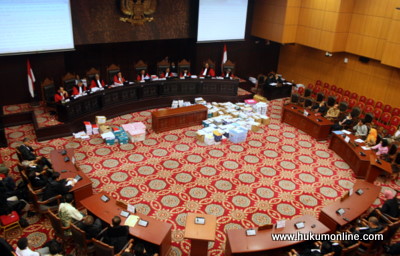 Petitioners in a Constitional Court case are arguing that excluding revenue from corporate income taxes innatural resource revenue sharing funds is contrary to the fairness and proportionality principles stipulated in Article 1 Number 3 of Law No.33 of 2004 on the Financial Balance between the Central and Regional Governments.
“Therefore, the articles being assessed are also contrary to Article 18A Paragraph (2) of the 1945 Constitution (UUD 1945) because the utilization of natural resources should be implemented fairly and equitably,” said Prof HAS Natabaya while giving testimony as the applicants’expert in a Constitional Court trial reviewing three laws related to revenue sharing funds from tax sourceson Wednesday (14/9).
This petition was filed by the heads of five regional governments, namely Zulkifli Muhadli (the Regent of West Sumbawa), Abdul Muis (Vice Regent of Mimika), Willy M Yoseph (Regent of Murung Kingdom), Hein Nomotomo (Regent of North Halmahera), and Anwar Hafid (Regent of Morowali). The petitoners are “protesting” because their regional governments did not obtain 20 percent of revenue sharing funds generated from the corporate income tax on natural resource companies, particularly companies in the mining sector.
The petitioners are asking the Constitutional Court to review three articles: Article 160 (2) (c) of Law No. 32 of 2004 on Regional Governments; Article 11 (2) (c) of Law No.33 of 2004 on the Financial Balance Between Central and Local Governments; and Article 31C (1) Law No. 36 of 2008 on The Fourth Amendment to Law No.7 of 1983 on Income Taxes, which only subjects “natural persons” to the Income Tax.
Meanwhile, corporate income tax revenue is not being distributed to local governments, even though Article 2 (1) states that tax subject types include both individual taxpayers and corporate taxpayers.The applicants believe their constitutional rights have been infringed because they did not receive a fair and equitable share of revenue sharing funds generated by the corporate income tax.
It hampers development and overcomes damage to thenatural environment as a result of mining activities in the applicants’ territories. Therefore the petitioners want the Constitutional Court to revoke/delete the phrase “natural person” in the articles in question because the phrase is considered contrary to Article 18A (2) and Article 33 (4) of the 1945 Constitution (UUD 1945).
Natabaya explained that the things subject to the income tax are natural persons (orang pribadi), undivided inheritances, corporations (badan), and/or permanent establishments (bentuk usaha tetap), according to the Income Taxes Law. “The issue is that the income tax is only being imposed on private individuals. Based on these three laws, corporations are not subject to the income tax, whereas revenue sharing should be conducted fairly and proportionately according the mandate of Article 18A of the 1945 Constitution (UUD 1945),” said the former Constitutional Court Judge.
Other experts agree. SyahrilMachmud who is also an expert for the applicants and the Development Director of the Capacity Program at the All-Indonesian Regency Governments Association argued that the income tax has not been fully distributed to local governments, because local governments should be entitled to revenues from the corporate income tax in addition to the individual income tax.
“Income tax revenue sharing should see Article 2 (1) of the Law on Income Taxes, which states that tax subjects arenot only natural persons, but also corporations and permanent establishments. Therefore, the three articles arecontrary to Article 18A (2) of the 1945 Constitution (UUD 1945),” said the retired official of the Ministry of Home Affairs.
(Agus Sahbani/Adi Condro Bawono)
Petitioners in a Constitional Court case are arguing that excluding revenue from corporate income taxes innatural resource revenue sharing funds is contrary to the fairness and proportionality principles stipulated in Article 1 Number 3 of Law No.33 of 2004 on the Financial Balance between the Central and Regional Governments.
“Therefore, the articles being assessed are also contrary to Article 18A Paragraph (2) of the 1945 Constitution (UUD 1945) because the utilization of natural resources should be implemented fairly and equitably,” said Prof HAS Natabaya while giving testimony as the applicants’expert in a Constitional Court trial reviewing three laws related to revenue sharing funds from tax sourceson Wednesday (14/9).
This petition was filed by the heads of five regional governments, namely Zulkifli Muhadli (the Regent of West Sumbawa), Abdul Muis (Vice Regent of Mimika), Willy M Yoseph (Regent of Murung Kingdom), Hein Nomotomo (Regent of North Halmahera), and Anwar Hafid (Regent of Morowali). The petitoners are “protesting” because their regional governments did not obtain 20 percent of revenue sharing funds generated from the corporate income tax on natural resource companies, particularly companies in the mining sector.
The petitioners are asking the Constitutional Court to review three articles: Article 160 (2) (c) of Law No. 32 of 2004 on Regional Governments; Article 11 (2) (c) of Law No.33 of 2004 on the Financial Balance Between Central and Local Governments; and Article 31C (1) Law No. 36 of 2008 on The Fourth Amendment to Law No.7 of 1983 on Income Taxes, which only subjects “natural persons” to the Income Tax.
Meanwhile, corporate income tax revenue is not being distributed to local governments, even though Article 2 (1) states that tax subject types include both individual taxpayers and corporate taxpayers.The applicants believe their constitutional rights have been infringed because they did not receive a fair and equitable share of revenue sharing funds generated by the corporate income tax.
It hampers development and overcomes damage to thenatural environment as a result of mining activities in the applicants’ territories. Therefore the petitioners want the Constitutional Court to revoke/delete the phrase “natural person” in the articles in question because the phrase is considered contrary to Article 18A (2) and Article 33 (4) of the 1945 Constitution (UUD 1945).
Natabaya explained that the things subject to the income tax are natural persons (orang pribadi), undivided inheritances, corporations (badan), and/or permanent establishments (bentuk usaha tetap), according to the Income Taxes Law. “The issue is that the income tax is only being imposed on private individuals. Based on these three laws, corporations are not subject to the income tax, whereas revenue sharing should be conducted fairly and proportionately according the mandate of Article 18A of the 1945 Constitution (UUD 1945),” said the former Constitutional Court Judge.
Other experts agree. SyahrilMachmud who is also an expert for the applicants and the Development Director of the Capacity Program at the All-Indonesian Regency Governments Association argued that the income tax has not been fully distributed to local governments, because local governments should be entitled to revenues from the corporate income tax in addition to the individual income tax.
“Income tax revenue sharing should see Article 2 (1) of the Law on Income Taxes, which states that tax subjects arenot only natural persons, but also corporations and permanent establishments. Therefore, the three articles arecontrary to Article 18A (2) of the 1945 Constitution (UUD 1945),” said the retired official of the Ministry of Home Affairs.
(Agus Sahbani/Adi Condro Bawono)