


 Ada Pertanyaan? Hubungi Kami


 Ada Pertanyaan? Hubungi Kami
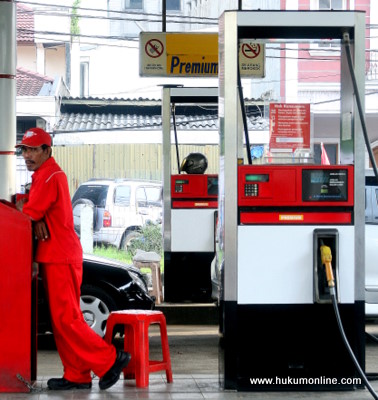 The House of Representatives is asking the government to be firm in handling the problem of subsidized fuel, because the susidized fuel quota for the first half of this year has already exceeds 50 percent of the total quota. Commission VII of the House of Representatives urged the government to raise subsidized fuel prices at a hearing with the Coordinating Minister for Economic Affairs, Hatta Rajasa, who temporarily (Ad Interim) is the Minister of Energy and Natural Resources, and his Ministry officials, Thursday (15/9).
Some members of Commission VII of the House of Representatives asked the government to take rapid steps to addres the subsidized fuel issue. Member of Commission VII Sutan Bathoegana said the government is not just planning to implement subsidized fuel restrictions. According to him, the fuel price should be raised if the restriction is not possible.
“Many analysts believe the government was afraid to raise subsidized fuel price, so what,” Sutan said.
This year, the government set the quota for subsidized fuels at 40.4 Million kiloliters(KL). But, at the first semester of 2011, fuel consumption already exceeded 50 percent of the quota. Then, in the year 2012 Draft State Revenue and Expenditures Budget (RAPBN 2012), the government set the quota for next year at 40 Million KL.
Sutan said, if next year’s subsidized fuel quota is set at 40 Million KL, it is better for the government to revoke the subsidies and raise prices. However, he warned that the government must be able to improve public transport which has been a constraint.
Another member of Commission VII, Satya W. Yudha questioned what action will be taken by the government to minimize the use of subsidized fuel in the fiscal year 2012 Draft of State Revenues and Expenditures Budget, assuming that the subsidized fuel quota is set at 40 Million KL. According to him, the political reprecussions could be big next year if the government does not do anything.
“Thegovernment should take concrete steps. Either control or reduce the subsidies,” said, the Functional Group Party member.
It should be noted, according to the law, the government may raise the price of subsidized fuel only if the average oil price in Indonesia for the year, already exceeds the highest limit set in the budget. Article 7 paragraph (4) of Law No.10 of 2010 on the State Revenue and Expenditures for the 2011 Budget year (APBN TA 2011) states that the government is given the authority to adjust the subsidized fuel price if the estimated average price of Indonesia Crude Palm (ICP) for one year increases by more than 10 percent of the prices assumed in the 2011 budget.
Despite pressures from the House of Representatives, the government seems reluctant to raise subsidized fuel prices. Hatta Rajasa, said the price increase can not be looked at solely from the fiscal point of view. It must also be seen from the macro and real sector. In addition, the subsidized fuel price adjustment should not be done without considering the impact on inflation and consumerpurchasing ability.
“I do not want to make a hasty decision,” said the Chairman of the National Mandate Country (PAN/Partai Amanat Nasional).
Hatta still believes the subsidized fuel quota in the financial note of the 2011 State Revenues and Expenditures Budget Amendment (APBN-P) , will not be exceeded even though consumption inAugust 2011 already exceeded the target. According to him, this year’s subsidized fuel quota can be maintained if the government limits fuel consumption.
Hatta attributed the excess subsidized fuel consumption to alleged misappropriated by the industrial sector, particularly the mining industry, agriculture, and plantations. To address the issue, he said the government will issue a supervisory policy that is expected to minimize fuel misappropriation.
(M Agus Yozami/Adi Condro Bawono)
The House of Representatives is asking the government to be firm in handling the problem of subsidized fuel, because the susidized fuel quota for the first half of this year has already exceeds 50 percent of the total quota. Commission VII of the House of Representatives urged the government to raise subsidized fuel prices at a hearing with the Coordinating Minister for Economic Affairs, Hatta Rajasa, who temporarily (Ad Interim) is the Minister of Energy and Natural Resources, and his Ministry officials, Thursday (15/9).
Some members of Commission VII of the House of Representatives asked the government to take rapid steps to addres the subsidized fuel issue. Member of Commission VII Sutan Bathoegana said the government is not just planning to implement subsidized fuel restrictions. According to him, the fuel price should be raised if the restriction is not possible.
“Many analysts believe the government was afraid to raise subsidized fuel price, so what,” Sutan said.
This year, the government set the quota for subsidized fuels at 40.4 Million kiloliters(KL). But, at the first semester of 2011, fuel consumption already exceeded 50 percent of the quota. Then, in the year 2012 Draft State Revenue and Expenditures Budget (RAPBN 2012), the government set the quota for next year at 40 Million KL.
Sutan said, if next year’s subsidized fuel quota is set at 40 Million KL, it is better for the government to revoke the subsidies and raise prices. However, he warned that the government must be able to improve public transport which has been a constraint.
Another member of Commission VII, Satya W. Yudha questioned what action will be taken by the government to minimize the use of subsidized fuel in the fiscal year 2012 Draft of State Revenues and Expenditures Budget, assuming that the subsidized fuel quota is set at 40 Million KL. According to him, the political reprecussions could be big next year if the government does not do anything.
“Thegovernment should take concrete steps. Either control or reduce the subsidies,” said, the Functional Group Party member.
It should be noted, according to the law, the government may raise the price of subsidized fuel only if the average oil price in Indonesia for the year, already exceeds the highest limit set in the budget. Article 7 paragraph (4) of Law No.10 of 2010 on the State Revenue and Expenditures for the 2011 Budget year (APBN TA 2011) states that the government is given the authority to adjust the subsidized fuel price if the estimated average price of Indonesia Crude Palm (ICP) for one year increases by more than 10 percent of the prices assumed in the 2011 budget.
Despite pressures from the House of Representatives, the government seems reluctant to raise subsidized fuel prices. Hatta Rajasa, said the price increase can not be looked at solely from the fiscal point of view. It must also be seen from the macro and real sector. In addition, the subsidized fuel price adjustment should not be done without considering the impact on inflation and consumerpurchasing ability.
“I do not want to make a hasty decision,” said the Chairman of the National Mandate Country (PAN/Partai Amanat Nasional).
Hatta still believes the subsidized fuel quota in the financial note of the 2011 State Revenues and Expenditures Budget Amendment (APBN-P) , will not be exceeded even though consumption inAugust 2011 already exceeded the target. According to him, this year’s subsidized fuel quota can be maintained if the government limits fuel consumption.
Hatta attributed the excess subsidized fuel consumption to alleged misappropriated by the industrial sector, particularly the mining industry, agriculture, and plantations. To address the issue, he said the government will issue a supervisory policy that is expected to minimize fuel misappropriation.
(M Agus Yozami/Adi Condro Bawono)