


 Ada Pertanyaan? Hubungi Kami


 Ada Pertanyaan? Hubungi Kami
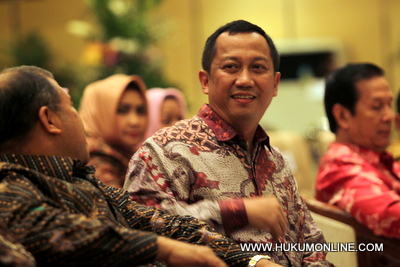 Travel bans that are approved by immigration officials are still necessary for investigation purposes. The bans help to protect national interests.
"They also protect public interests," said Erwin Azis, Secretary of the Director General of Immigration at the Ministry of Laws and Human Rights, in Jakarta, Tuesday (13/9). Erwin made this statement at a judicial review trial for Law No. 6 of 2011 on Immigration at the Constitutional Court.
Seven lawyers filed for judicial review. The lawyers are Rico Pandeirot, Afrian Bondjol, Rachmawati, Yulius Irawansyah, Slamet Yuwono, Dewi Ekuwi Vina and Gusti Made Kartika. They want the Constitutional Court to review Article 16 (1) (b) of the Immigration Law, which regulates the authority of an investigator to ask an immigration official for a travel ban.
The lawyers argue that Article 16 (1) (b) could harm citizen’s constitutional rights, if they are banned from traveling before being convicted of an actual crime, or at even named as a suspect. They say this could be considered a human rights violation and is unconstitutional.
The Lawyers presented Nazaruddin as an example. The Corrupation Eradication Commission had Nazaruddin banned from traveling when he was a fugitive. At the time, the status of the case was unclear, and the KPK had not even named Nazaruddin as a suspect. Therefore, the applicants asked the court to revoke the word "inquiry" from Article 16 (1) (b), since it contradicts Articles 28A and 28D of the 1945 Constitution.
However, Erwin said that the applicant's argument regarding human rights violations is not correct.
"The article won't harm their constitutional rights, since the inquiry process is in line with the law. Therefore, Article 16 (1) (b) of the Immigration Law does not contradict the 1945 Constitution," Erwin asserted.
Erwin further added that the Article 16 (1) (b) of the Immigration Law can be implemented if there is a request from a related official, such as the Attorney General, Minister of Finance, Chairman of KPK, Chief of the National Police, or a representative of other state institution that are authorized to release a travel ban.
The applicants are not convinced by these arguments, and plan to bring two experts to the next trial. "The experts can't be here for today, because they have to attend other trials. We hope they can come to the next trial," said Rico Pandeirot, one of the applicants.
As a sidenote, the applicants are lawyers at Otto Cornelius Kaligis and Associates. OC Kaligis is Nazaruddin's legal counsel. As mentioned above, Nazaruddin was previously banned from traveling and has his passport revoked after he was named a suspect in a corruption case.
(Agus Sahbani / Pirhot Nababan)
Travel bans that are approved by immigration officials are still necessary for investigation purposes. The bans help to protect national interests.
"They also protect public interests," said Erwin Azis, Secretary of the Director General of Immigration at the Ministry of Laws and Human Rights, in Jakarta, Tuesday (13/9). Erwin made this statement at a judicial review trial for Law No. 6 of 2011 on Immigration at the Constitutional Court.
Seven lawyers filed for judicial review. The lawyers are Rico Pandeirot, Afrian Bondjol, Rachmawati, Yulius Irawansyah, Slamet Yuwono, Dewi Ekuwi Vina and Gusti Made Kartika. They want the Constitutional Court to review Article 16 (1) (b) of the Immigration Law, which regulates the authority of an investigator to ask an immigration official for a travel ban.
The lawyers argue that Article 16 (1) (b) could harm citizen’s constitutional rights, if they are banned from traveling before being convicted of an actual crime, or at even named as a suspect. They say this could be considered a human rights violation and is unconstitutional.
The Lawyers presented Nazaruddin as an example. The Corrupation Eradication Commission had Nazaruddin banned from traveling when he was a fugitive. At the time, the status of the case was unclear, and the KPK had not even named Nazaruddin as a suspect. Therefore, the applicants asked the court to revoke the word "inquiry" from Article 16 (1) (b), since it contradicts Articles 28A and 28D of the 1945 Constitution.
However, Erwin said that the applicant's argument regarding human rights violations is not correct.
"The article won't harm their constitutional rights, since the inquiry process is in line with the law. Therefore, Article 16 (1) (b) of the Immigration Law does not contradict the 1945 Constitution," Erwin asserted.
Erwin further added that the Article 16 (1) (b) of the Immigration Law can be implemented if there is a request from a related official, such as the Attorney General, Minister of Finance, Chairman of KPK, Chief of the National Police, or a representative of other state institution that are authorized to release a travel ban.
The applicants are not convinced by these arguments, and plan to bring two experts to the next trial. "The experts can't be here for today, because they have to attend other trials. We hope they can come to the next trial," said Rico Pandeirot, one of the applicants.
As a sidenote, the applicants are lawyers at Otto Cornelius Kaligis and Associates. OC Kaligis is Nazaruddin's legal counsel. As mentioned above, Nazaruddin was previously banned from traveling and has his passport revoked after he was named a suspect in a corruption case.
(Agus Sahbani / Pirhot Nababan)