


 Ada Pertanyaan? Hubungi Kami


 Ada Pertanyaan? Hubungi Kami
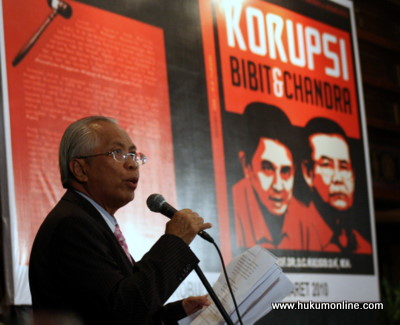 Otto Cornelis Kaligis accused the Corruption Eradication Commission (KPK) of denying his right to meet his client, Muhammad Nazaruddin, a suspect in the athlete dormitory corruption case. Kaligis asserted that he is Nazaruddin's legal counsel, based on a power of attorney No. 187/SK.VI/2011, dated 16 June 2011. Nazaruddin gave him power of attorney while he was a fugitive in Singapore.
Furthermore, Kaligis said that the examination report (berita acara pemeriksaan), warrant, and the detainee transfer letter had been given to the Nazaruddin's legal counsel team. Kaligis even said that Nazaruddin asked to meet Kaligis when he was in Bogota, Colombia. Kaligis further asserted that KPK has not been transparent, denying Nazaruddin legal representation when Nazaruddin was on the plane and when Nazaruddin was examined by a KPK investigator.
However, Kaligis' accusations were contradicted by KPK evidence. When KPK showed a close-circuit television (CCTV) recording, last Thursday (18/8), the video recording showed that Afrian Bondjol, one of Nazaruddin's legal counsel appeared in the investigation room to meet Nazaruddin with KPK's investigator, on Saturday (13/8).
KPK further explained that Nazaruddin himself, was the one who did not want to meet Kaligis. The video recording also shows that Afrian Bondjol handed him the power of attorney and asked Nazaruddin's signature, right after Nazaruddin's arrival in Indonesia. However, Nazaruddin refused to sign it. He asked to talk about it at the Police Special Force Headquarter’s (Mako Brimob), Depok.
Bibit Samad Riyanto, Deputy Chairman of KPK said that Kaligis' claim should comply with the Supreme Court Circular Letter No. 1 of 1971 on Special Power of Attorney. The Circular states that the legality of a power of attorney that was made in a foreign country, should meet the written form requirements, where it should state the identity of both parties, the dispute, and be legalized by the Indonesian embassy in that country.
Furthermore, Flora Dianti, a criminal procedural law lecturer at Universitas Indonesia Law Faculty, also asserted that, "If the power of attorney was only signed in absence of a legalization stamp by the Indonesian Embassy in Singapore, than it has not fulfill the formal requirements," said Flora, Saturday (20/8).
Flora also refers to the Circular Letter, which states the obligation to legalize the power of attorney to the Indonesian Embassy in the country where it was signed.
Moreover, Flora explained that a client may give the power of attorney through a verbal agreement and even by phone, even though the client has not signed the power of attorney. "But it's really hard to be proved. That's why, a written form could show whether the power of attorney has been legalized by an authorized official," Flora asserted.
In Flora's view, a verbal agreement, particularly on Nazaruddin's case, could be conducted if the agreement was made in front of KPK's investigator. "Nazaruddin appointed Kaligis as his counsel in front of the investigators. That could be accepted," Flora emphasized.
On the other hand, Kaligis asserted that KPK has no authority say whether the power of attorney is legal or not. "Power of attorney is regulated under Article 1792 of the Indonesian Civil Code. It is not KPK's business. That's why the power of attorney that we made in Singapore is legal. Nazaruddin even admitted that I'm his counsel in front of the KPK's investigators," he asserted.
Kaligis viewed that Elza Syarief had took over his client. "I have reported her to the advocate ethics council, since she took my client through a verbal agreement. Whereas, I have a written power of attorney," he said.
It should be noted, Nazaruddin is accused of receiving an IDR 4,3 billion bribe in the athlete dorm project, by the contractor--PT Duta Graha Indah, the project itself was valued around IDR 191 billion. There are also three other suspects, respectively Wafid Muharram, Secretary General of the State Ministry of Youth and Sports; Mindo Rosalina Manulang, Director of Marketing at the PT Anak Negeri; and Mohamad El Idris, Marketing Manager of PT Duta Graha Indah.
Nazaruddin's commission is believed by the investigators to have violated Article 5 (2), Article 11, and Article 12 (a) (b) of the Law No. 20 of 2001 on Corruption Eradication. The articles, more or less, states that a public official receives bribe due to his/her position, is subject to 20 years imprisonment and fines up to IDR 1 billion.
(Agus Sahbani / Pirhot Nababan)
Otto Cornelis Kaligis accused the Corruption Eradication Commission (KPK) of denying his right to meet his client, Muhammad Nazaruddin, a suspect in the athlete dormitory corruption case. Kaligis asserted that he is Nazaruddin's legal counsel, based on a power of attorney No. 187/SK.VI/2011, dated 16 June 2011. Nazaruddin gave him power of attorney while he was a fugitive in Singapore.
Furthermore, Kaligis said that the examination report (berita acara pemeriksaan), warrant, and the detainee transfer letter had been given to the Nazaruddin's legal counsel team. Kaligis even said that Nazaruddin asked to meet Kaligis when he was in Bogota, Colombia. Kaligis further asserted that KPK has not been transparent, denying Nazaruddin legal representation when Nazaruddin was on the plane and when Nazaruddin was examined by a KPK investigator.
However, Kaligis' accusations were contradicted by KPK evidence. When KPK showed a close-circuit television (CCTV) recording, last Thursday (18/8), the video recording showed that Afrian Bondjol, one of Nazaruddin's legal counsel appeared in the investigation room to meet Nazaruddin with KPK's investigator, on Saturday (13/8).
KPK further explained that Nazaruddin himself, was the one who did not want to meet Kaligis. The video recording also shows that Afrian Bondjol handed him the power of attorney and asked Nazaruddin's signature, right after Nazaruddin's arrival in Indonesia. However, Nazaruddin refused to sign it. He asked to talk about it at the Police Special Force Headquarter’s (Mako Brimob), Depok.
Bibit Samad Riyanto, Deputy Chairman of KPK said that Kaligis' claim should comply with the Supreme Court Circular Letter No. 1 of 1971 on Special Power of Attorney. The Circular states that the legality of a power of attorney that was made in a foreign country, should meet the written form requirements, where it should state the identity of both parties, the dispute, and be legalized by the Indonesian embassy in that country.
Furthermore, Flora Dianti, a criminal procedural law lecturer at Universitas Indonesia Law Faculty, also asserted that, "If the power of attorney was only signed in absence of a legalization stamp by the Indonesian Embassy in Singapore, than it has not fulfill the formal requirements," said Flora, Saturday (20/8).
Flora also refers to the Circular Letter, which states the obligation to legalize the power of attorney to the Indonesian Embassy in the country where it was signed.
Moreover, Flora explained that a client may give the power of attorney through a verbal agreement and even by phone, even though the client has not signed the power of attorney. "But it's really hard to be proved. That's why, a written form could show whether the power of attorney has been legalized by an authorized official," Flora asserted.
In Flora's view, a verbal agreement, particularly on Nazaruddin's case, could be conducted if the agreement was made in front of KPK's investigator. "Nazaruddin appointed Kaligis as his counsel in front of the investigators. That could be accepted," Flora emphasized.
On the other hand, Kaligis asserted that KPK has no authority say whether the power of attorney is legal or not. "Power of attorney is regulated under Article 1792 of the Indonesian Civil Code. It is not KPK's business. That's why the power of attorney that we made in Singapore is legal. Nazaruddin even admitted that I'm his counsel in front of the KPK's investigators," he asserted.
Kaligis viewed that Elza Syarief had took over his client. "I have reported her to the advocate ethics council, since she took my client through a verbal agreement. Whereas, I have a written power of attorney," he said.
It should be noted, Nazaruddin is accused of receiving an IDR 4,3 billion bribe in the athlete dorm project, by the contractor--PT Duta Graha Indah, the project itself was valued around IDR 191 billion. There are also three other suspects, respectively Wafid Muharram, Secretary General of the State Ministry of Youth and Sports; Mindo Rosalina Manulang, Director of Marketing at the PT Anak Negeri; and Mohamad El Idris, Marketing Manager of PT Duta Graha Indah.
Nazaruddin's commission is believed by the investigators to have violated Article 5 (2), Article 11, and Article 12 (a) (b) of the Law No. 20 of 2001 on Corruption Eradication. The articles, more or less, states that a public official receives bribe due to his/her position, is subject to 20 years imprisonment and fines up to IDR 1 billion.
(Agus Sahbani / Pirhot Nababan)